

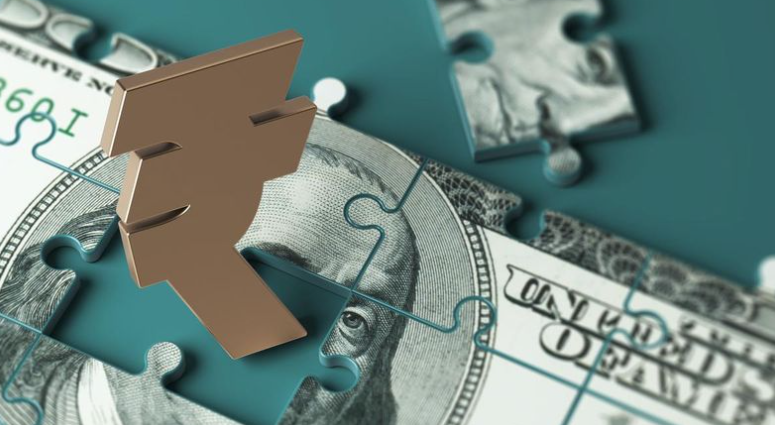
MUMBAI, Oct 7: The Indian rupee weakened by 22 paise to 96.57 against the US dollar in early trade on Wednesday, following the Reserve Bank of India’s decision to raise the benchmark repo rate by 25 basis points to 5.50 per cent.
At the interbank foreign exchange market, the rupee opened at 96.37 against the US dollar before slipping to 96.57. The currency had settled at 96.35 per dollar on Tuesday.
Market analysts said the RBI’s rate hike reflected growing concerns over cyclical inflation, while the shift in its policy stance to “calibrated tightening”, along with higher growth and inflation projections, signalled a more hawkish approach.
DBS Bank Senior Economist and Executive Director Radhika Rao said the RBI’s decision indicated that cyclical inflation risks were no longer benign.
She noted that the combination of higher inflation projections and a tightening stance could keep short-term interest rates elevated. According to Rao, the policy shift could also provide some support to the rupee through wider interest-rate differentials, although a stronger US dollar remains a challenge.
The RBI’s latest rate hike marks a reversal from its recent easing cycle. The central bank had last raised the repo rate by 25 basis points in February 2023, taking it to 6.50 per cent. It subsequently kept rates unchanged through 2023-24 before beginning a rate-cut cycle in 2025.
Meanwhile, the US dollar index was trading at 102.09, up 0.25 per cent, indicating continued strength in the greenback.
Global oil prices also remained elevated, with Brent crude futures rising 0.97 per cent to USD 101.56 per barrel. Higher crude prices could add pressure on India’s import bill and the rupee.
On the domestic equity market, the Sensex fell 149.14 points to 72,918.67, while the Nifty declined 93.45 points to 22,682.65 in early trade.
Foreign Institutional Investors (FIIs) remained net sellers, offloading equities worth ₹2,961.30 crore on Tuesday, according to exchange data.
The rupee’s movement is expected to remain closely linked to global dollar trends, crude oil prices, foreign capital flows and the RBI’s monetary policy stance.
