

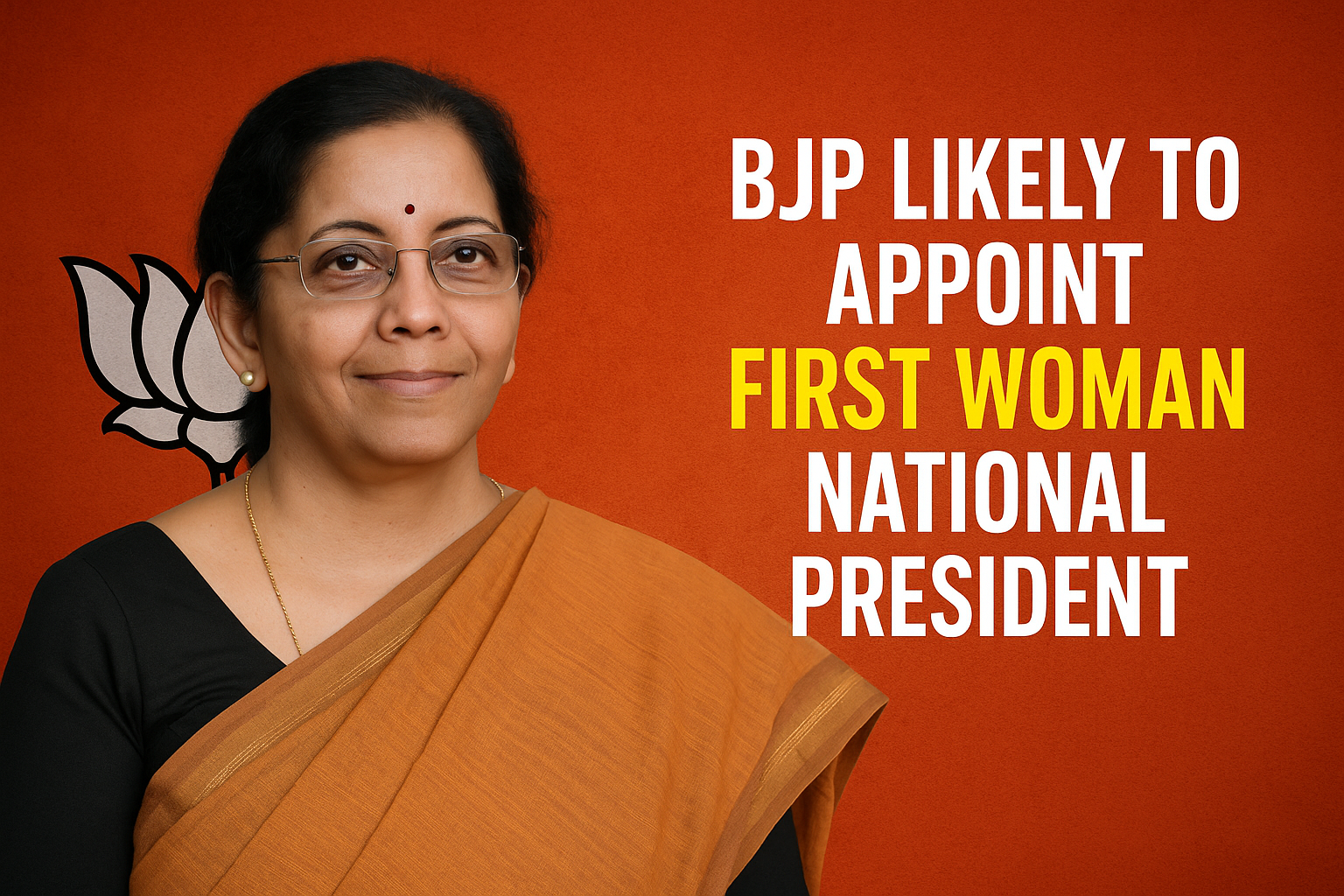
New Delhi, Jul 04: In a groundbreaking political shift that could redefine the Bharatiya Janata Party’s leadership dynamics, the BJP is reportedly on the verge of appointing a woman as its national president for the very first time. This potential change is being viewed as both historic and strategic, offering a fresh narrative in India’s political landscape.
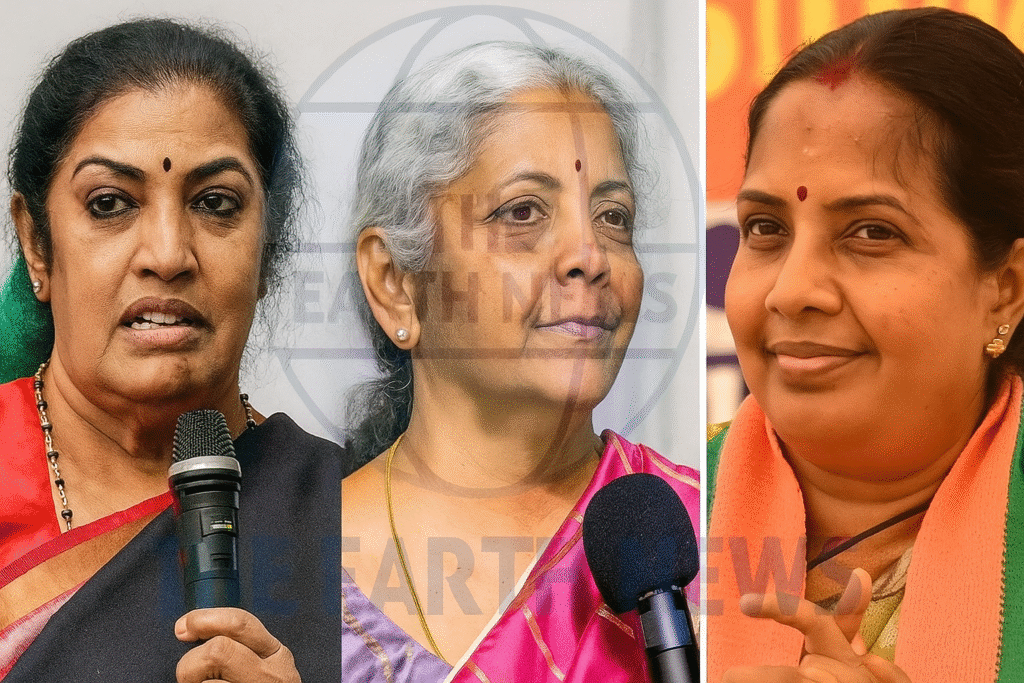
Highly placed sources within the party and its affiliate bodies have indicated that prominent women leaders such as Union Finance Minister Nirmala Sitharaman, Andhra Pradesh BJP president D. Purandeswari, and Tamil Nadu legislator Vanathi Srinivasan are under serious consideration to succeed J.P. Nadda, whose extended tenure at the helm recently concluded. Their inclusion in the shortlist marks a decisive turn for a party traditionally led by men since its formation in 1980, from stalwarts like Atal Bihari Vajpayee and L.K. Advani to recent leaders such as Amit Shah and J.P. Nadda.
The move is seen as more than symbolic. It represents a calculated strategic push to align with evolving voter expectations and broaden the party’s appeal. Especially significant is the backdrop of the Women’s Reservation Bill passed in 2023, which mandates 33 percent reservation for women in legislatures across the country. This legislative milestone has prompted a renewed focus within the BJP on gender representation at the highest levels of leadership.
Sources close to the decision-making process have confirmed that the Rashtriya Swayamsevak Sangh (RSS), the BJP’s ideological mentor, has extended its support to the idea of female leadership at the national level. The RSS reportedly recognizes both the symbolic value and the electoral benefit that such a decision could deliver. Discussions within the BJP Parliamentary Board are now in their final stages, with an official announcement anticipated in the coming weeks.
The timing of this potential leadership change is particularly notable. The BJP is preparing for key assembly elections in Maharashtra, Haryana, and Jharkhand later this year, where women voters have played a critical role in past victories. A female president at the helm would send a strong signal of inclusivity and gender-forward leadership. It would also serve to counter criticism that the party’s leadership base has been overly concentrated in northern and central India. Notably, all the frontrunners for the post hail from South India, hinting at a renewed push to strengthen the BJP’s presence in southern states like Tamil Nadu and Andhra Pradesh—regions where its electoral success has remained modest.
Internally, BJP strategists believe this move could enhance the party’s appeal among women and younger voters, positioning it as a modern, forward-thinking political force. The decision also reflects a broader recalibration in the party’s outreach strategy, focusing on social inclusiveness and regional balance.
While the Congress party has cautiously acknowledged the development, it has also questioned the timing. A senior Congress spokesperson remarked that the move may be an attempt to shift public attention at a time when the BJP is facing increasing scrutiny over various policy and governance issues. However, supporters within the BJP insist that the leadership change is both genuine and necessary, reflecting a commitment to progress and representation.
Should the BJP finalize the appointment of a woman as national president, it would not only be a first for the party but also a landmark moment in Indian political history. It would showcase the evolving role of women in national politics and potentially reshape the power dynamics within the BJP, giving rise to new opportunities and narratives ahead of the 2024 Lok Sabha elections.
With internal discussions nearing conclusion and momentum building, the nation now awaits a decision that could redefine political leadership in one of the world’s largest democracies.
