

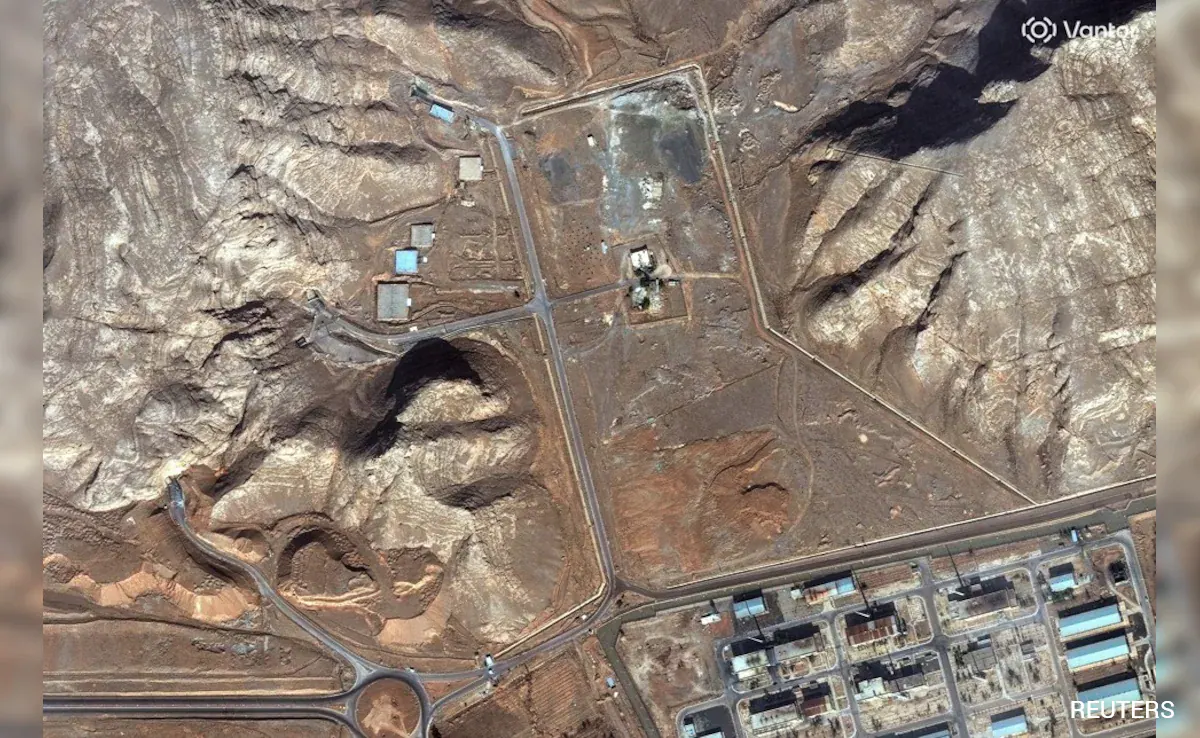
TEHRAN/WASHINGTON, Feb 21: As the US ramps up its regional military presence, satellite imagery reveals Iran racing to restore missile sites, fortify nuclear facilities, and bolster defenses ahead of potential conflict.
Indirect US-Iran talks resumed in Geneva on Tuesday, called “constructive” by Iranian Foreign Minister Abbas Araghchi. US Vice President JD Vance, however, said Iran ignored President Trump’s “red lines,” underscoring divides that hinder a deal. US officials briefed the White House that forces could strike within days via newly deployed naval and air assets, per CNN.
Iran has repaired damage from last year’s Israel war, which hammered its military and nuclear programs. At Imam Ali Missile Base in Khorramabad, three of ~12 destroyed structures are rebuilt, one repaired, and three under construction—including ballistic missile silos (Jan 5 imagery). Tabriz Air Base runways and medium-range missile ops are fully restored; Hamadan Airbase craters filled and shelters fixed, with nearby tunnels reopened. Shahrud’s solid-propellant missile production has restarted, boosting launch speed and range—possibly surpassing pre-war levels.
Nuclear sites are also hardening: Natanz’s Pickaxe Mountain tunnels have new concrete reinforcements (Feb 10 images), with vehicles on-site. Taleghan 2 at Parchin now sports a buried “sarcophagus” concrete cover for bunker protection, per ISIS analysts. Isfahan’s UN-sanctioned 7th of Tir centrifuge facility is rebuilt.
ISIS president David Albright warned on X: “The facility may soon become a fully unrecognisable bunker, providing significant protection from aerial strikes.”
Middlebury College’s Jeffrey Lewis told CNN: “Iran is reconstituting its nuclear and missile programs, probably faster than Israel claimed… They likely replaced or hid equipment underground before strikes.”
