

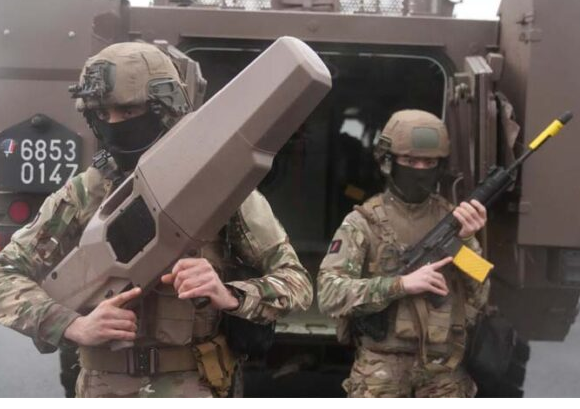
WARSAW, FEB 21: Five key European nations—France, Poland, Germany, the UK, and Italy—have unveiled a bold new initiative to mass-produce affordable air defense systems and autonomous drones, drawing directly on Ukraine’s battle-tested expertise from four years of grueling war against Russia.
The E5 group’s Friday announcement forms part of a broader European push to fortify borders, including a proposed “drone wall” along frontiers with Russia and Ukraine. This network aims to detect, track, and neutralize drones breaching European airspace more effectively.
Both Russia and Ukraine have pioneered advanced drone warfare through real-world combat, revolutionizing modern tactics. Poland already has collaborated closely with Kyiv on joint military training and drone manufacturing, building on shared innovations from the front lines.
These moves come after repeated drone incursions testing Europe’s defenses, including disruptions at airports and borders. While Russia has faced accusations for some incidents, it denies any deliberate involvement.
Britain’s Minister for Defense Readiness and Industry, Luke Pollard, emphasized the partnership’s urgency: “The UK and our E5 partners are stepping up – investing together in the next generation of air defence and autonomous systems to strengthen NATO’s shield.” He highlighted a critical mismatch: “We have some of the best kit on the entire planet for shooting down air threats. The problem is to be effective at shooting down relatively low-cost missiles, drones, and other threats facing us. We need to make sure that we’re matching the cost of the threats with the cost of defence.”
Poland’s Defence Minister Wladyslaw Kosiniak-Kamysz announced that the nations have signed a pact under the Low-Cost Effectors and Autonomous Platforms (LEAP) program. This covers joint investment in drone-based strike capabilities, low-cost production, and procurement of AI-driven combat payloads. “Combat technologies and techniques are changing rapidly – we must respond quickly and appropriately,” he stated. “We also signed a crucial commitment regarding the joint development of drone-based strike capabilities, low-cost joint production, and joint procurement of drone effectors.”
The need has grown acute since Russian drones violated Polish airspace in September 2025. Warsaw and NATO allies then deployed multimillion-dollar jets to counter cheap drones that simply crashed harmlessly. LEAP’s low-cost kinetic and electronic interceptors promise to destroy threats at a fraction of the expense.
Europe’s defense awakening has accelerated under US President Donald Trump’s sharp critiques of NATO spending and alliances. The EU has surged its budgets and explored ambitious military projects. EU foreign policy chief Kaja Kallas captured the moment: “Europe’s security is more uncertain than it has been in decades,” citing Russian aggression, Middle East turmoil, Chinese assertiveness, and a “redefined” US partnership.
She praised LEAP as a symbol of resolve: “If we want to keep our country safe, we must strengthen our hard power. The good news is that we are already investing record sums in defence. Europe is stepping up, but it’s not about competing with NATO. It’s about making Europe stronger within NATO. A stronger Europe makes the alliance also stronger.”
Trump’s second term has rattled the 32-nation bloc further. His threats to seize Greenland—a semi-autonomous Danish territory and NATO ally—along with disparaging comments about allies’ Afghanistan performance, sparked outrage. Though Greenland tensions have eased, the discord has eroded NATO’s deterrence against foes.
This E5 program underscores how Europe has moved decisively to harness Ukraine’s hard-won lessons, ensuring affordable defenses that match evolving threats in an increasingly volatile world.
