

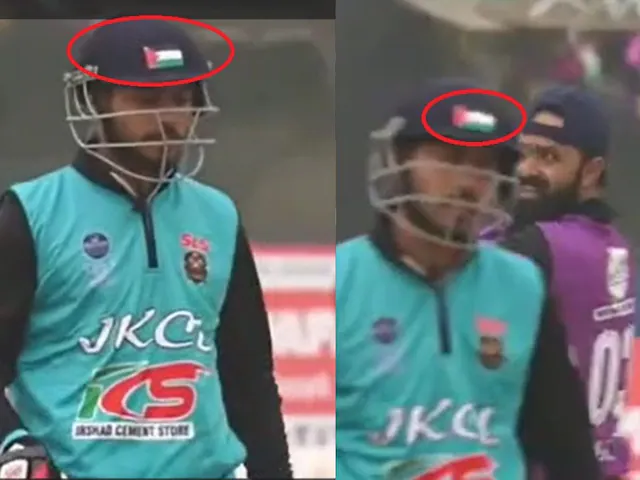
JAMMU JAN 1 : A seemingly routine cricket match in Jammu has snowballed into a major controversy, with Jammu and Kashmir Police launching a full-scale investigation into the Jammu Kashmir Champions League over cricketer Furqan Bhat’s use of a helmet featuring a Palestine flag sticker.
The incident unfolded during the league, which kicked off on December 29, 2025, transforming a sports arena into a battleground for debates on political expression, nationalism, and sporting regulations. Eyewitnesses and viral images captured Bhat batting with the prominent sticker, sparking immediate outrage on social media and prompting swift police action.
Officers from Domana police station wasted no time, rushing to the venue post-match and summoning Bhat for intense questioning. The focus remains on unraveling his motivations—personal statement, oversight, or something more organized? Simultaneously, league organizer Zahid Bhat faces grilling over the absence or laxity of uniform and equipment guidelines.
Sources indicate police are treating the matter with utmost sensitivity, cross-verifying footage, witness accounts, and communications to map any ripple effects.
The Jammu Kashmir Cricket Association (JKCA) quickly washed its hands off the fiasco, clarifying that neither the league nor Bhat falls under their umbrella. “No affiliation means no intervention from us,” a JKCA spokesperson emphasized, underscoring the event’s status as a private tournament.
Adding fuel to the fire, prominent business leader Praveen Khandelwal unleashed a scathing rebuke: “If you live in India, wear India’s flag. No love for the nation? Then leave.” His viral statement has polarized opinions, amplifying calls for stringent action while drawing counter-cries over free expression.
This episode revives thorny questions about the sanctity of sports fields amid geopolitical sensitivities. Legal experts note that while personal gear like helmets allows some leeway, public displays risking harmony fall under scrutiny via IPC sections on public mischief or UAPA if terror links emerge—though no such claims here yet.
Past incidents, from pro-Palestine tees to rally banners in Kashmir, highlight a pattern where symbols intersect with security. Organizers now face pressure to enforce zero-tolerance policies on non-sporting motifs, potentially reshaping local league bylaws.
As the probe grinds on without an official police word, all eyes remain on potential outcomes: warnings, bans, or closures. The saga underscores cricket’s tightrope walk in J&K—uniting communities yet vulnerable to division.
