

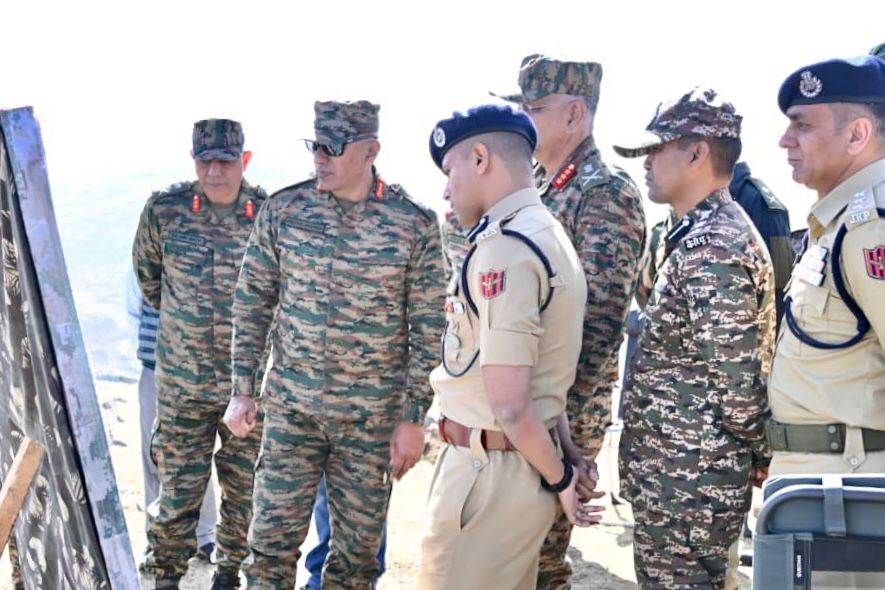
UDHAMPUR: In a significant move to bolster defenses against cross-border terrorism, Lieutenant General Pratik Sharma, the Northern Army Commander, undertook a high-level visit to the rugged Basantgarh hills in Udhampur district on Friday. The tour aimed to thoroughly evaluate the prevailing security landscape and the progress of ongoing counter-terrorist operations in this notoriously militancy-affected mountainous belt, which has long been a hotspot for insurgent activities.
Accompanied by senior military officials, Lt Gen Sharma was presented with detailed briefings on the robust intelligence grid that has been meticulously established in the region. These updates also covered enhanced security measures, including advanced surveillance systems, fortified patrols, and coordinated intelligence-sharing protocols with other security agencies. The discussions underscored the Army’s commitment to adapting its strategies to the evolving threat dynamics in the area.
Northern Command headquarters shared an official update on X, stating: “Lt Gen Pratik Sharma, Army Commander, Northern Command, visited Basantgarh to review the prevailing security situation and ongoing counter-terrorist operations. Focused deliberations were held on reinforcing the security architecture in coordination with all stakeholders.” This visit highlights the command’s proactive approach to maintaining operational readiness in vulnerable terrains.
During the visit, Lt Gen Sharma took time to interact directly with frontline troops deployed in the challenging hilly terrain. He commended their unwavering dedication, resilience, and professionalism, acknowledging their pivotal role in disrupting terror networks and ensuring a secure environment. “Your vigilance and courage are the bedrock of a terror-free Jammu and Kashmir,” he reportedly told the soldiers, boosting their morale amid demanding operations.
Basantgarh’s strategic location amplifies its importance in the broader counter-terrorism framework. Nestled along a traditional infiltration route exploited by Pakistani terrorists, the area serves as a gateway for militants who often enter Indian territory through neighboring Kathua district before pushing deeper into the mountainous regions of Udhampur and beyond. Sharing boundaries with both Kathua and Doda districts, Basantgarh forms a critical junction in the Pir Panjal range, making it a prime target for adversarial elements aiming to destabilize the region.
Security officials point out that the belt has witnessed several high-stakes encounters in recent years. Notable among them include ambushes and neutralization operations where security forces have eliminated hardened terrorists, seized arms caches, and thwarted infiltration bids. These incidents reflect the persistent threat from Pakistan-sponsored groups, who continue to exploit the dense forests and steep elevations for cover. The Army’s sustained operations, often in tandem with the Jammu and Kashmir Police and paramilitary forces, have significantly degraded terror infrastructure, but challenges remain due to the terrain’s unforgiving nature.
This visit comes at a time when Jammu and Kashmir has seen a resurgence in terror activities in the hinterland districts, following a period of relative calm in the Kashmir Valley post the abrogation of Article 370 in 2019. Udhampur, once considered a relatively stable area, has emerged as a focal point for renewed militancy, prompting the security establishment to intensify its multi-layered strategy. Enhanced measures include the deployment of specialized counter-insurgency units, drone surveillance, and community outreach programs to gather real-time intelligence from locals.
Lt Gen Sharma’s oversight is expected to further streamline these efforts, ensuring seamless coordination among stakeholders like the Army, CRPF, and local administration. As the Northern Command continues its mission, such field reviews play a vital role in fine-tuning operations and reinforcing the resolve to eradicate terrorism from the Union Territory
