

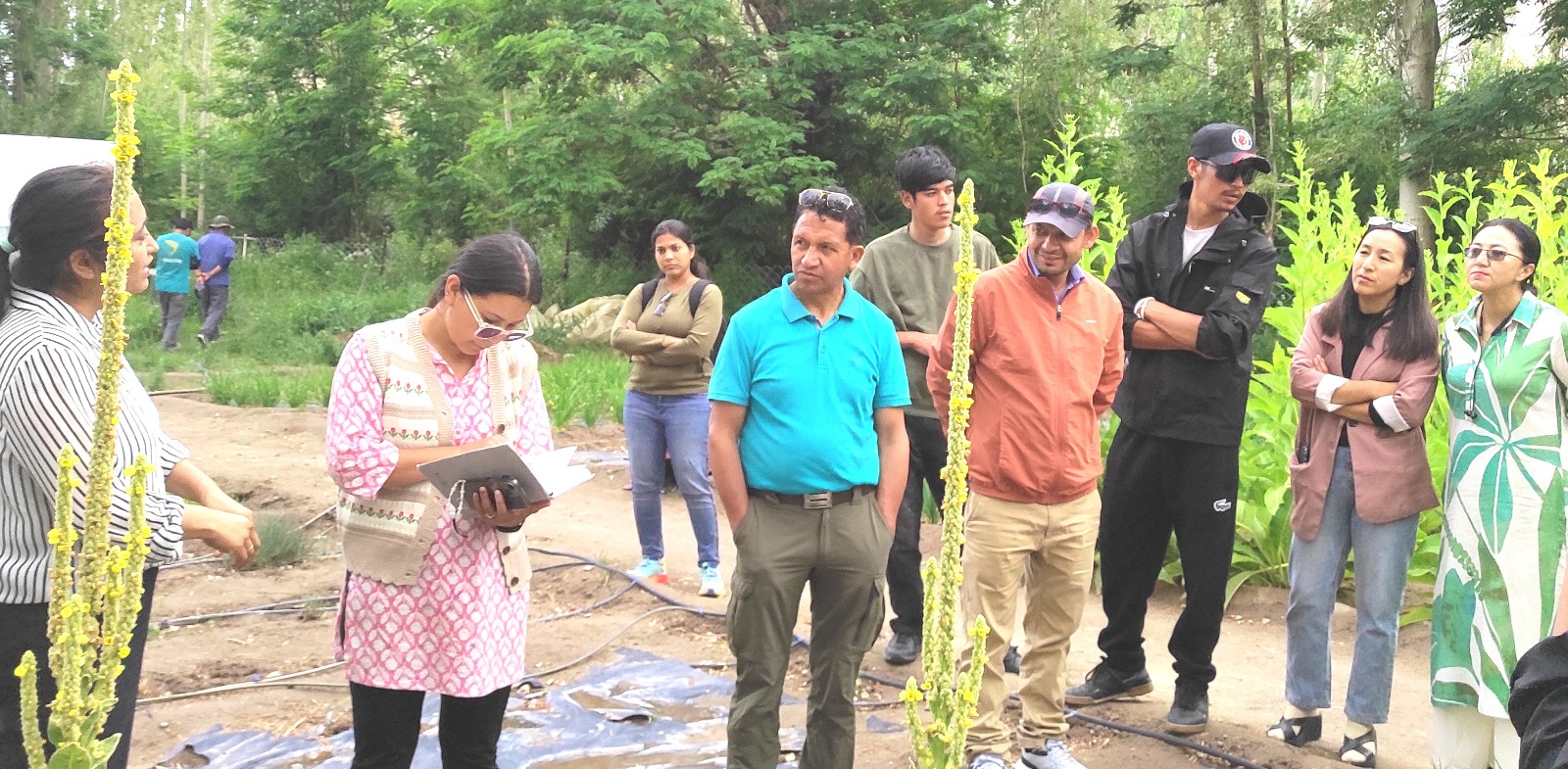
Leh, Jul 10: Farmers from across Ladakh are turning to climate-smart farming, embracing hydroponics and wastewater reuse after an intensive hands-on training session in Leh that brought together local innovators, scientists, and sustainability advocates.
Held under the banner “Treated Wastewater for Vegetable Cultivation through Hydroponics in Ladakh UT”, the one-day initiative was jointly hosted by the Ladakh Ecological Development Group (LEDeG) and the G.B. Pant National Institute of Himalayan Environment (NIHE), with the backing of the Municipal Committee Leh and NIHE’s headquarters in Almora. Farmers from Nubra, Leh, and nearby villages joined the gathering, sharing indigenous insights while absorbing new techniques tailored for the region’s harsh climate.
Dr. Sandipan Mukerjee, leading NIHE’s Ladakh Regional Centre, opened the session by underscoring the importance of fusing traditional practices with modern science to tackle water scarcity and food insecurity. LEDeG’s Executive Director, Shri Ishey Tundup, followed with an outline of the organization’s ongoing efforts in sustainable farming and how hydroponics — combined with reclaimed water — can offer a resilient alternative for Ladakhi agriculture.
Participants learned about Leh’s wastewater management systems through a presentation by Shri Stanzin Rabgais of the Municipal Committee, who addressed water safety and infrastructure. A virtual talk by Dr. Lalti Giri of NIHE, Almora, delved into core aspects of hydroponic farming — from nutrient circulation to controlled environment techniques — drawing comparisons with other high-altitude agricultural setups.
Practical exposure followed at the Rural Technology Centre (RTC), where farmers explored vertical pot systems, affordable polyhouses, and simple wastewater filtration technologies customized for Ladakh’s terrain. The group then visited an experimental site at Bombgarh where crops like capsicum, cucumber, and spinach thrived under polycarbonate roofing — all irrigated with treated wastewater. The project, led by Dr. Dalbeer Singh and his team, offered a working model of future-ready farming.
Farmers also visited sites in Stakna and Thiksey to observe off-season vegetable and ornamental plant cultivation. At the University of Ladakh, they were introduced to agro-climatic instruments such as anemometers, rain and snow gauges, and the Stevenson Screen, along with a guided tour of the Trans-Himalayan Arboretum, where medicinal plants and rare species are being preserved under the care of Dr. Kungzes Angmo and Dr. Jigmet Yangchan.
The program concluded with a demonstration of mushroom farming using passive climate control — a low-tech, high-impact model showcasing local innovation. Farmers left inspired and ready to implement these practices, calling the experience both practical and transformative.
As Ladakh faces evolving climate and resource challenges, this training marks a clear move toward an adaptable and ecologically aware agricultural future in the high Himalayas.
