

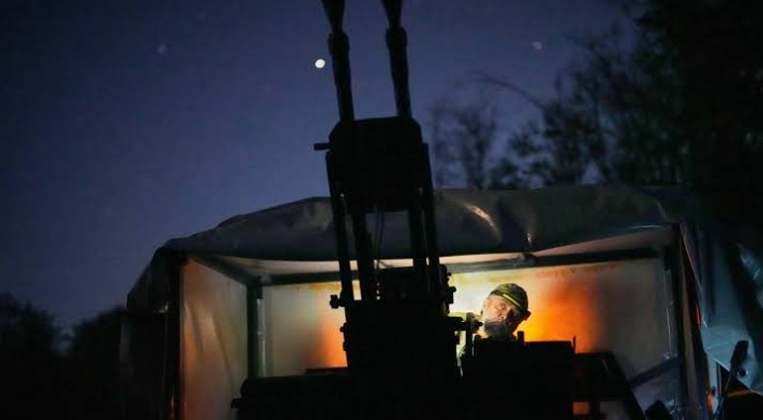
Kyiv, October 1: Russia’s increasing use of jet-powered drones is posing a fresh challenge to Ukraine’s air-defence systems, with the faster aircraft leaving defence crews only a short window to detect and intercept them.
The new drones, based on Iranian-designed Shahed models, can travel at much higher speeds and altitudes than conventional propeller-driven drones. Ukrainian air-defence commanders say their existing systems often struggle to get a sufficient tracking lock before the drones move beyond interception range.
The intensified drone campaign has increasingly targeted infrastructure across Ukraine, including energy facilities, railways, telecommunications networks, industrial sites, shopping centres, fuel stations and grain-related infrastructure.
Ukraine is now racing to develop a new generation of interceptor drones capable of matching the speed of the jet-powered threats. Defence manufacturers are working on faster propulsion systems, improved guidance technology and artificial intelligence-assisted targeting.
Ukrainian officials say some newly developed interceptors have already successfully engaged jet-powered Russian drones. However, manufacturers estimate that producing the systems in significant numbers and training operators could take several months.
Existing Defences Face New Challenge
Ukrainian air-defence units use radar, electronic warfare and AI-based systems to direct incoming drones into areas where they can be intercepted. However, the latest jet-powered drones are testing these methods because of their increased speed and operating altitude.
Ukrainian interceptor systems typically reach speeds of around 300 to 400 kmph, making it difficult for them to catch the fastest drones.
Ukraine has also deployed F-16 fighter jets to counter some of the fastest aerial threats. However, the aircraft require extensive maintenance and availability remains limited.
Race to Increase Interceptor Production
Ukrainian defence companies are now working to expand production of faster interceptors. Engineers are developing miniature turbojet-powered systems and autonomous guidance technologies to improve their ability to track and engage incoming drones.
One major challenge is the availability of miniature turbojet engines, with much of the current supply coming from European manufacturers whose production capacity is limited compared with Ukraine’s potential requirements.
Defence industry officials estimate that scaling up production could take three to six months or longer, depending on component availability, testing and crew training.
The growing threat has also increased pressure on Ukraine’s air-defence network as Russian drone attacks continue to strike cities and critical infrastructure.
For residents in Kyiv and other affected areas, the attacks have brought explosions, disrupted services and increasing uncertainty, with civilians forced to seek shelter as drones approach urban areas.
Ukraine’s defence industry is therefore racing against time to deploy faster and more capable interceptors before the new generation of jet-powered drones can further strain the country’s air-defence network.
