

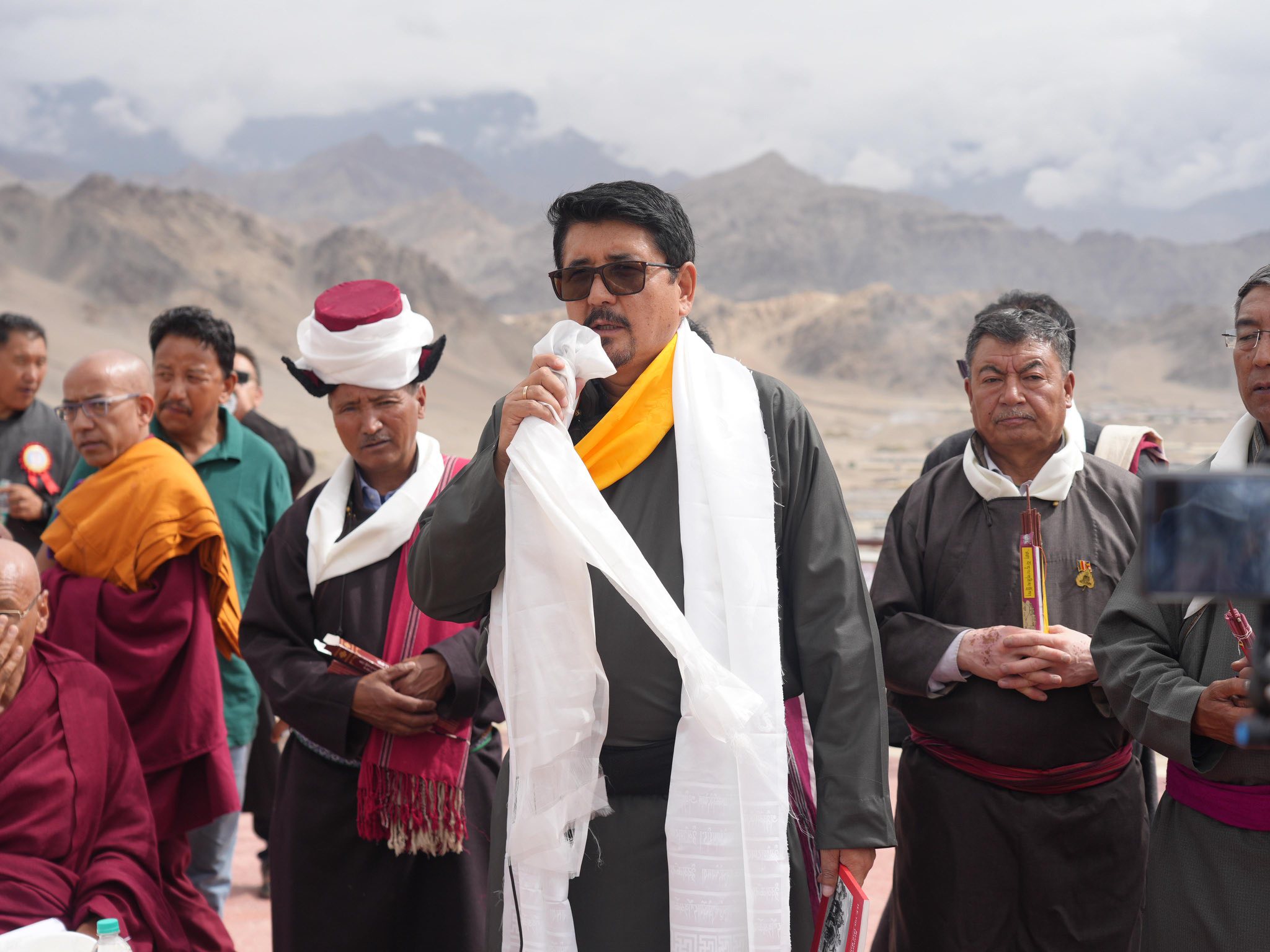
Leh, Aug 02: Giving a developmental push in Leh district with initiation of vial projects, Chairman LAHDC Leh, Advocate Tashi Gyalson on Saturday laid Foundation Stone for the construction of a Solar Lift Irrigation Scheme, and inaugurated the newly developed public park at Ibex Colony in Leh.
A Foundation Stone Laying Ceremony was held at Spethup Monastery, aimed at addressing the issue of water scarcity in the region, particularly the higher-altitude hamlets of Spituk.
Councillor Lower Leh, Tsering Namgyal was present on inauguration of the newly developed public park.
Addressing the gathering, Chokje Lama Geshe Lobsang Wangchok expressed heartfelt gratitude to the CEC and Hill Council for supporting the demand of the monastic and local community.
He emphasized that the Solar Lift Irrigation Scheme was not merely a development project but a step toward ecological restoration and spiritual merit.
“The Oracle has stated that large-scale plantation must be undertaken to preserve the environment, and the river-lifting system is essential for this,” he said. “We are also undertaking this project with prayers for the long life of His Holiness the 14th Dalai Lama, as he enters his 90th year.”
Gyalson, in his address, congratulated Spethup Monastery and the people of Spituk on the laying of the foundation stone for the Solar Lift Irrigation Scheme. Emphasising the importance of water security, he lauded the project as a timely intervention that aligns with the ongoing plantation drive.
He further highlighted that the initiative, dedicated to the long life and well-being of His Holiness the 14th Dalai Lama, holds both practical significance and deep spiritual value for the community.
Later in the day, a grand inaugural ceremony of Riglam, the traditional Buddhist dialectical debate was held at Spethup Photang, organized by Spituk Gonpa, Spituk Villagers, and Pethub Khangtsen. The program brought together students from the upper, middle, and lower regions of Ladakh to honour His Holiness the 14th Dalai Lama’s 90th birthday, symbolising his lifelong dedication to the values of education, analytical thought,and compassion.
The ceremony began with the lighting of the traditional butter lamp by His Eminence Bakula Rinpoche, CEC and all the dignitaries, following which Chokje Lama Geshe Lobsang Wangchok addressed the students and public. In an impassioned speech, he said, “Riglam is not just for monastics; it is a way of sharpening the mind, of asking questions, of approaching life with clarity. It aligns perfectly with His Holiness’ vision of a compassionate and logical society. I thank the villagers and youth for coming together to make this celebration deeply meaningful.”
Students from different regions showcased Riglam debates, performed traditional songs, and delivered talks on His Holiness’ four core commitments: the promotion of human values, the preservation of Tibetan Buddhist culture, harmony among religious traditions, and the revival of ancient Indian knowledge. Particularly moving were the reflections from Tenzin Delek, an alumnus of Drepung Loseling Monastery, who shared how Buddhist education shaped his thinking and transformed his life.
Deputy Chairman, Tsering Angchuk, appreciated the efforts of the organisers in creating a platform for dialectical learning.
“It is our responsibility to preserve the Bhoti language and the Nalanda tradition that have defined our civilisational identity. I commend Spituk Monastery and the local Tsogpa for taking this step. Education rooted in our traditions will shape future leaders who are both compassionate and wise,” he said.
Councillor Tundup Nurbu, in his speech, paid homage to His Eminence Bakula Rinpoche, for his pioneering contributions to education and public life. He elaborated on His Holiness the Dalai Lama’s four principal commitments, calling on the youth to internalise these teachings. He also highlighted key developments initiated in the area, such as the Science Learning and Training Centre and improved educational infrastructure.
CEC Tashi Gyalson, while congratulating the students and organisers, spoke about the relevance of Riglam in today’s rapidly changing world. “The essence of Riglam—critical thinking, respectful dialogue, and logic has never been more relevant. These tools not only preserve our tradition but equip our youth for the challenges of the future,” he said.
He also took the opportunity to speak about recent initiatives of the Hill Council, including the cervical cancer vaccination campaign for adolescent girls, environmental conservation efforts under the Indus Mission, and the celebration of July as the ‘Month of Compassion’. “We must carry forward these values of unity, service, and compassion, not just as ideals, but as daily practices,” he urged.
His Eminence Bakula Rinpoche, delivering the keynote address as the Chief Guest, inspired the audience with his spiritual guidance. “Compassion is the foundation of our community. Riglam is not just an exercise of intellect, but a path to wise and compassionate action. If we learn Riglam, we broaden our horizons and empower ourselves to do great deeds for society,” he said. He called on the youth to combine spiritual learning with social service, and expressed his happiness at being back in Spituk after seven years.
The program concluded with a vote of thanks by Nambardar Jigmet Wangchuk, who expressed his deep appreciation to all the guests, participants, organisers, and the devoted villagers whose efforts made the day a success.
The ceremony was graced by His Eminence Bakula Rinpoche,Tenzin Ngawang Jigmet Wangchuk; CEC Gyalson; Phyang Councillor Tundup Nurbu; ADC Ghulam Mohammad; CPO Tsewang Gyalson; Executive Engineers of Different Department; Chokje Lama Geshe Lobsang Wangchok, Goba and Chakzot of Spituk, venerable monks, community members, and villagers.
The event saw the presence of various dignitaries and a large gathering of the public who came together to celebrate the addition of this much-needed recreational space in the locality.
Also present at the inaugural function were President of Anjuman Moin-ul Islam, Dr. Abdul Qayoom; Director of Rajya Sainik Welfare Board, Col (Retd.) Lobzang Neema; President of the Ex-Servicemen League Ladakh, Hony. Captain Sonam Morup; ADDC Leh, Sonam Norboo; Dy SP Sonam Dorjey; Chief Engineer of PDD, Tsewang Paljor; Executive Engineers; Nambardar of Ibex Colony, Sonam Rigzin; and several community representatives and officials.
The Goba of Ibex Colony expressed gratitude to all stakeholders who contributed to the successful development of the park, especially CEC, the district administration, the executing departments, contractors, and the local community.
A memento was presented to the CEC by the Nambardar and community members as a token of appreciation. The Ladakh Scouts Band Party added to the celebratory mood of the occasion.
Addressing the gathering, Col (Retd.) Lobzang Neema shared that the park fulfilled a long-felt need in the area, providing a much-needed space for residents of all age groups, including ex-servicemen for walking, recreation, and outdoor activities.
He appreciated the remarkable changes seen post the formation of the Union Territory, especially under the leadership of the CEC, and acknowledged the visible growth in welfare initiatives for ex-servicemen.
Contractors and key contributors to the development of the park were felicitated with traditional khataks in recognition of their dedication and timely execution.
Councillor Tsering Namgyal congratulated all those involved in the swift and efficient completion of the park, highlighting that every essential amenity had been thoughtfully incorporated.
He urged residents to take collective responsibility in maintaining the park’s cleanliness and ensuring it remains a vibrant community space.
In his address, Gyalson extended heartfelt congratulations to the residents of Ibex Colony, describing the newly inaugurated public park as a powerful symbol of community harmony and well-being.
He noted that the space would serve as a meaningful place for leisure, health, and shared experiences.
He also stressed the importance of safeguarding the park from misuse and recommended that the canteen be operated by local residents, making it a potential source of revenue to support the park’s long-term maintenance and sustainability.
CEC further assured the gathering that the concerns and grievances raised by community members during the event would be addressed with due attention and urgency.
