

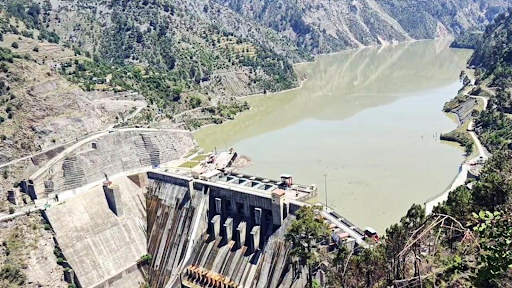
NEW DELHI, Dec 27: A Ministry of Environment panel has granted environmental clearance to the 260-megawatt Dulhasti Stage-II hydropower project on the Chenab river in Kishtwar district, Jammu and Kashmir, officials confirmed on Saturday.
The approval comes after India suspended the Indus Waters Treaty with Pakistan following the deadly Pahalgam terror attack in April this year.
The Expert Appraisal Committee on hydel projects accorded approval during its 45th meeting earlier this month, enabling the floating of construction tenders for the run-of-the-river project estimated to cost over Rs 3,200 crore.
According to meeting minutes, the panel noted that Chenab basin water was previously shared between India and Pakistan under the Indus Water Treaty, 1960, and project parameters were initially planned accordingly. However, the committee acknowledged that “the Indus Water Treaty stands suspended effective from April 23, 2025.”
Under the treaty, Pakistan had rights over the Indus, Jhelum and Chenab rivers, while India controlled the Ravi, Beas and Sutlej. With the treaty now in abeyance, the Centre is accelerating several hydroelectric projects in the Indus basin, including Sawalkote, Ratle, Bursar, Pakal Dul, Kwar, Kiru, and Kirthai I and II.
Dulhasti Stage-II is an extension of the existing 390 MW Dulhasti Stage-I Hydro Electric Project (Dulhasti Power Station), successfully operated by National Hydroelectric Power Corporation Limited since its commissioning in 2007.
The project will divert water from the Stage-I power station through a separate tunnel measuring 3,685 meters in length and 8.5 meters in diameter to create a horseshoe-shaped pondage for Stage-II. It includes a surge shaft, pressure shaft, and underground powerhouse housing two 130 MW units, generating a total installed capacity of 260 MW.
The project requires a total of 60.3 hectares of land, including 8.27 hectares of private land from two villages—Benzwar and Palmar—in Kishtwar district.
