

Itifaq Lone
Leh, Jul 22: To coup up the issue of improper and increasing disposal of garbage and plastic waste at the tourist destinations and to protect the fragile ecology, the Ladakh union territory striding have led the way and treated 100% of the solid waste in the year 2023–24, and year 2022–23.
The cold desert generated 12.454 tonnes of solid waste per day in the year 2023–24, and 11.845 Tonnes Per Day (TPD) in the year 2022–23.
This was revealed in the Monsoon Session of the Parliament by Minister of state in the Ministry of Environment, Forest and Climate Change, Kirti Vardhan Singh, while answering to a question raised by the Member of Parliament Ladakh, Mohmad Haneefa Jan.
The waste produced figures come from the Ladakh Pollution Control Committee’s (LPCC) Annual Report presented in the Parliament.
As per the Annual Report, submitted by the LPCC in compliance with Solid Waste Management Rules, 2016, to Central Pollution Control Board, the UT administration has taken steps for waste management in rural and urban areas.
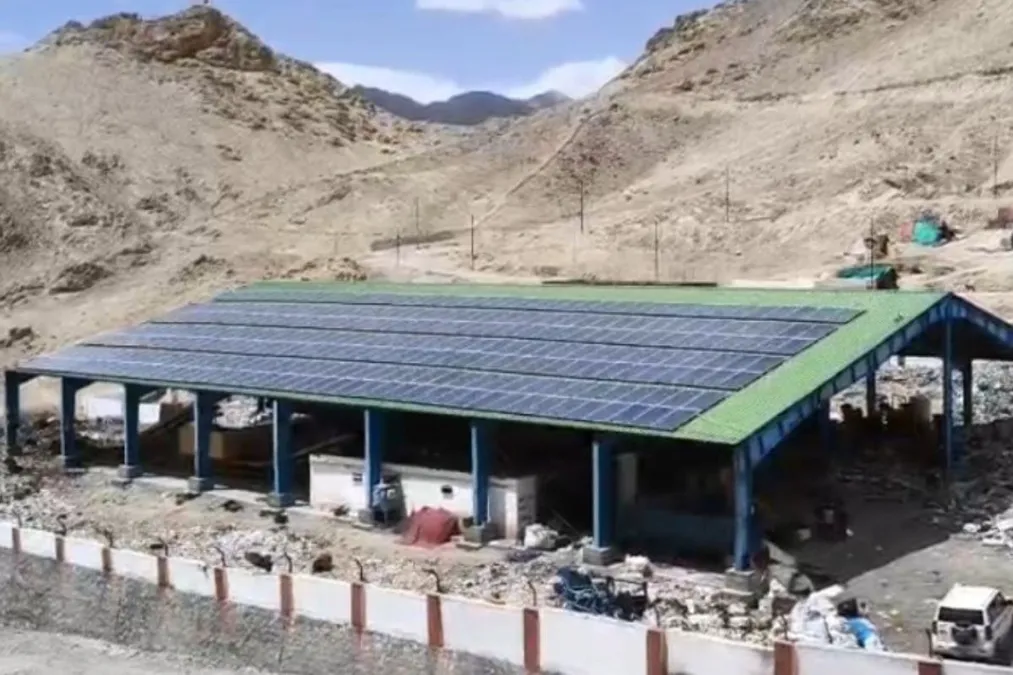
With the aim to protect fragile ecology of the region, MoS, Kirti Vardhan said, “31 Solid Resource Management Centres (SRMCs) have been established across all 31 blocks of UT Ladakh, with an additional SRMC set up in Sodh Block (Aryan Valley), a major tourist destination.”
Solid wastes from the villages is collected by pickup trucks and transported to the SRMCs where the waste is segregated and recyclable material is sold to scrap buyers.
Under the Swachh Bharat Mission, cleanliness drives have been organized in collaboration with other departments and with active community participation. Awareness about proper garbage disposal is also being spread among taxi drives, army personnel, and the general public.
Shops, hotels, homestays in every villages have dustbins.
In Urban Area, active enforcement of the ban on single-use plastics is carried out under the Ladakh Waste Management By-Laws-2020. Source segregation of waste into biodegradable and non-biodegradable components is encouraged and vehicles have been deployed to collect the solid waste, the
Material Recovery Facilities (MRFs) have been established in Leh and Kargil for sorting and recycling collected waste, campaigns such as ‘Zero Waste Ladakh’ and ‘Carry Your Waste Back’ are promoted to encourage responsible tourism, Kirti Vardhan said.
Regular clean-up drives and promotion behaviour change communication has been carried out in collaboration with NGOs and local groups. In some areas, the UT Administration is incentivising the return of plastic bottles and wrapped under Plastic Buy Back Scheme.
The UT Ladakh undertakes sweeping and waste collection especially in market and tourist hubs.
To contain the improper disposal of garbage and plastic waste at the tourist destinations, the Ministry informed that as per rules, local body shall frame Bye-laws and prohibit citizen from littering wastes on the streets and give strict direction to the tourists not to dispose any waste such as paper, water bottles, liquor bottles, soft drink canes, tetra packs, any other plastic or paper waste on the streets or down the hills and instead direct to deposit such waste in the litter bins that shall be placed by the local body at all tourist destinations.
Further, local body shall arrange to convey the provisions of solid waste management under the bye-laws to all tourists visiting the hilly areas at the entry point in the town as well as through the hotels, guest houses or like where they stay and by putting suitable hoardings at tourist destinations. Under the rules, local body may levy solid waste management charge from the tourist at the entry point to make the solid waste management services sustainable.
Considering the importance of cleanliness in and around Tourist sites and to create awareness, ‘Swachhta Action Plan’ (SAP) has been framed by Ministry of Tourism, Government of India in coordination with Department of Drinking Water & Sanitation under Nodal Ministry of Jal Shakti, Government of India.
Under SAP, the Ministry carries out cleanliness awareness programme including symbolic cleanliness drives, discourage the use of plastic at tourist destinations through educational institutions like Indian Institute of Tourism and Travel Management (IITTМ), Central Government affiliated Institutes of Hotel Management, State Government affiliated Institutes of Hotel Management and Food Craft Institutes across the country under categories Tourist awareness, students awareness, and Stakeholders awareness.
In addition to this, Ministry of Tourism celebrates various cleanliness activities on PAN India basis under Swachhta Pakhwada and Swachhta Hi Sewa every year during the month of September and October.
The administration of UT Ladakh is strictly enforcing the existing rules along with imposition of penalties and punitive actions against persons littering ranging from Rs. 500/- to Rs. 5000/- . The Ladakh Autonomous Hill Development Council (LAHDC)-Leh in collaboration with UT Administration have started “Mission Indus Clean up”.
