

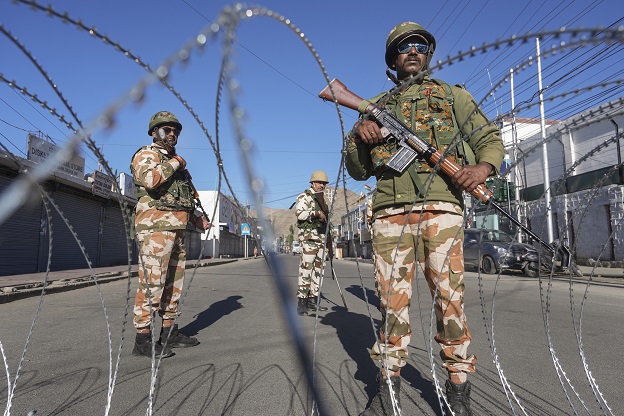
Addl COYs of CRPF reach Leh; ITBP deployed to maintain Law and Order
Yash Khajruia
Leh, Sept 26: Climate activist Sonam Wangchuk was relocated to Jodhpur Jail in Rajasthan late Friday evening after his arrest under the National Security Act amid escalating tensions in Ladakh, sources confirmed.
Wangchuk was flown out of Leh aboard a special defence aircraft. Authorities had initially considered lodging him in Udhampur Jail in Jammu and Kashmir, but intelligence assessments prompted a last-minute shift to Jodhpur, with officials citing the need to keep him beyond the immediate influence of local supporters.
The transfer followed his detention earlier in the day by Leh police, just moments before he was scheduled to brief journalists. Officials abruptly curtailed the press interaction before taking him into custody.
His arrest comes against the backdrop of violent confrontations in recent days over demands for Ladakh’s full statehood and inclusion under the Sixth Schedule of the Constitution. The provision, which grants autonomy to tribal councils, has remained central to local agitations since Ladakh’s separation from Jammu and Kashmir in 2019.
Clashes between protesters and security personnel turned deadly two days ago, leaving four people dead and sharply escalating tensions. Government sources accused Wangchuk of delivering incendiary remarks that allegedly incited demonstrators, prompting the administration to invoke preventive detention under the NSA to avert further disorder.
Responding to requests from the Union Territory administration for additional forces, the Ministry of Home Affairs on Thursday rushed seven companies of the Central Reserve Police Force to Leh to reinforce checkpoints and patrols. Six more companies of the Indo-Tibetan Border Police were tasked with conducting flag marches to reassure civilians and deter violence. Temporary curbs on internet services were also imposed in sensitive zones to stem misinformation and facilitate coordination among security agencies.
The Leh Apex Body has sharply criticized the government’s handling of the case, denouncing Wangchuk’s distant relocation as a deliberate attempt to sever his ties with local networks. Officials, however, defended the decision, describing it as a national security necessity in a strategically fragile border region.
