

WASHINGTON, JUN 27: The United States on Friday carried out military strikes on targets in Iran in response to a drone attack on a cargo ship in the Strait of Hormuz, marking the most serious challenge yet to the fragile ceasefire and interim understanding reached between the two countries a week ago.
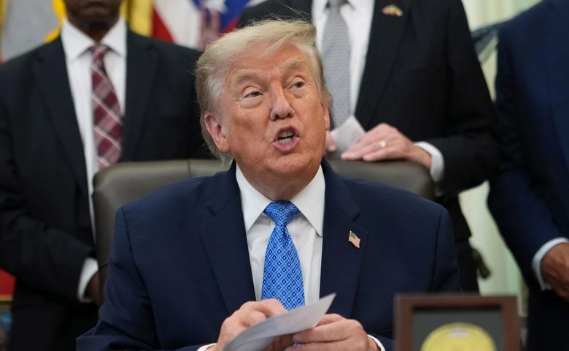
US President Donald Trump said the drone attack violated the ceasefire agreement, prompting a military response. Shortly before the strikes, Trump hinted at possible action, telling reporters, “You’ll find out,” when asked whether the US would retaliate.
The US Central Command said it targeted missile and drone launch sites, along with coastal radar installations in Iran.
“I don’t like the fact that they took a shot yesterday, actually four of them,” Trump said at the White House before the operation. He also acknowledged ongoing negotiations with Tehran but remarked that “they’re a little bit different.”
Iran rejected the US accusation, with Ebrahim Azizi, chairman of the Iranian Parliament’s National Security Commission, insisting that the Strait of Hormuz remains under Iran’s control. In a social media post, he said, “This is not a violation of the ceasefire; it is ceasefire management,” while urging Washington to “respect the rules.”
US Vice President JD Vance later warned that while diplomatic channels remain open, any further violence would be met with force. “Iran should pick up the phone if there are disagreements about the ceasefire agreement. But violence will be met with violence,” he said.
According to a US official, the military operation concluded about an hour after Central Command announced the strikes.
The escalation follows Thursday’s drone attack on a container ship off the coast of Oman. The United Kingdom Maritime Trade Operations (UKMTO) said the vessel was struck by a projectile but reported no casualties.
The incident has disrupted efforts to restore normal shipping through the Strait of Hormuz, a vital global energy corridor. The International Maritime Organization (IMO) has suspended operations to assist stranded vessels until security guarantees are in place.
Around 115 ships have exited the strait in recent days, but nearly 500 vessels remain in the area. Shipping analysts warned that the latest attack has slowed the return of commercial confidence despite the waterway remaining operational.
The US and Iran continue negotiations on a long-term peace agreement, with key issues including safe navigation through the Strait of Hormuz and the future of Iran’s highly enriched uranium stockpile still unresolved. Under the interim agreement, both sides have 60 days to finalize a permanent framework.
