

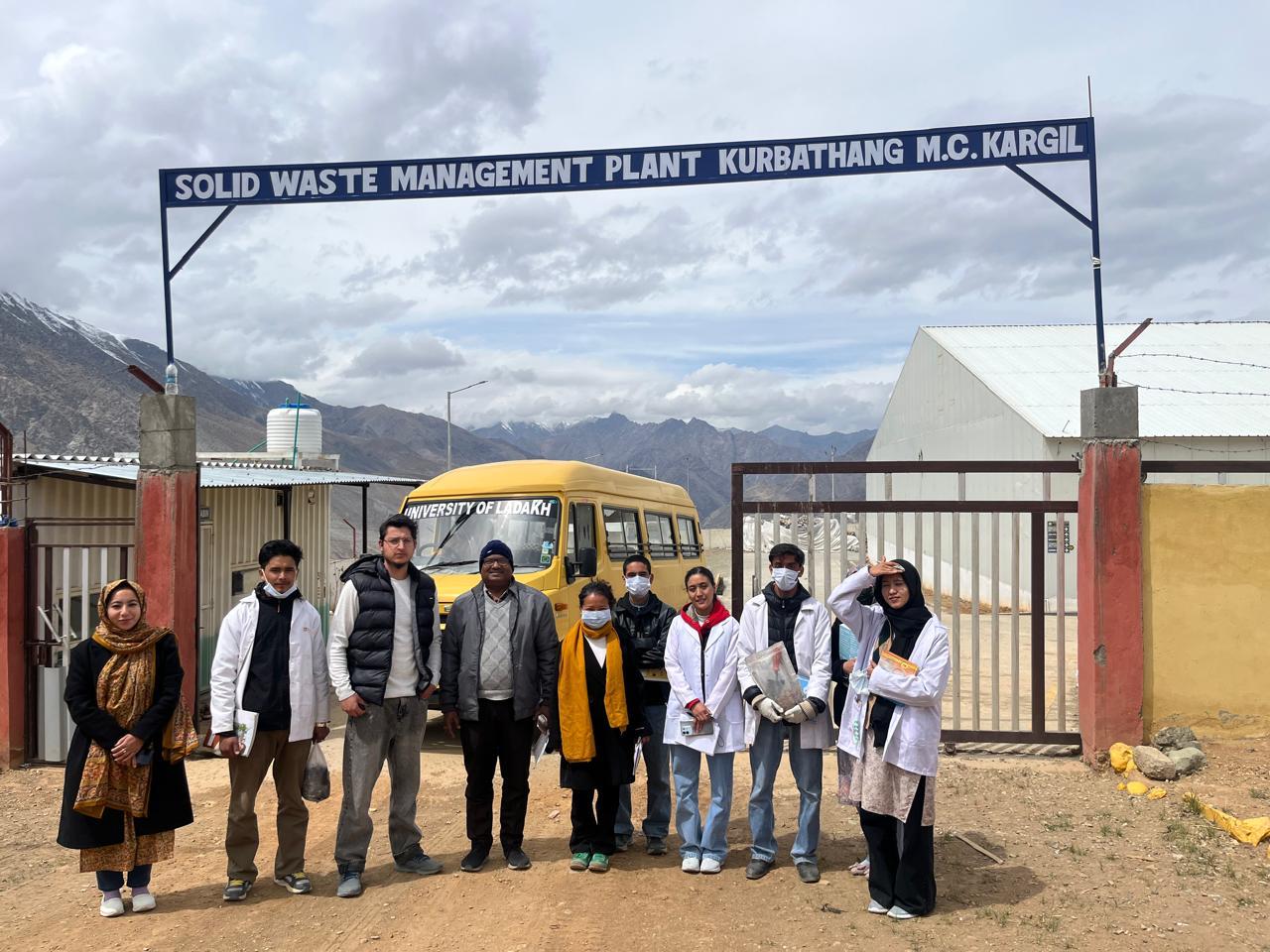
Kargil, Apr 18 : A group of postgraduate students from the Department of Environmental Science at the University of Ladakh undertook a field visit to Kargil’s solid waste management plant on Friday, gaining first-hand exposure to the region’s waste handling systems and the environmental challenges tied to them.
The visit, conducted with administrative approval and academic supervision, was aimed at bridging classroom learning with practical understanding of sanitation systems, environmental health, and waste utilisation practices. Faculty members accompanying the students emphasised the importance of experiential learning in shaping future environmental professionals.
At the facility, students closely observed the processes of collection, segregation, and treatment of municipal solid waste. Plant officials demonstrated how waste is categorised into different streams, followed by scientific handling methods including decomposition, recycling, and thermal utilisation. Composting practices at the plant, which convert organic waste into bio-fertiliser, were also explained in detail.
Supervisory staff at the plant guided the students through each stage of waste processing, outlining both the technical procedures and operational constraints. The interaction offered insights into the complexities of managing urban waste in a high-altitude region like Kargil, where logistical and behavioural challenges often intersect.
However, the field study also brought to light concerns over public compliance with waste segregation norms. According to observations shared during the visit, improper disposal habits among sections of the population continue to hinder efficient segregation, particularly in handling hazardous and medical waste alongside routine dry and wet refuse.
Plant workers, students noted, face persistent difficulties due to mixed waste entering the system, increasing both health risks and operational burdens. The absence of consistent use of colour-coded disposal methods remains a pressing issue.
In response, the students have resolved to initiate an awareness campaign in collaboration with local organisations and social workers. The proposed outreach aims to educate residents on proper waste disposal practices, with a focus on segregation at source and adherence to designated container systems.
The initiative reflects a growing recognition among young scholars of their role beyond academic spaces—extending into community engagement and environmental stewardship in the fragile ecosystem of Ladakh.
