

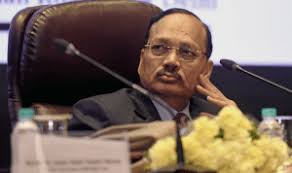
New Delhi, Dec 31: For the first time in its history, the Supreme Court of India held vacation benches during the winter break, with Chief Justice of India (CJI) Surya Kant himself sitting twice to hear urgent cases involving life, liberty, and matters requiring immediate judicial review.
Traditionally, the apex court holds vacation benches only during the longer summer recess, which has in recent years been rebranded as “partial court working days.” However, this winter marked the first instance of such sittings during the shorter Christmas–New Year break, demonstrating the CJI’s push for a more continuous judicial process.
The Supreme Court remained closed from December 22 to January 2, 2026, and is scheduled to reopen on January 5. Before the break, CJI Surya Kant — who assumed office on November 24 — had announced that vacation benches, including his own, would function to handle urgent pleas.
On December 22, the first day of the break, a bench comprising CJI Surya Kant and Justice Joymalya Bagchi heard 17 urgent matters, including several criminal and civil cases. Later, on December 29, a three-judge bench led by the CJI took up a suo motu case concerning the new definition of the Aravallis, putting on hold its earlier November 20 order that had adopted a uniform definition. The bench observed that “critical ambiguities” must be resolved before finalising parameters such as elevation and inter-hill distance that affect environmental protection.
That same day, another vacation bench of Justices J.K. Maheshwari and Augustine George Masih stayed the Delhi High Court order suspending the life sentence of expelled BJP leader Kuldeep Singh Sengar in the 2017 Unnao rape case, directing that he not be released pending further consideration.
On December 31, a bench of Justices M.M. Sundresh and Prashant Kumar Mishra held online hearings in two urgent cases — one relating to a habeas corpus petition alleging illegal detention by Uttar Pradesh Police, and another concerning a property dispute.
Alongside the winter sittings, the Supreme Court also introduced a Standard Operating Procedure (SOP) to streamline hearings and improve case management. The circular, effective immediately, mandates that advocates must submit written submissions and estimated argument timelines in advance.
According to the SOP, senior advocates and arguing counsel must provide written briefs of up to five pages at least three days before the hearing and adhere to approved time limits for oral arguments. The document was signed by four apex court registrars.
CJI Surya Kant had earlier indicated that the top court will soon roll out further measures in the new year to rationalise judicial time and ensure efficiency in proceedings.
A statement from the Supreme Court said the initiative for winter vacation benches was aimed at ensuring timely judicial access and providing redress in cases requiring urgent intervention, reflecting a significant administrative shift under the new CJI’s leadership.
