

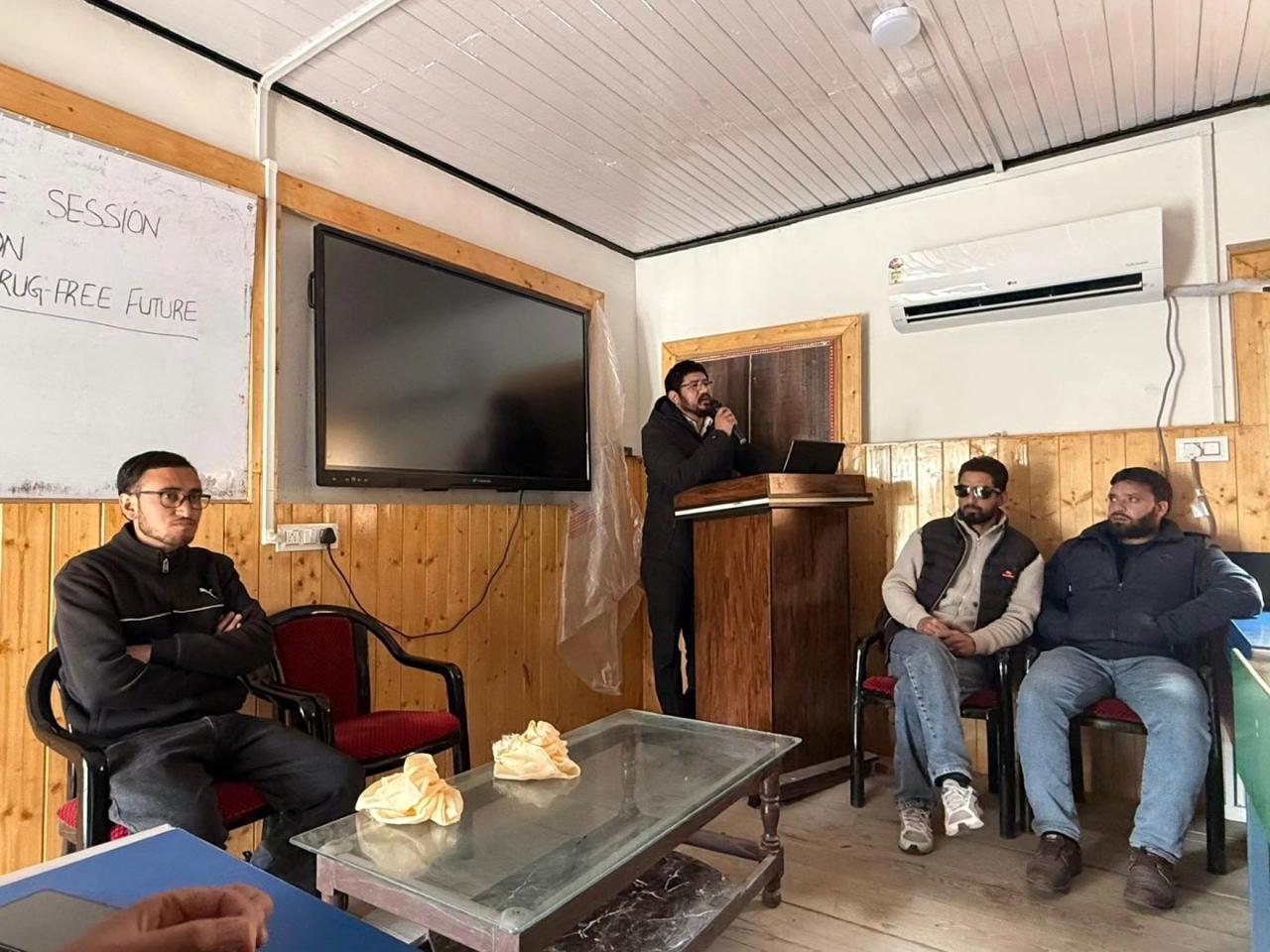
Kargil, Apr 10: Highlighting concerns over the rising incidence of substance abuse among youth in Ladakh, the Department of Sociology at Government Degree College (GDC), Kargil, Sankoo Campus organised an awareness and intervention programme, calling for early identification, preventive action, and community involvement to address the issue.
The programme, themed “Empowered Youth, Drug-Free Future,” was conducted under the national campaign Nasha Mukt Bharat Abhiyaan, reflecting ongoing efforts to tackle substance misuse through institutional outreach and public engagement.
Imtiyaz Hussain, Manager and In-charge of the District Drug De-Addiction Centre (DDAC), Kargil, who attended as the guest speaker, emphasised the need for timely intervention to prevent addiction from progressing to severe stages. He outlined the adverse impact of drug misuse on mental and physical health, academic performance, and social stability, while reiterating the administration’s zero-tolerance stance towards drug abuse and trafficking.
The session also focused on rehabilitation mechanisms, including withdrawal management, counselling, and sustained psychosocial support. Hussain stressed that effective recovery requires a coordinated approach involving medical care, family support, and community participation.
Earlier, Aqeela Banoo, a sixth-semester student, introduced the theme and underlined its relevance in the regional context, pointing to emerging patterns of substance use among young people. She called for greater awareness and collective responsibility to address the issue.
Discussions during the programme underscored the importance of identifying at-risk youth, particularly in vulnerable areas, and ensuring timely support. Participants were encouraged to challenge the stigma associated with addiction and adopt a more empathetic approach towards individuals undergoing recovery.
Information regarding financial assistance and rehabilitation support systems was also shared, aimed at facilitating reintegration of affected individuals into society.
The event concluded with a vote of thanks by Parvaaz Ahmed, Assistant Professor, Department of Sociology, who acknowledged the participation of the guest speaker, faculty members, and students.
The programme witnessed active participation from students and faculty across departments, fostering an interactive exchange on prevention strategies and the broader social dimensions of substance abuse.
