

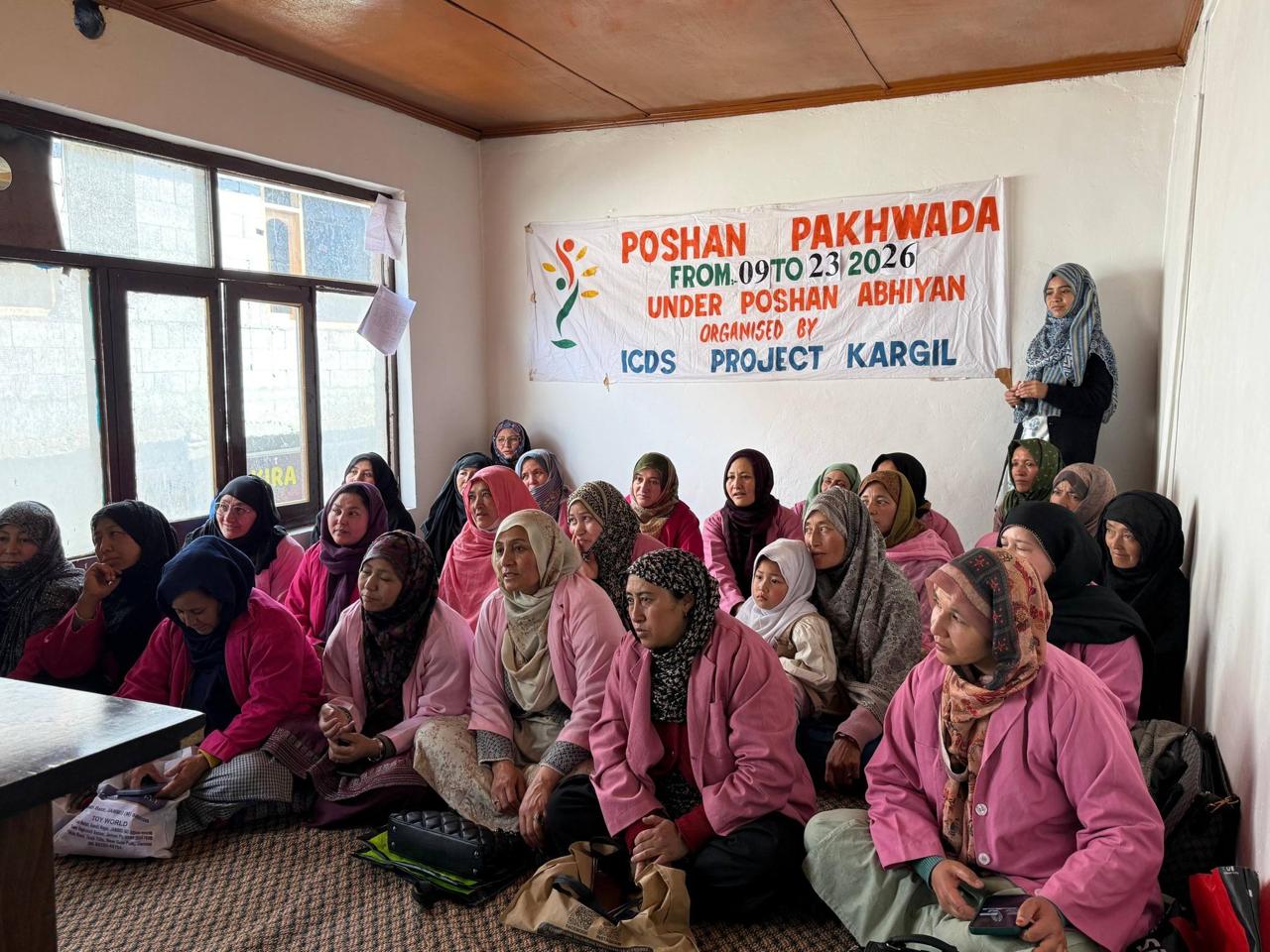
Kargil, Apr 10 : The Integrated Child Development Services (ICDS) Project Kargil joined the nationwide launch of the 8th edition of Poshan Pakhwada, a government-led initiative aimed at strengthening nutritional awareness and outreach across communities.
The programme was held at the office of the Child Development Project Officer (CDPO), ICDS Project Kargil, and saw participation from departmental functionaries including supervisors, Auxiliary Nurse Midwives (ANMs), and Anganwadi workers associated with the project.
The launch event commenced with remarks by Anil Malik, Secretary, Ministry of Women and Child Development, who outlined the broader objectives of the campaign and reiterated the Centre’s focus on improving nutritional outcomes among women and children.
Annapurna Devi, Union Minister for Women and Child Development, attended the event as the chief guest, underscoring the importance of coordinated grassroots interventions in addressing malnutrition and enhancing early childhood care.
As part of the programme, Vidyarambh Certificates and graduating kits were distributed among children completing their early learning phase at various Anganwadi Centres under the ICDS Project Kargil. Officials noted that such initiatives are intended to encourage enrolment and retention while marking key milestones in early childhood development.
The event also featured the rollout of a new “Home Scheduler” feature within the Poshan Tracker application. The digital tool is expected to assist Anganwadi workers in planning structured home visits, enabling more consistent monitoring of beneficiaries’ nutritional and health status. Officials said the feature would improve service delivery and data tracking at the field level.
Poshan Pakhwada was focussed on promoting better nutrition practices, enhancing health awareness, and fostering community participation. Activities during the fortnight are expected to include outreach campaigns, awareness drives, and monitoring exercises across districts.
The participation of ICDS Kargil reflects the region’s integration into the broader national framework aimed at addressing malnutrition through community-based interventions and digital support systems.
