

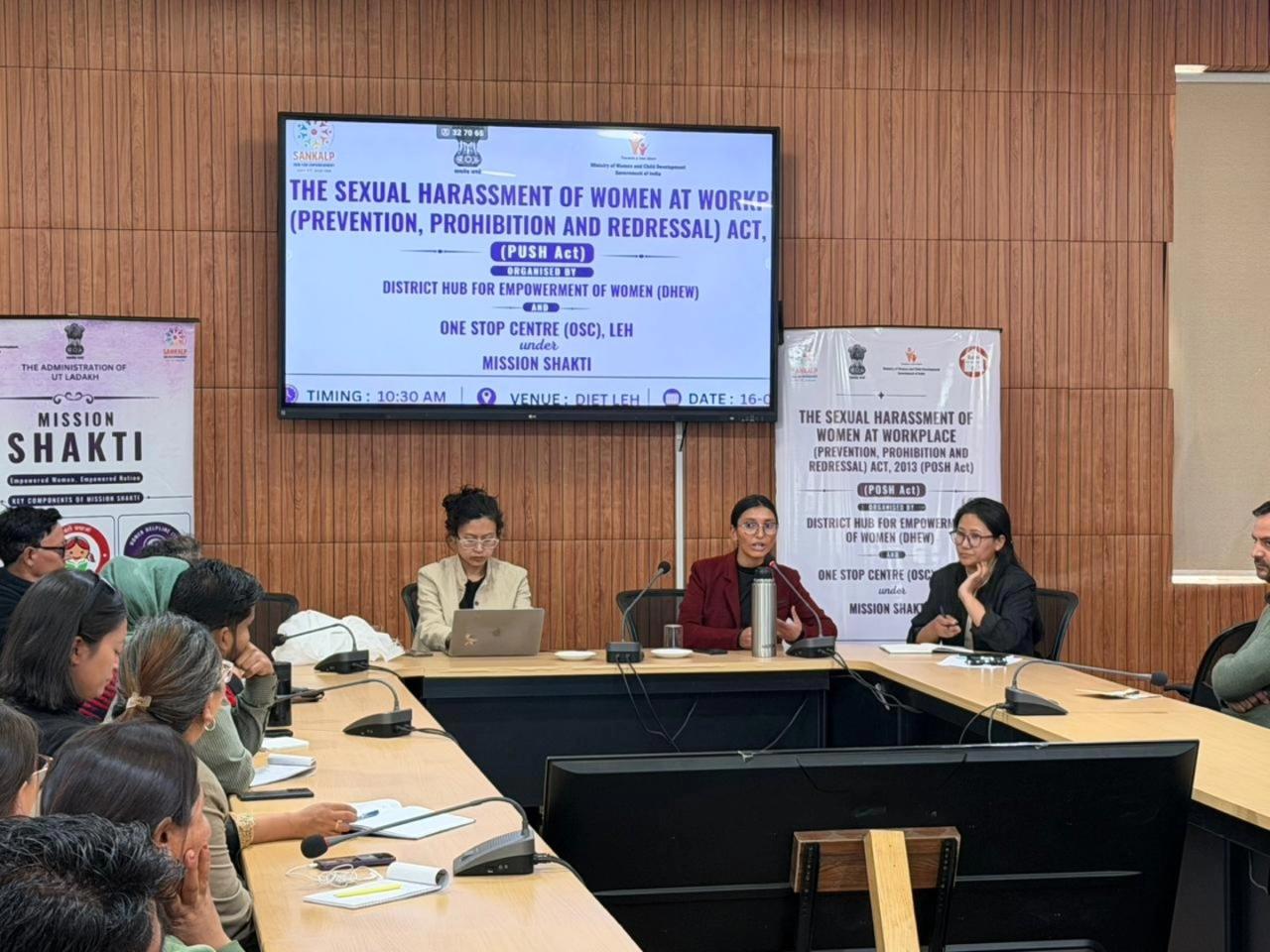
LEH: The University of Ladakh on Friday organised an awareness programme on the Sexual Harassment of Women at Workplace (Prevention, Prohibition and Redressal) Act, 2013, with speakers underscoring the need for greater awareness, gender sensitivity and institutional accountability in creating safe and inclusive workplaces.
The programme was organised at the University’s Leh Campus under the banner of the Internal Complaints Committee (ICC) in collaboration with the District Hub for Empowerment of Women (DHEW) and One Stop Centre Leh under Mission Shakti. Teaching and non-teaching staff members participated in the sensitisation initiative aimed at strengthening awareness of workplace rights and grievance redressal mechanisms.
Addressing the gathering, Vice Chancellor Prof. (Dr.) Saket Kushwaha emphasised the importance of women’s empowerment, self-confidence and awareness of legal rights. He encouraged women employees to remain informed and proactive while contributing to a workplace environment founded on dignity, mutual respect and equality.
The programme began with a welcome address by Dr. Dawa Wangmo, Assistant Professor, University of Ladakh, followed by an introductory briefing from Ms. Shahida Parveen, Central Administrator, Mission Shakti. She outlined the objectives and functions of the District Hub for Empowerment of Women and One Stop Centre Leh, highlighting the support services available for women’s welfare, protection and grievance redressal.
The central session was delivered by Ms. Deachen Angmo, Gender Specialist, Mission Shakti, who served as the resource person. She provided a detailed overview of the POSH Act, 2013, explaining the legal definition of sexual harassment, categories of workplace misconduct covered under the legislation and the safeguards available to employees.
She also elaborated on complaint procedures, grievance redressal mechanisms and the role of the Internal Complaints Committee in ensuring fair, confidential and time-bound resolution of complaints. Stressing the importance of reporting incidents of harassment, she urged employees to make use of institutional mechanisms designed to protect their rights.
The programme concluded with an interactive discussion during which participants engaged with experts on issues relating to workplace ethics, gender sensitivity and professional conduct, reinforcing the University’s commitment to fostering a secure and respectful working environment.
