

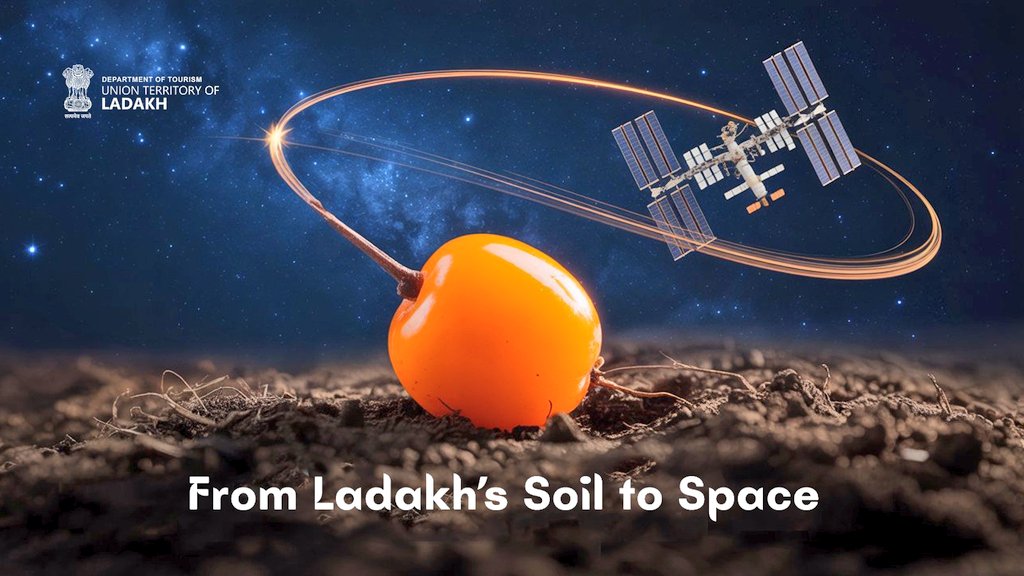
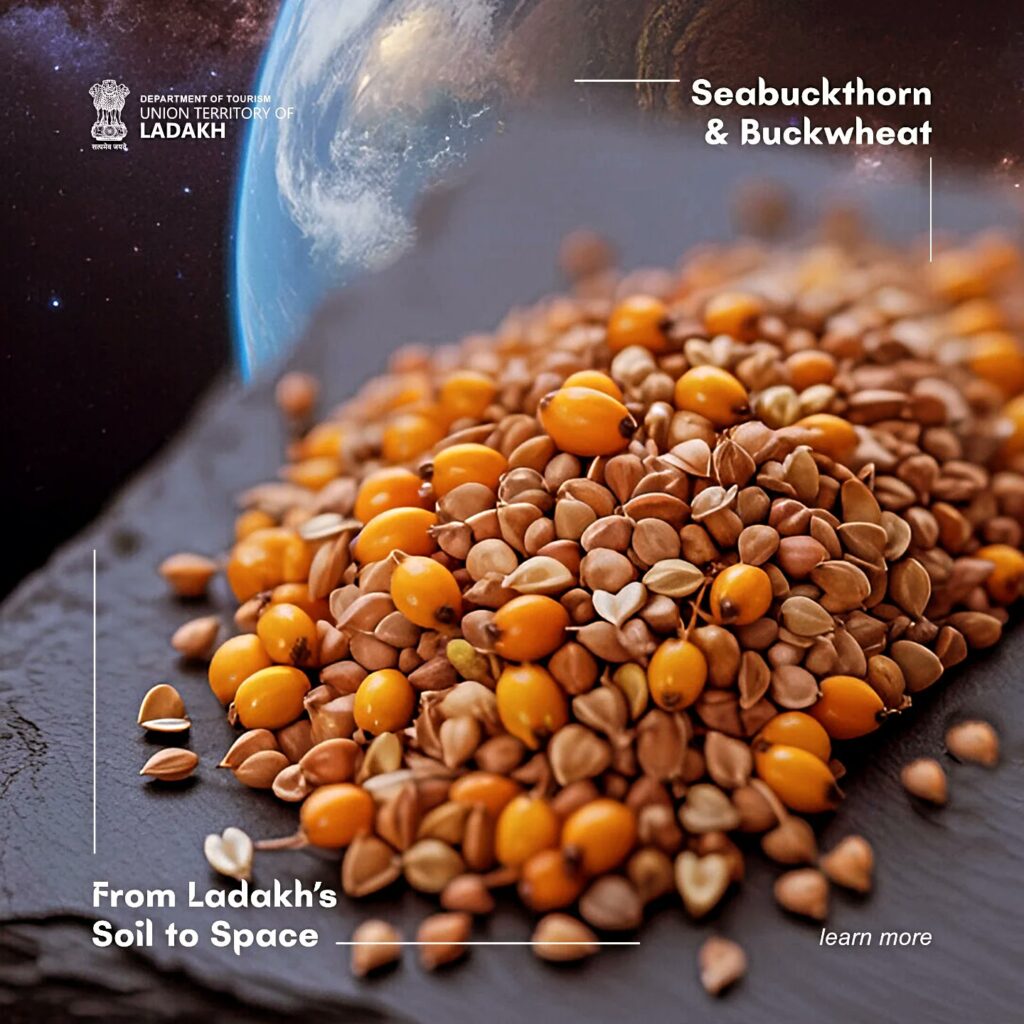
Leh, Aug 10: Two resilient crop seeds from Ladakh’s cold desert have returned to Earth after spending over a week aboard the International Space Station, marking a new chapter in space-based agricultural experiments. Brought back by NASA astronauts on August 9 via the Crew-10 capsule, the seabuckthorn and Himalayan tartary buckwheat seeds endured microgravity, cosmic radiation and sharp temperature fluctuations as part of the “Emerging Space Nations’ Space for Agriculture and Agriculture for Space” project.Launched earlier this year with NASA’s Crew-11 mission from Florida’s Kennedy Space Center, the seeds reached the ISS within 15 hours and remained exposed to orbital conditions before their retrieval. The initiative, involving 11 countries across five continents, is led by U.S.-based Jaguar Space in collaboration with Bengaluru’s Protoplanet.The two crops, rich in antioxidants, vitamins and gluten-free grains, are central to Ladakh’s farming tradition, thriving in sub-zero temperatures and poor soils above 4,000 metres. Scientists hope that studying genetic and metabolic changes in the seeds will provide insights for cultivating food on long-term space missions and for developing climate-resilient varieties capable of withstanding drought, degraded soils and extreme weather on Earth.Protoplanet director Siddharth Pandey, who sourced the seeds from Ladakh farmers, said this was the first time regional varieties from the area had travelled to space, calling them symbols of endurance in the world’s harshest terrains. Part of the returned batch will undergo detailed analysis in Indian laboratories, while the rest will be shared with local communities as emblems of innovation.Jaguar Space founder Dr. Luis Zea said the experiment not only examined plant resilience in space but also contributed to safeguarding biodiversity and traditional knowledge, essential for food security in an era of population growth and unpredictable climate.Local leaders, including Council Executive Chairman Tashi Gyalson, hailed the achievement as a source of pride for Ladakh, celebrating that the region’s agricultural legacy now has a place among the stars. Analysts believe the results could influence future strategies for sustaining crops in space and for rehabilitating challenging farmlands on Earth, building on decades of crop enhancement work by agencies like the IAEA and FAO.—If you’d like, I can also prepare SEO-friendly tags, trending hashtags, and a punchy headline to make this story stand out for online readers.
