

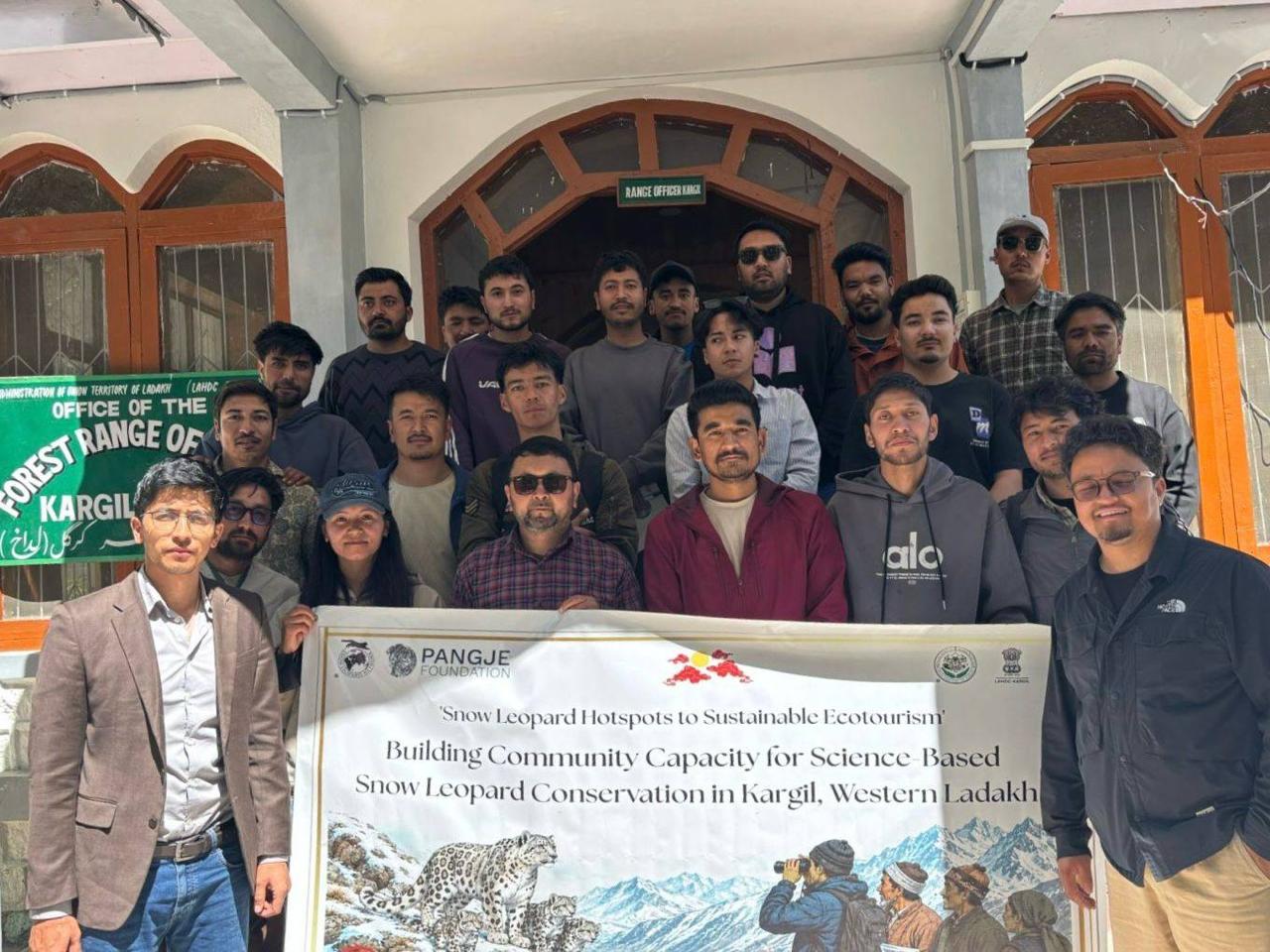
Kargil, May 22 : A four-day training programme for newly recruited wildlife guards concluded in Kargil on Thursday with the launch of a science-based snow leopard ecotourism initiative and renewed emphasis on community-led conservation efforts in Ladakh’s fragile mountain ecosystem.
The programme, organised by the Snow Leopard Network in collaboration with the Wildlife Protection Department Kargil, focused on strengthening field capabilities of frontline wildlife personnel while promoting scientific conservation practices and sustainable tourism linked to snow leopard habitats.
The concluding session also marked the formal inception of the initiative titled “Snow Leopard Hotspots to Sustainable Ecotourism: Building Community Capacity for Science-Based Snow Leopard Conservation in Kargil.”
Addressing participants virtually from Leh, Chief Wildlife Warden Ladakh S. Rajesh stressed the need for coordinated conservation efforts involving local communities, wildlife officials and tourism stakeholders. He said awareness and responsible tourism practices could play a crucial role in reducing human-wildlife conflict in ecologically sensitive regions.
Rajesh also underlined the importance of community participation and collective responsibility in ensuring long-term sustainability of wildlife conservation programmes in Ladakh.
The training programme was attended by Wildlife Warden Kargil Raza Ali Abidi, Director SLC Tsewang Namgail, wildlife experts and representatives of tourism and local organisations.
A total of 27 newly recruited wildlife guards participated in the programme and were advised to act as first responders in their respective areas while maintaining close coordination with local communities during wildlife management and conservation activities.
The training combined classroom sessions with practical field exposure aimed at equipping guards with modern wildlife monitoring and survey techniques.
On the opening day, wildlife expert Dr Niazul H. Khan and ornithologist Dr Iqbal Ali Khan delivered lectures on the biodiversity and wildlife landscape of Ladakh, with special focus on Kargil district. Discussions centred on regional fauna, avifauna and ecological conservation challenges in the trans-Himalayan region.
The second day featured field-based training in Drass, where participants received practical orientation in the use of wildlife survey tools such as GPS devices, rangefinders, spotting scopes and camera traps.
During field exercises, trainees recorded sightings of species including the Himalayan brown bear, Himalayan ibex and Long-tailed marmot, besides bird species such as the Fire-fronted serin and Blue whistling thrush.
Subsequent sessions focused on the taxonomy of medicinal plants found in Ladakh and practical training on snow leopard survey techniques and herbivore population assessment conducted in the Shargole Valley.
Officials associated with the programme said the initiative was aimed at strengthening scientific wildlife management while simultaneously creating livelihood opportunities through ecotourism rooted in conservation and local community participation.
