

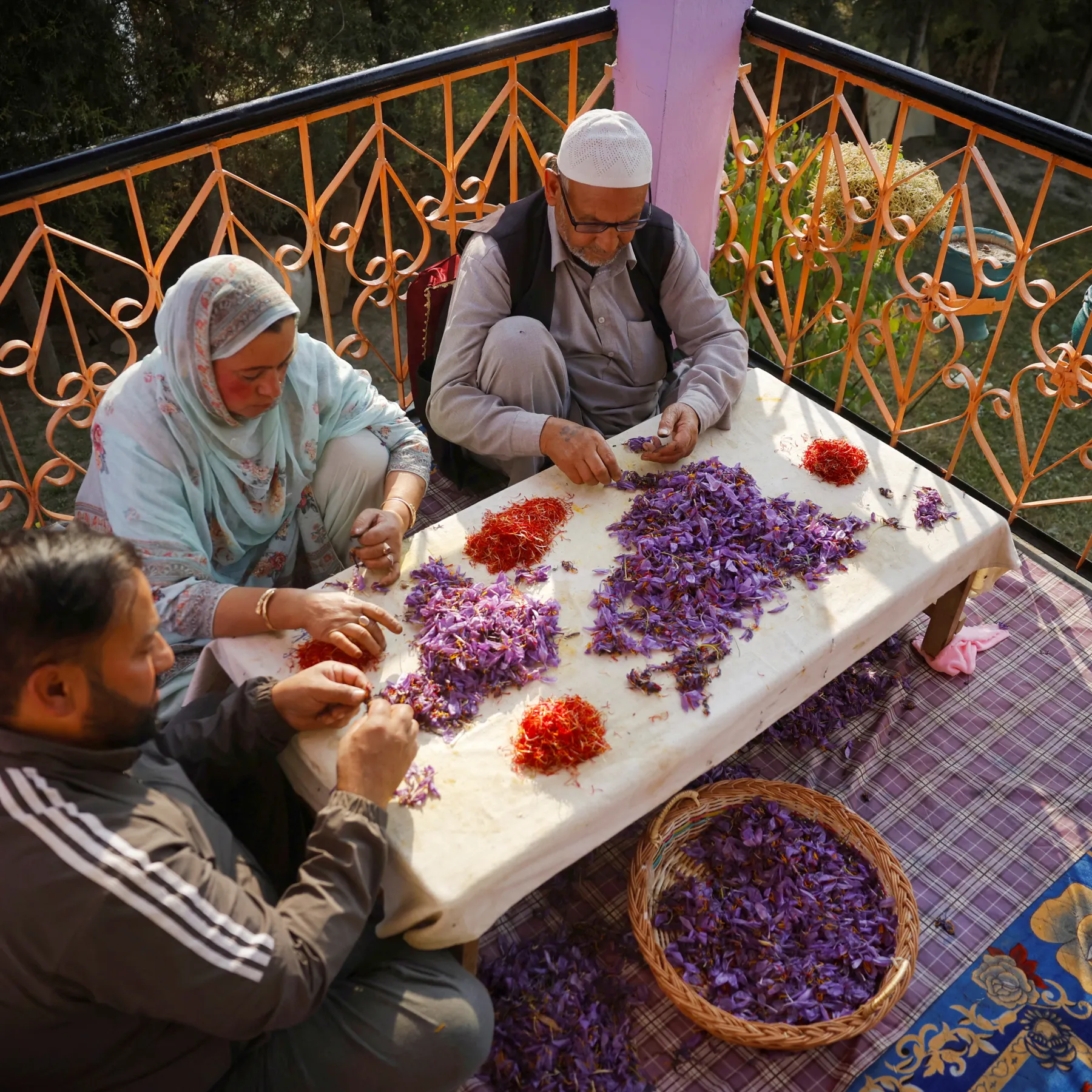
SRINAGAR, Feb 13: The Jammu & Kashmir Government disclosed in the Legislative Assembly that just eight of 124 community borewells planned under the ₹411-crore National Saffron Mission remain operational, with 77 lying defunct for years due to tender failures, legal hurdles, and obstruction by locals—exposing major gaps in the irrigation backbone meant to revive Kashmir’s iconic crop.
Responding to MLA Hasnain Masoodi’s query, officials explained the mission targeted 3,665 hectares of saffron land with borewells irrigating 30 hectares each via sprinklers. Of 85 handed to Agriculture, most stalled amid poor contractor response, disputes, and resistance from “caretakers, farmers, and miscreants.” Legal notices cite site blockages, unpaid work, and lack of admin/police support.
A probe committee confirmed four operational borewells each in Srinagar and Budgam; another panel under Awantipora’s Additional DC— including Pulwama’s Chief Agriculture Officer and others—will oversee weekly restoration checks, reporting to the District Development Commissioner.
Threats from real-estate encroachers in saffron belts prompted complaints to revenue officials. Yet, the government dismissed 2025 production crash claims, citing stable output: 17.33 MT (2020-21), peaking at 23.53 MT (2023-24), and 19.58 MT (2024-25). Cultivation holds at 3,715 hectares since 2010-11 (3,665 in Kashmir, 50 in Kishtwar).
Rejuvenation covered 2,598.75 hectares of 3,665, with 1,116.25 phased for 2026-27 planting (July-August). Productivity in revived areas hit 4.42 kg/ha (2023) from 2.50 kg/ha (2009-10). Mission highlights include the Indian Institute of Kashmir Saffron and Technology Centre (IIKSTC) boosting colour strength to 16% (from 8%) via scientific drying, and e-auctions lifting prices to ₹2.2 lakh/kg (2021-22) from ₹80,000/kg.
While claiming most goals met, officials conceded irrigation shortfalls persist, vowing stakeholder fixes to sustain Kashmir’s “red gold.”
