

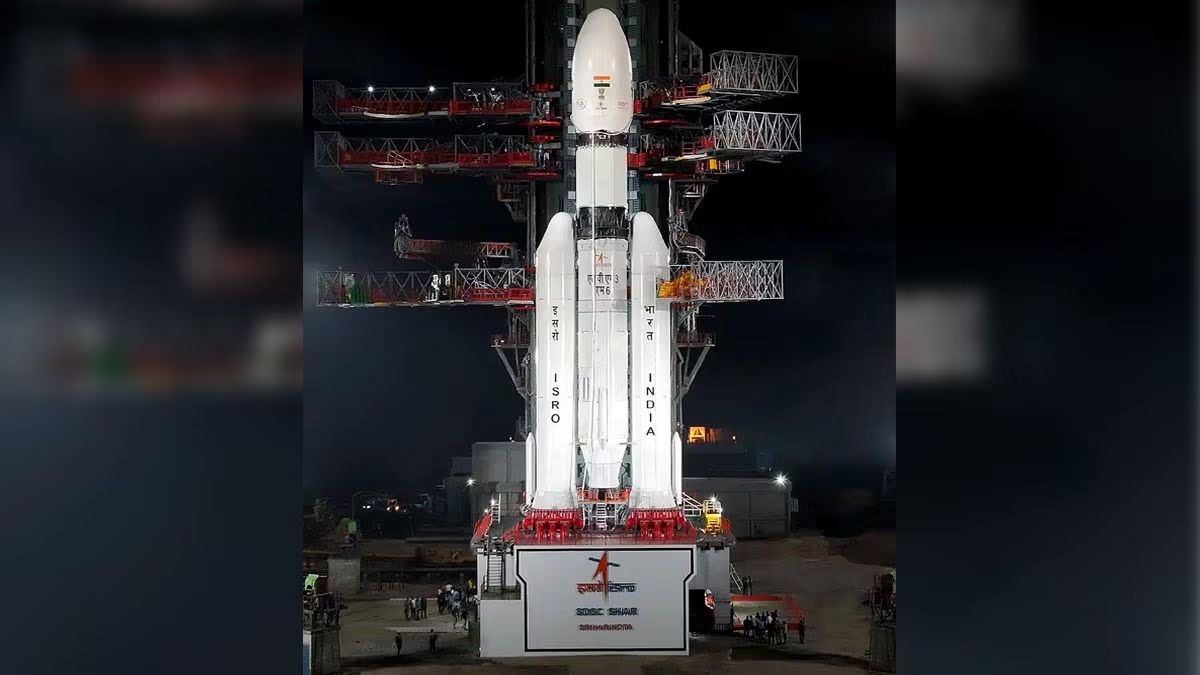
SRIHARIKOTA, Dec 21: In a landmark commercial venture, the Indian Space Research Organisation (ISRO) is gearing up for its high-profile LVM3 M6 mission, scheduled to lift off on December 24 from the Satish Dhawan Space Centre here. This ambitious launch will deploy the BlueBird Block-2 satellite, a cutting-edge next-generation communication spacecraft developed by US-based AST SpaceMobile, marking another milestone in India’s growing prowess in the global space commercialization arena.
The mission stems from a strategic commercial agreement between NewSpace India Ltd (NSIL)—ISRO’s commercial arm headquartered in Bengaluru—and AST SpaceMobile (AST & Science, LLC). BlueBird Block-2 represents a technological marvel, featuring the largest-ever 223 square meter phased array antenna for a commercial communications satellite destined for Low Earth Orbit (LEO). This massive payload will be the heaviest ever carried by the reliable LVM3 rocket, underscoring the vehicle’s evolving capabilities for heavy-lift operations.
AST SpaceMobile is at the forefront of revolutionizing global connectivity with the world’s first space-based cellular broadband network, designed to beam high-speed internet directly to unmodified smartphones without the need for traditional ground infrastructure. “We are on a mission to eliminate the connectivity gaps faced by today’s nearly six billion mobile subscribers and bring broadband to the billions who remain unconnected,” the company states prominently on its website. The network caters to both commercial users and government applications, promising seamless 4G and 5G services including voice calls, video streaming, texting, and high-volume data access—available to anyone, anywhere, at any time.
This upcoming satellite builds on AST SpaceMobile’s rapid progress, following the successful deployment of its first five BlueBird satellites (BlueBird 1-5) in September 2024. Those pioneering spacecraft already provide continuous internet coverage across the United States and select international regions. With partnerships forged with over 50 mobile network operators worldwide, the company is aggressively expanding its LEO constellation to deliver ubiquitous, 24/7 cellular broadband from space, bridging digital divides in remote and underserved areas.
The BlueBird Block-2 mission is a pivotal step in this global rollout, enhancing network capacity and coverage with its advanced direct-to-mobile connectivity architecture. ISRO officials highlighted that the satellite will enable users to make crystal-clear voice and video calls, browse the internet, stream content, and exchange data effortlessly, even in the most challenging terrains where terrestrial towers fall short.
LVM3, ISRO’s workhorse launch vehicle, has an impeccable track record that instills confidence in this venture. Past successes include the Chandrayaan-2 orbiter mission, the trailblazing Chandrayaan-3 lunar landing that made India the first nation to soft-land on the Moon’s south pole, and two high-capacity OneWeb missions deploying a total of 72 satellites. Most recently, on November 2, 2025, the LVM3-M5/CMS-03 mission flawlessly orbited another communications satellite, reaffirming the rocket’s reliability for both sovereign and commercial payloads.
As India cements its position as a preferred launch partner for international clients, this dedicated commercial launch not only boosts NSIL’s revenue streams but also showcases ISRO’s technical expertise on the world stage. Space enthusiasts and industry watchers will have their eyes glued to Sriharikota on December 24 as LVM3 roars to life, propelling BlueBird Block-2 into orbit and one step closer to a truly connected planet.
