

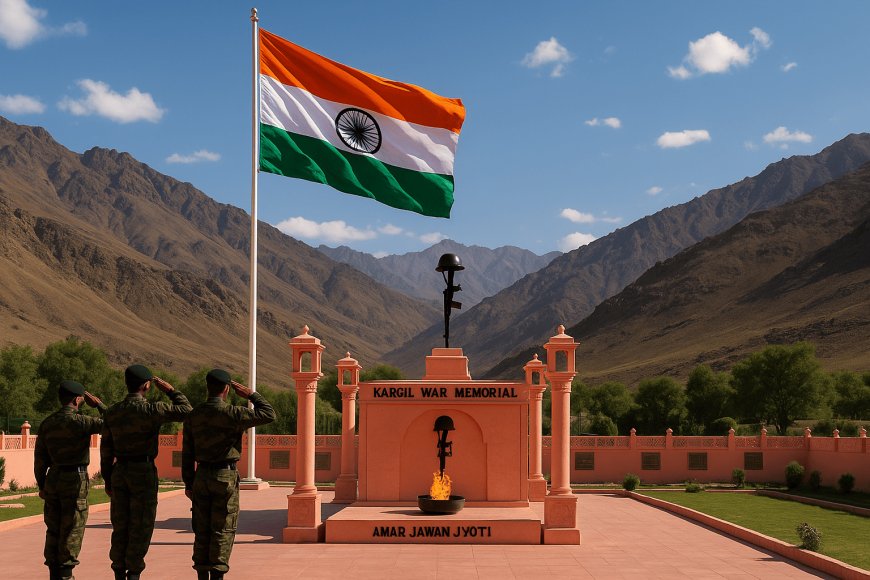
Every year on July 26th, India commemorates Kargil Vijay Diwas, a day etched into the nation’s collective memory with pride and solemn remembrance. This historic day marks the successful culmination of Operation Vijay in 1999, a pivotal moment in Indian military history. The Kargil War will forever be remembered for the unwavering determination, extraordinary valour, and unmatched bravery displayed by the soldiers of the Indian Army in the face of formidable challenges.
The Western Ladakh community continues to hold vivid memories of the courage and sacrifices made during the war. Their unwavering support to the Armed Forces remains a cornerstone of these annual commemorations. In the lead-up to Kargil Vijay Diwas, a series of events organized by the Indian Army not only pay tribute to the nation’s martyrs but also serve as a catalyst for regional development, youth and women empowerment, economic upliftment, and communal harmony.
Over the years, these commemorative activities have evolved from purely military traditions into dynamic platforms fostering development, tourism, education, cultural unity, and civil-military collaboration. They actively involve the local population, celebrating their integral role in the legacy of Operation Vijay.
Events such as the Recreation of Battlefield revive fading tales of heroism, inspiring the youth and honouring local contributions to the conflict. These reenactments are seen by the local population as the Army’s way of acknowledging both military history and the community’s heritage.
The concept of Human Libraries, such as the one inaugurated in Hanuyogpa by Col. (Retd.) Sonam Wangchuk, Maha Vir Chakra, serves as a living tribute to Ladakh’s unsung heroes. These interactive forums breathe life into oral history, fostering pride and connection between generations.
National Integration Tours further this spirit of inclusion by connecting students from remote villages with the broader Indian landscape. Visits to prestigious institutions like the Indian Institute of Science, Hindustan Aeronautics Limited, Indian Military Academy, and LBSNAA expose youth to opportunities they may never have otherwise imagined.
In a vibrant celebration of local culture, the Indian Army has made significant strides in preserving Ladakh’s unique heritage. Cultural shows featuring traditional music, folk dances, Army bands, and martial arts bring together diverse communities—Baltis, Dards, Purgis, Shias, Sunnis, and Buddhists—in a shared celebration of identity and unity. Events such as the Summer and Winter Carnivals at Dras and the Cultural Festival in Garkone stand as shining examples.
Though music and cultural fests like Sangam-e-Sur have occasionally been paused due to operational commitments, they remain an invaluable platform for locals to showcase traditional art forms, attire, crafts, and music. These festivals are instrumental in fostering cultural continuity, especially among the youth.
The Pre-KVD celebrations also deliver a tangible economic boost to the region. Events surrounding the 25th Kargil Vijay Diwas, such as the inauguration of the Shinkun La Tunnel, have brought about improved supply chains, better connectivity, and a rise in tourism. Local hospitality industries have experienced an uptick in demand, from hotels and guesthouses to taxi services and artisanal crafts. Families are increasingly joining the tourism value chain, offering homestays, guided tours, and cultural experiences that fuel grassroots economic growth.
The region’s dramatic landscape, coupled with the Army’s promotional efforts, has propelled Ladakh onto the national tourism map. Adventure activities like bike rallies and cyclothons have drawn tourists in droves. Tourist hotspots such as the Kargil War Memorial, Randhawa Top, and Indus View Point now see increased footfall. Newly inaugurated military tourism sites like Post 43 further enhance the region’s appeal.
A significant infrastructure transformation is visible throughout Ladakh, with the Indian Army, in collaboration with the Ladakh Autonomous Hill Development Council and civil authorities, spearheading projects that enhance the quality of life. Roads have been widened, bridges constructed, and schools and hospitals upgraded. These developments ensure better access to strategic locations, improved travel time, and heightened connectivity for locals and visitors alike.
The Army’s community outreach initiatives provide critical support to local populations. Veterans and civilians who played key roles during the Kargil War are honoured through personal interactions and public felicitations. This builds a strong bridge between the Army and civil society, creating avenues for locals to voice concerns and seek assistance.
Medical camps organized during the celebrations have become vital healthcare touchpoints in remote areas. These offer general health check-ups, pediatric services, and women’s wellness support, effectively filling the healthcare void in isolated villages.
The Tashi Namgyal Memorial, recently established, honors the sacrifices of the local populace and fosters a deep emotional connection with the nation. Similarly, the inauguration of national flags at Lamochan and Zoji La War Memorial serve as visual affirmations of unity and pride for residents, inspiring local schoolchildren and youth with tangible symbols of sacrifice and patriotism.
Various sports competitions dedicated to war heroes inject a spirit of healthy competition and national pride among youth. Tournaments in football, volleyball, cricket, archery, and athletics are named after local heroes, fostering remembrance and motivation. Events like the Shauryathon amplify this patriotic fervour while encouraging youth to consider careers in the Armed Forces.
Ladakhi students also participate in school-level activities such as painting competitions, debates, and motivational tours to memorial sites. Events like the Garkone Music and Cultural Festival and the “Veergatha” storytelling initiative help young minds internalize the values of courage, sacrifice, and service through real-life soldier accounts.
Perhaps the most transformative outcome of these pre-Kargil Vijay Diwas events is the strengthened civil-military cooperation. Jointly planned by military units, local leadership, and civil administration, these programmes ensure development that is both inclusive and aligned with community needs. The local population is not just a passive audience but an active participant, often volunteering for these initiatives, fostering a deep sense of ownership and accountability.
Pre-Kargil Vijay Diwas is more than a calendar event. It is a living journey of remembrance, empowerment, and unity. Far from being a ceremonial tradition, it has grown into a heartwarming community-driven movement that uplifts the people of Ladakh and embodies the spirit of national solidarity. It reinforces that when empathy, development, and engagement intersect, even the remotest regions can emerge as vibrant contributors to national progress. From children to the elderly, everyone is not just commemorating a historic victory—they are actively evolving together.
From the Battlefield to the Heartland: How Kargil Vijay Diwas is Empowering Ladakh
community development Ladakh cultural festivals Ladakh India civil military cooperation Indian Army in Ladakh Indian Army Initiatives Kargil Vijay Diwas Kargil War Memorial Ladakh Ladakh infrastructure Ladakh News Ladakh Tourism Leh military tourism India Operation Vijay Patriotism in India Pre-Kargil Vijay Diwas events The Earth News Women Empowerment youth empowerment Ladakh
