


Tel Aviv/Tehran, Jun 24: Explosions were heard in Tehran on Tuesday from Israeli airstrikes, even though U.S. President Donald Trump said he had told Israel to stop its attacks in order to protect a newly agreed ceasefire.
Two people in Tehran said by phone that they heard two loud blasts. Israel later confirmed it had targeted a radar site near Tehran. The Israeli Prime Minister’s office said it was in response to Iranian missiles launched hours after the ceasefire was supposed to begin.
Although Israel said it stopped further attacks after a phone call between Prime Minister Benjamin Netanyahu and President Trump, it didn’t clarify whether the radar strike happened before or after that conversation.
The news of a possible end to the conflict between Israel and Iran brought down oil prices and boosted global stock markets, as it reduced fears about disruptions to oil supplies from the Gulf.
While traveling to a NATO meeting in the Netherlands, Trump sharply criticized Israel, despite supporting its military actions earlier in the conflict. On Truth Social, he wrote:
“All planes will turn around and head home, while doing a friendly ‘Plane Wave’ to Iran. Nobody will be hurt, the Ceasefire is in effect!”
Earlier, he had posted:
“Israel. Do not drop those bombs. If you do it it is a major violation. Bring your pilots home, now!”
Before leaving Washington, Trump told reporters that both Israel and Iran had violated the ceasefire, but he was especially upset with Israel for launching attacks right after the agreement.
“I’ve got to get Israel to calm down now,” Trump said. “Iran and Israel have been fighting so long and so hard that they don’t know what they’re doing.”
According to a U.S. journalist, Netanyahu told Trump that Israel would reduce its bombing instead of fully canceling it.
Israel’s Defense Minister said he had ordered major strikes on Tehran in response to what he called a “clear violation” of the ceasefire by Iran. But Iran denied firing any missiles and claimed Israel kept attacking for over an hour after the ceasefire was meant to start.
Despite the violence, there were signs of relief in both countries. Many hoped the fighting was finally over, 12 days after it began with a surprise Israeli attack and just two days after U.S. forces joined in by striking Iranian nuclear sites.
In Tehran, Reza Sharifi, a 38-year-old man returning home with his family, said:
“We’re happy, very happy. Who mediated or how it happened doesn’t matter. The war is over. It never should have started in the first place.”
In Tel Aviv, Arik Daimant, a software engineer, said:
“It’s a bit too late for me and my family—our house was destroyed in the bombings. But better late than never. I hope this ceasefire is a new beginning.”
Speaking aboard Air Force One, Trump said he was not seeking to overthrow Iran’s leadership.
“I don’t want that. I just want things to calm down. Regime change brings chaos, and we want to avoid that.”
He added:
“Iran’s not going to have a nuclear weapon. I think that’s the last thing on their mind right now.”
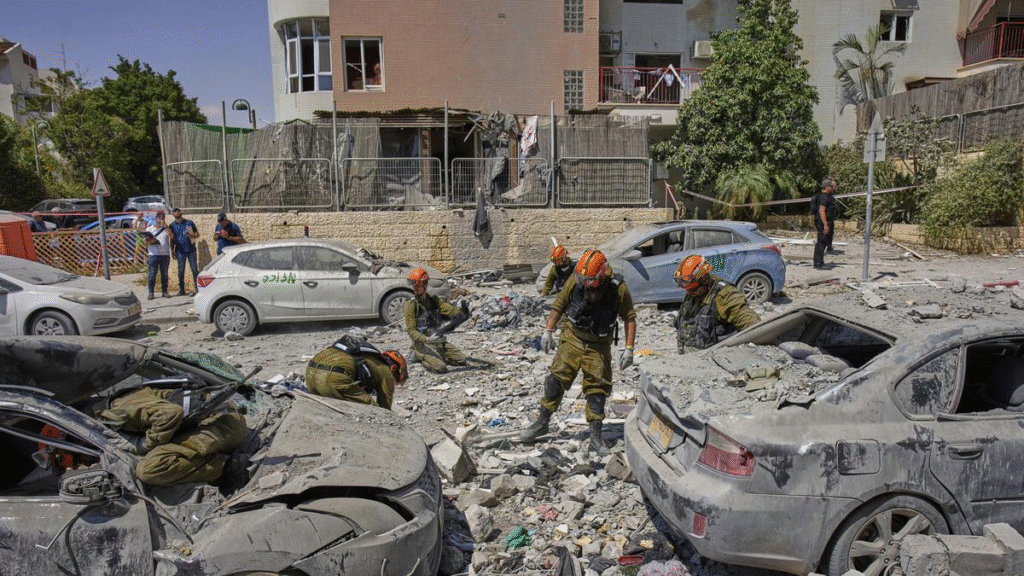
Earlier on Tuesday, four people were killed in Israel when Iranian missiles hit a residential building in Beersheba. In return, Iran said nine people died in a strike on a building in northern Iran.
The conflict began on June 13, when Israel launched a surprise attack that hit Iranian nuclear sites and killed top military leaders. Israel had even warned it might try to remove Iran’s ruling government if needed.
Iran insists its nuclear program is peaceful and denies trying to build nuclear weapons.
Iran says hundreds have been killed in Israeli airstrikes, but it’s difficult to confirm the full extent of the damage because of strict media controls.
In retaliation, Iranian missile strikes have killed 28 people in Israel—marking the first time that many Iranian missiles made it past Israeli defenses.
A senior U.S. official said Trump helped broker the ceasefire with Netanyahu. Meanwhile, officials in Qatar helped secure Iran’s agreement through direct calls with Iranian leaders.
Just before the ceasefire started, Iran had fired missiles at a large U.S. base in Qatar. No one was injured, and Iran appeared to warn the U.S. in advance, possibly to avoid escalation. Trump later thanked Iran for that warning.
