

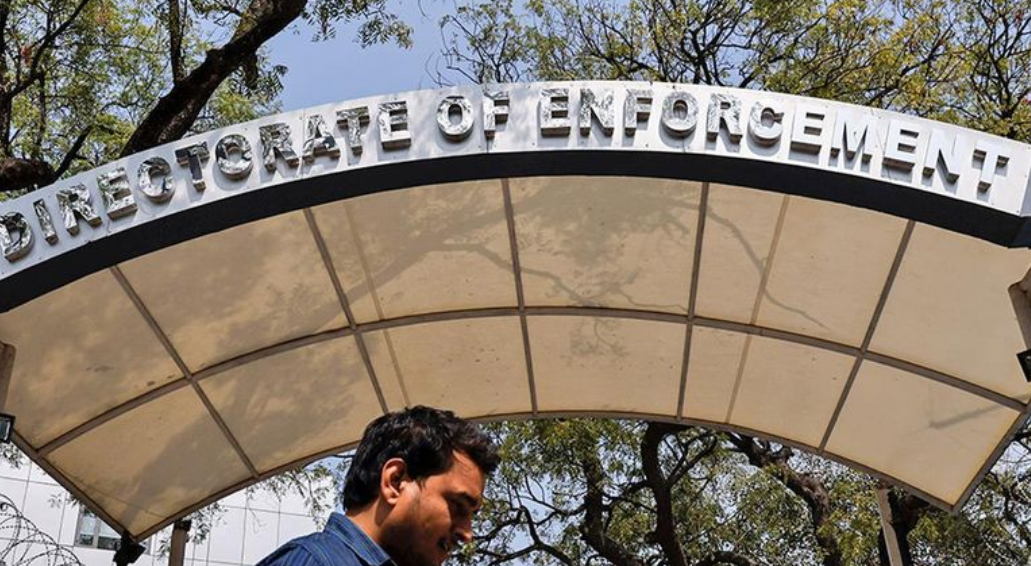
NEW DELHI, OCT 10: The Enforcement Directorate (ED) has arrested Rakesh Kumar Gupta, chairman of the Delhi-based Sadhna Group, in a money laundering case linked to alleged irregularities in insolvency proceedings under the Insolvency and Bankruptcy Code (IBC), officials said on Saturday.
Gupta, 63, was arrested in Delhi on Friday at around 10:25 pm under the provisions of the Prevention of Money Laundering Act (PMLA).
He was produced before a court at around 2 am on Saturday. The court subsequently remanded him to five days of ED custody, although the agency had sought seven days for further interrogation.
Alleged Insolvency Irregularities Under Investigation
The case stems from a September FIR registered by the Economic Offences Wing (EOW) of Delhi Police.
According to the complaint, Gupta allegedly orchestrated the insolvency of Sadhna Media Pvt. Ltd. (SMPL) through related creditors who controlled 99.41 per cent of the company’s Committee of Creditors.
Investigators allege that the process resulted in outstanding Income Tax dues of ₹110.10 crore being settled for just ₹20 lakh.
The businessman is also accused of receiving more than ₹2 crore in cash through cryptocurrency and hawala channels in connection with the resale of SMPL and Aryan TV.
The complaint further alleges that SMPL paid ₹4.48 crore to connected creditors, including ₹2.99 crore to Gupta’s company, Sharpline Broadcast.
ED Puts Alleged Proceeds Of Crime At ₹168 Crore
According to the agency’s submissions before the court, the alleged proceeds of crime in the case amount to approximately ₹168 crore.
The ED also referred to a Securities and Exchange Board of India (SEBI) order issued in May 2025, which reportedly identified Gupta as the alleged mastermind behind manipulation of Sadhna Broadcast shares and held him jointly and severally liable for approximately ₹58 crore.
Court Rejects Defence’s Objections To Arrest
Gupta’s defence counsel argued that neither SEBI nor the Income Tax Department had filed a complaint against him. The counsel also submitted that Gupta had obtained a tax no-dues certificate and had paid a penalty imposed by SEBI.
However, the court rejected the argument that the absence of a separate complaint from these departments made the ED’s action illegal.
The court observed that the SEBI order, although reportedly under challenge, indicated that the allegations warranted investigation.
It also stated that the existence of an earlier National Company Law Tribunal (NCLT) order from 2024 did not prevent the ED from investigating allegations involving a potential loss of more than ₹100 crore to the public exchequer.
The court noted that investigators still needed to examine the alleged money trail, which reportedly passed outside formal banking channels, and analyse data retrieved from seized electronic devices.
The investigation is continuing, and the allegations against Gupta remain subject to legal proceedings.
