

Overcoming nature’s toughest challenges with innovation and real-time design
Jammu, Jun 09: The Chenab Bridge in Jammu and Kashmir, now the world’s highest railway bridge, was officially inaugurated by Prime Minister Narendra Modi on Friday. This remarkable structure is part of the 272-kilometer Udhampur-Srinagar-Baramulla Railway Link (USBRL), a project that received approval back in 2003.
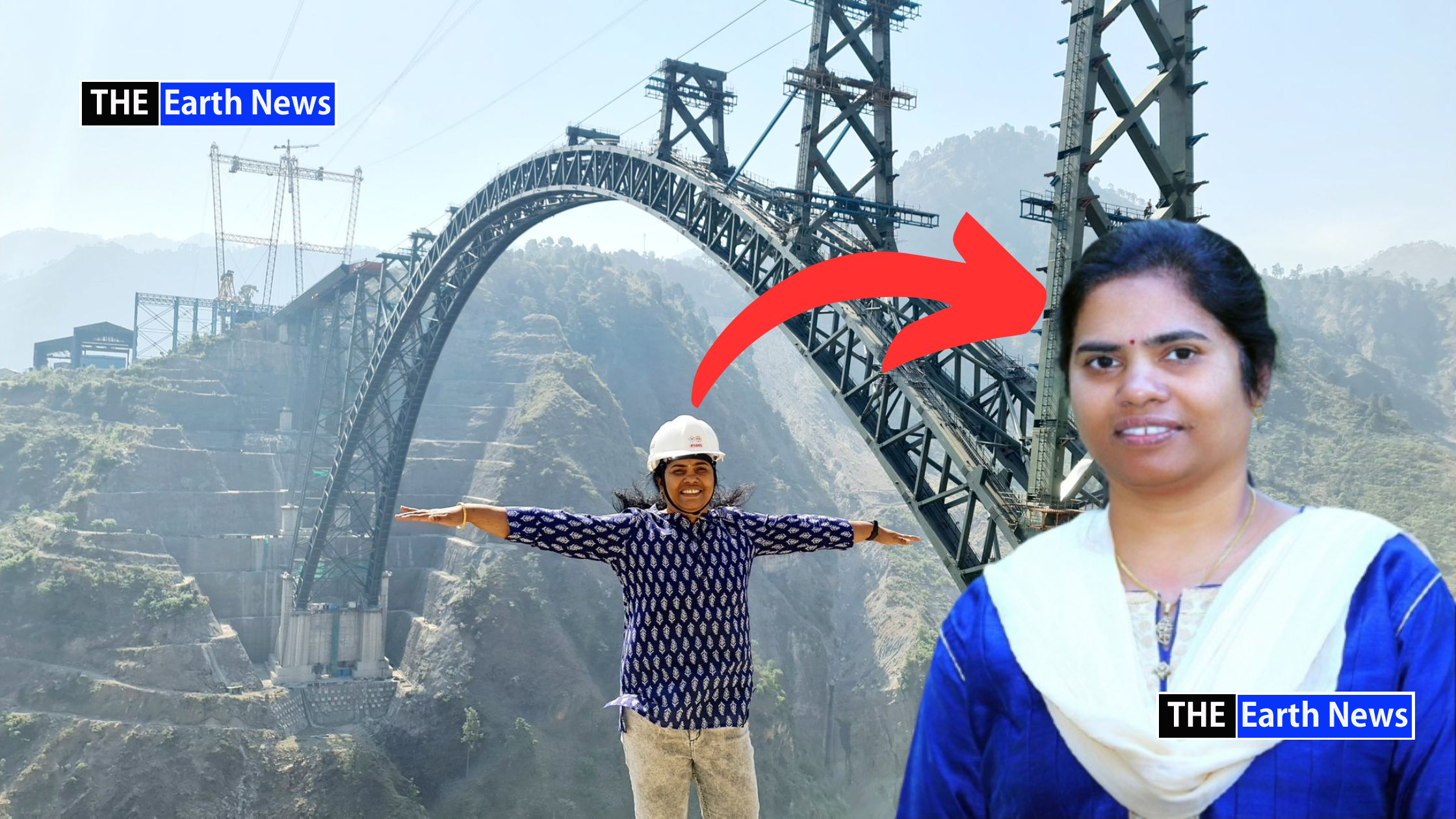
A key figure behind the successful completion of the Chenab Bridge is Professor G Madhavi Latha from the Indian Institute of Science (IISc) in Bengaluru. She served as the geotechnical consultant for 17 years, playing a vital role in overcoming the challenges posed by the difficult terrain. Working closely with Afcons, the main contractor, Dr. Latha contributed to the planning, design, and construction phases, focusing on solutions for the complex geological conditions.
Dr. Madhavi Latha holds a B.Tech in Civil Engineering from Jawaharlal Nehru Technological University, where she graduated with first-class distinction in 1992. She earned a gold medal during her M.Tech studies at the National Institute of Technology, Warangal, specializing in Geotechnical Engineering. She completed her Ph.D. from IIT Madras in 2000, further solidifying her expertise in this field.
Throughout her career, Dr. Latha has received numerous awards, including the Best Woman Geotechnical Researcher award from the Indian Geotechnical Society in 2021. She was also recognized as one of the Top 75 Women in STEAM in India in 2022.
The construction of the Chenab Bridge faced major challenges due to the region’s tough topography, harsh weather, and remote location. Dr. Latha’s team adopted an innovative “design-as-you-go” strategy to address these obstacles. This approach involved making real-time adjustments based on actual geological conditions encountered during construction, such as fractured rocks, hidden cavities, and varying rock strengths that were not visible in initial surveys. Their work included complex calculations and design changes, especially in the placement of rock anchors to ensure the bridge’s stability.
Dr. Latha recently shared insights on this unique approach in a paper titled “Design as You Go: The Case Study of Chenab Railway Bridge,” published in the Indian Geotechnical Journal’s special issue for women. The paper highlights how the bridge’s design evolved continuously while maintaining the core structure, location, and type to adapt to site-specific geological conditions.
Built at a cost of Rs 1,486 crore, the Chenab Bridge stands as one of the most significant civil engineering feats in recent Indian railway history. Measuring 359 meters in height, it surpasses the Eiffel Tower by 35 meters. This landmark project is expected to greatly enhance connectivity in the Kashmir Valley, providing a crucial link to the region.
