

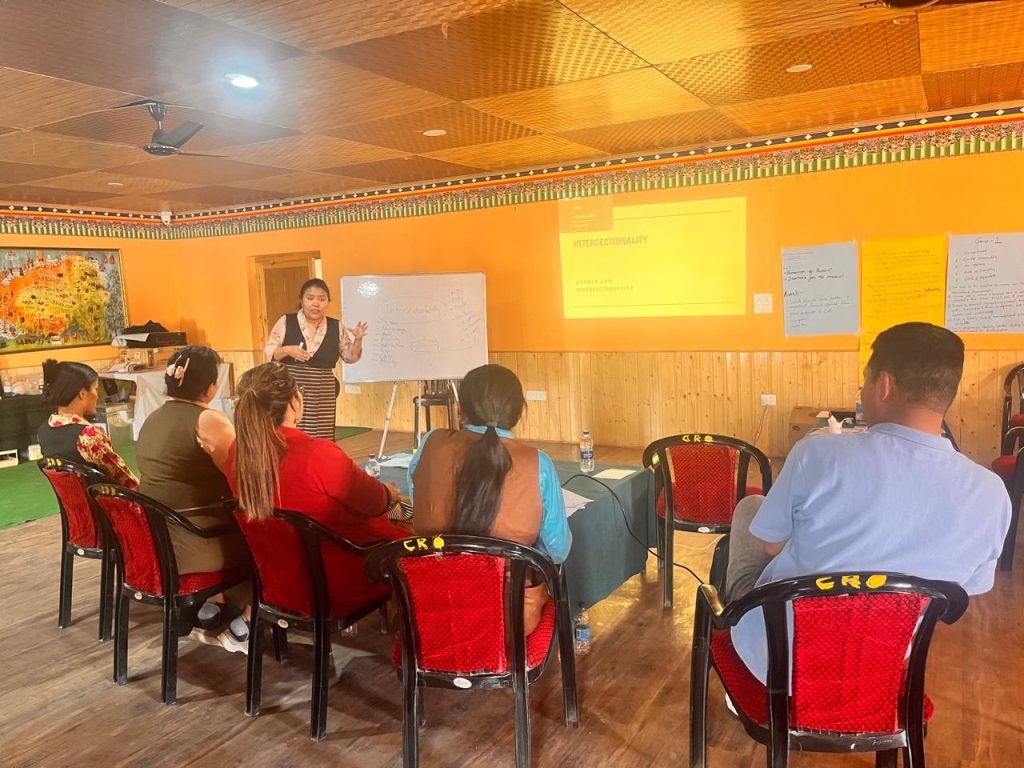
Leh, Oct 03: The Women’s Empowerment Desk wrapped up a five-day official visit to the Sonamling Tibetan Settlement in Ladakh, conducting targeted workshops on gender equality and the prevention of gender-based violence from September 15 to 19
This outreach by the desk, part of the Central Tibetan Administration’s broader mission to support exiled communities, engaged local committees, leaders, and youth in discussions designed to strengthen protections against such harms.
The program featured a two-day workshop for members of the settlement’s committee on sexual and gender-based violence, providing practical guidance on response strategies and community protocols.
A separate one-day session brought together camp leaders and stakeholders for gender sensitization training, while a two-day workshop catered specifically to 10th-grade students at the Tibetan Children’s Village in Ladakh, encouraging early awareness of equitable practices.
Through these gatherings, facilitators stressed the essential functions of schools and neighborhoods in halting violence, enforcing bans on abusive behaviors, and offering remedies to those affected, all while nurturing environments that promote inclusion and safety for every individual in the Tibetan diaspora.
Formed in 2006 under the Central Tibetan Administration headquartered in Dharamsala, the Women’s Empowerment Desk has spearheaded numerous projects to uplift women in exile, including the rollout of comprehensive guidelines to combat sexual and gender-based violence across settlements.
These guidelines, which define violence rooted in biological sex or gender identity, outline prevention measures and redressal processes that have been integrated into community operations through orientations and helplines.
In the Sonamling Settlement, established in 1960 and home to approximately 7,000 refugees amid the stark Himalayan landscape, such interventions address persistent vulnerabilities exacerbated by displacement and cultural transitions.
Research into gender-based violence within Tibetan refugee groups in India reveals patterns influenced by statelessness, with calls for tailored education to mitigate domestic and societal harms.
Efforts like the Tibetan Women’s Helpline, launched to offer immediate aid and information, exemplify ongoing responses to these issues, particularly in remote areas where access to external support remains limited.
The recent workshops in Ladakh build upon earlier campaigns, such as a 2019 initiative featuring survivor stories to break silence on violence, and align with the administration’s commitment to human rights education for youth.
Settlement officials noted the positive reception among participants, who explored topics ranging from traditional roles to contemporary empowerment tools during the sessions. As one of the largest Tibetan enclaves in India, Sonamling benefits from its cooperative structure, which aids in sustaining livelihoods while preserving heritage, yet faces added pressures from environmental factors and regional dynamics.
The visit also coincided with administrative transitions, including the appointment of a new chief representative officer earlier in the year, fostering renewed focus on community welfare.
With Tibetan refugees numbering over 100,000 in India since the 1959 exodus, programs from the Women’s Empowerment Desk continue to bridge gaps in isolated locales like Ladakh, where high-altitude living intersects with cultural preservation needs. Attendees left the workshops equipped with action plans, pledging to implement learned strategies in daily interactions and school curricula, thereby extending the reach of these empowerment drives into the fabric of settlement life.
