

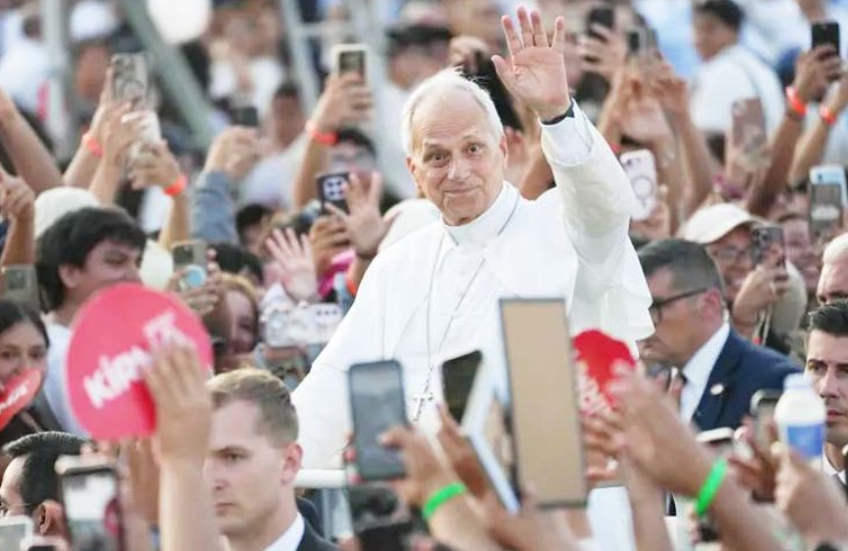
ZANA (PERU), NOVEMBER 14: Pope Leo XIV’s visit to the historic town of Zana, a centre of Afro-Peruvian culture, has brought renewed attention to the legacy of the African slave trade and the struggles of Peru’s Black community for equality and recognition.
The significance of the visit was reflected in the performance of Latin Grammy-winning Afro-Peruvian singer Susana Baca, who welcomed the Pope with music upon his arrival in Peru. Baca, the country’s first Black Cabinet minister, has been a prominent voice against discrimination faced by Black and Indigenous communities.
Pope Leo is scheduled to lead a prayer meeting on Saturday at the sanctuary of St Turibius of Mogrovejo in Zana. The pontiff has a personal connection with the town, having visited it frequently during his tenure as bishop of nearby Chiclayo.
St Turibius of Mogrovejo, who served as the first Archbishop of Lima in the 16th century, was known for defending the rights of Indigenous and enslaved people. He also confirmed St Martin de Porres, regarded as the first Black saint of the Americas and a symbol of racial harmony and social justice.
Pope Seeks Forgiveness for Church’s Role in Slavery
In his first encyclical, titled Magnificent Humanity, Pope Leo issued an apology for the role played by previous popes in legitimising slavery and failing to condemn the practice over several centuries.
He referred to historical Vatican directives from the 15th century that authorised European powers to conquer territories in Africa and the Americas and enslave non-Christians.
Expressing regret over the suffering caused by slavery, the Pope sought forgiveness on behalf of the Church, acknowledging the humiliation and injustice endured by millions of people.
Historical records indicate that around 100,000 Africans were brought to Peru as slaves following the arrival of Spanish conquistadors. They were forced to work on sugar plantations and in silver mines, while others became artisans in urban centres.
At one point, people of African descent and their descendants accounted for more than 40 per cent of Lima’s population. Today, they represent a small share of Peru’s population of approximately 35 million and continue to face social and economic challenges more than 170 years after emancipation.
According to Peru’s 2017 national census, 1,311 residents of Zana identified themselves as Afro-Peruvian, while the wider Lambayeque region recorded 78,639 people belonging to the community.
Susana Baca Says Forgiveness Connects Her to Pope
Baca said she felt a strong connection with Pope Leo because of his emphasis on acknowledging historical injustices and seeking forgiveness.
She said the Afro-Peruvian community had endured centuries of suffering but had managed to preserve its identity, culture and traditions.
Baca described forgiveness as an important part of the community’s history and said the Pope’s teachings on seeking and granting forgiveness resonated with her own beliefs.
During her performance, she chose two songs, Cancion de Fe (Song of Faith) and Si me quitaran totalmente todo (If Everything Were Taken From Me), which she said reflected the shared importance of faith.
Zana Recognised for Its Afro-Peruvian Heritage
Zana, a historic town in Peru’s northern Chiclayo province, was recognised by UNESCO in 2017 as a “site of memory of slavery and African cultural heritage”.
The Peruvian government described the recognition as the first of its kind for an Afro-descendant community in the country or comparable communities along South America’s Pacific Coast.
Former Culture Minister Salvador del Solar had highlighted the resilience of Zana’s people, saying the community had survived slavery and repeated natural disasters while continuing to preserve its Afro-descendant identity.
The Pope’s return has generated pride among local residents, particularly because of his family’s African ancestry and the recognition he has given to historical injustices.
Local chef and poet Felipe Gutierrez, known as Frontado, said the community felt proud of both Baca’s performance and the Pope’s African roots.
Historical census records from 19th-century Louisiana indicate that all four of Pope Leo’s maternal great-grandparents were classified as “free people of colour”. His maternal ancestry reflects the region’s French, Spanish, African and Native American cultural influences.
Museum Preserves the Community’s History
Zana’s Afro-Peruvian Museum houses historical photographs, plantation carts, African-origin percussion instruments from Peru, Cuba and Brazil, as well as documents relating to enslaved people and shackles used to restrain them.
The museum also displays photographs of Pope Leo from his earlier visits to the town, alongside images of former US President Barack Obama and South African anti-apartheid leader Nelson Mandela.
Gutierrez said these figures represented the possibility of overcoming discrimination and achieving equal rights, regardless of race or background.
He emphasised that Black and Indigenous communities deserved the same dignity and opportunities as everyone else, adding that all people were equal in the eyes of God.
The Pope’s visit has therefore become more than a religious occasion for Zana, serving as an opportunity to celebrate Afro-Peruvian heritage, remember the painful history of slavery and renew calls for equality and recognition.
