

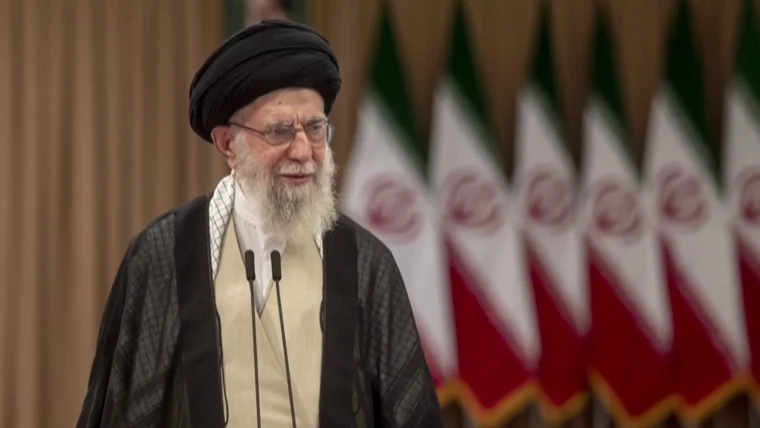
Dubai, Mar 1: Ayatollah Ali Khamenei, the unyielding architect of modern Iran’s theocratic rule, who spent decades consolidating power, transforming the nation into a defiant regional force, and clashing head-on with Israel and the United States over its nuclear ambitions—all while brutally suppressing waves of domestic dissent—has died at 86.
Iranian state media announced his passing early Sunday, following a devastating joint military strike by Israel and the United States. US President Donald Trump confirmed hours earlier that Khamenei had been killed in the operation, marking a dramatic end to one of the Middle East’s most enduring and polarizing figures.
Khamenei reshaped the Islamic Republic after stepping into the supreme leader’s role following Ayatollah Ruhollah Khomeini’s death in 1989. Khomeini, the charismatic revolutionary who toppled the shah and enshrined Shiite clerical dominance to export religious zeal, left a towering legacy. It was Khamenei—a more reserved, less scholarly cleric—who turned that fiery vision into a sprawling, resilient state machine.
Outlasting Khomeehran latest newsini by decades, he vastly expanded the Shiite clerical elite and elevated the paramilitary Revolutionary Guard into Iran’s powerhouse institution. The Guard evolved into a military juggernaut, commanding the nation’s ballistic missiles, elite forces, and vast economic empires across key sectors, all loyal to Khamenei above all.
Yet, mounting pressures tested his grip. Political crackdowns and a crumbling economy ignited massive protests, growing bolder over time. The 2022 death of Mahsa Amini, arrested for improperly wearing her mandatory headscarf, sparked nationwide fury against social controls. By early January, hundreds of thousands flooded streets in cities everywhere, their chants raw: “Death to Khamenei.”
His regime unleashed its bloodiest response in nearly 50 years, with security forces firing on crowds and killing thousands.
Meanwhile, the Middle East’s turmoil accelerated Khamenei’s downfall. Hamas’s October 7, 2023, assault on Israel unraveled his prized “Axis of Resistance.” Direct Israel-Iran strikes broke out in 2024, escalating when Israel hammered Iran again in June 2025—targeting its nuclear sites, top generals, and scientists—prompted by a US-Israel push. Iran fired back with missiles and drones at Israel.
Khamenei’s death now throws the Islamic Republic’s future into chaos. The 88-member Assembly of Experts, packed with hard-line clerics, must select a successor—but no obvious heir awaits. As Trump greenlit the February bombing, he urged Iranians: “Take over your government.”
Born into a devout family in Mashhad, Iran’s northeastern holy city and a cradle of anti-shah resistance, Ali Khamenei imbibed revolutionary fire early. Like countless Iranian leaders, he trained under Khomeini at Qom’s seminary in the early 1960s, before the ayatollah’s exile.
Khamenei plunged into the anti-shah fight, enduring prison and exile. Khomeini’s triumphant 1979 return saw Khamenei join the shadowy Revolutionary Council. Elected Iran’s third president in 1981, he survived a bombing that paralyzed his right hand.
With his signature thick glasses and subdued presence, Khamenei lacked Khomeini’s piercing charisma or deep religious stature—he held the modest rank of hojatolislam. Thrust into supreme leadership, he rocketed to grand ayatollah status amid whispers of doubt over his credentials.
He owned the skepticism humbly in his debut address: “I am an individual with many faults and shortcomings, truly a minor seminarian.” Lacking flair, he steadied Iran post-Iraq war and ruled for over three decades, outpacing Khomeini. Hard-liners revered him near-divinely, as he built a web of clerics and agencies that funneled all power to him. He shielded the Revolutionary Guard from post-war cuts, letting it seize economic dominance and bypass elected civilians through loyal appointees.
Khamenei eyed the US as the “Great Satan,” dismissing even Barack Obama’s 2009 olive branch. Brushing off UN sanctions, he drove Iran’s nuclear program—accused by the West of concealing a weapons quest until 2003. He issued a fatwa deeming nukes un-Islamic but insisted on “peaceful” nuclear rights.
The 2015 deal with world powers slashed Iran’s uranium stockpile for sanctions relief, but Trump’s 2018 pullout—claiming it fell short—revived tensions, pushing enrichment toward weapons-grade levels.
Khamenei’s early test came in 1997: Reformists swept parliament, and Mohammad Khatami won the presidency on youth fervor, demanding freer media, looser social codes, and Western ties. Khamenei and allies quashed it—vetoing laws, purging lawmakers, and restoring hard-liners by 2004.
Western influences persisted despite bans: Satellite dishes dotted Tehran roofs, social media thrived covertly—even among elites.
Amini’s 2022 death reignited fury, killing over 500 and jailing tens of thousands. By late December 2025, economic woes fueled the largest uprising yet—hundreds of thousands demanding the Islamic Republic’s end.
Khamenei’s era of control ends in flames, leaving Iran at a crossroads.
