

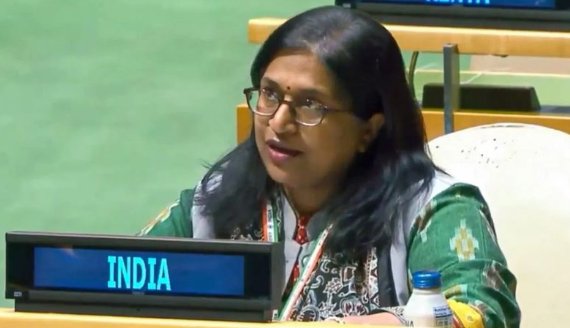
UNITED NATIONS, Aug 20: India has urged the UN Security Council to ensure that its membership is not used to advance narrow political interests or to “legitimise” terrorists by manipulating the sanctions-listing process.
Addressing an open debate on the Council’s working methods, India’s Charge d’Affaires at the UN, Ambassador Yojna Patel, called for greater transparency and objectivity in the listing and de-listing of terrorists and terror organisations.
“Security Council membership brings significant responsibilities. This must not become a platform to pursue narrow political interests,” Patel said.
She stressed that decisions to list or remove individuals and entities from the Council’s sanctions regimes should be based on objective criteria and supporting evidence, rather than political considerations.
India has repeatedly criticised the lack of transparency in the functioning of UNSC sanctions committees, particularly over proposals that are rejected or placed under technical holds without detailed explanations.
New Delhi has also raised concerns over the functioning of the 1267 Al-Qaida Sanctions Committee, arguing that blocking evidence-based proposals to designate internationally sanctioned terrorists undermines the Council’s commitment to fighting terrorism.
India has in the past faced obstacles in its efforts to designate Pakistan-based terrorists, with China, a permanent member of the Security Council, blocking or placing holds on several proposals.
Patel also expressed concern over delays in appointing chairs and vice-chairs of the Council’s subsidiary bodies, including the 1267 Al-Qaida and Taliban sanctions committees.
She called for the issue to be resolved urgently and for a “definitive and non-negotiable” timeline to be established for the appointment of chairs.
India further sought greater transparency for elected non-permanent members of the Council in key processes, including the selection of the UN Secretary-General.
Patel said reform of the Security Council was more urgent than ever, noting that the UN’s membership has increased four-fold since 1945.
“The world of 1945 has changed beyond recognition,” she said, stressing that the composition and working methods of the Council cannot remain determined indefinitely by the outcome of a conflict eight decades ago.
