

Yash Khajuria
Leh, Feb 17: Nearly fifteen months after it was unveiled as a practical answer to Ladakh’s growing plastic waste crisis, the much-publicised project to convert discarded plastic waste into road construction material has failed to move beyond paperwork, exposing gaps in coordination between the Union Territory administration and the Border Roads Organisation.
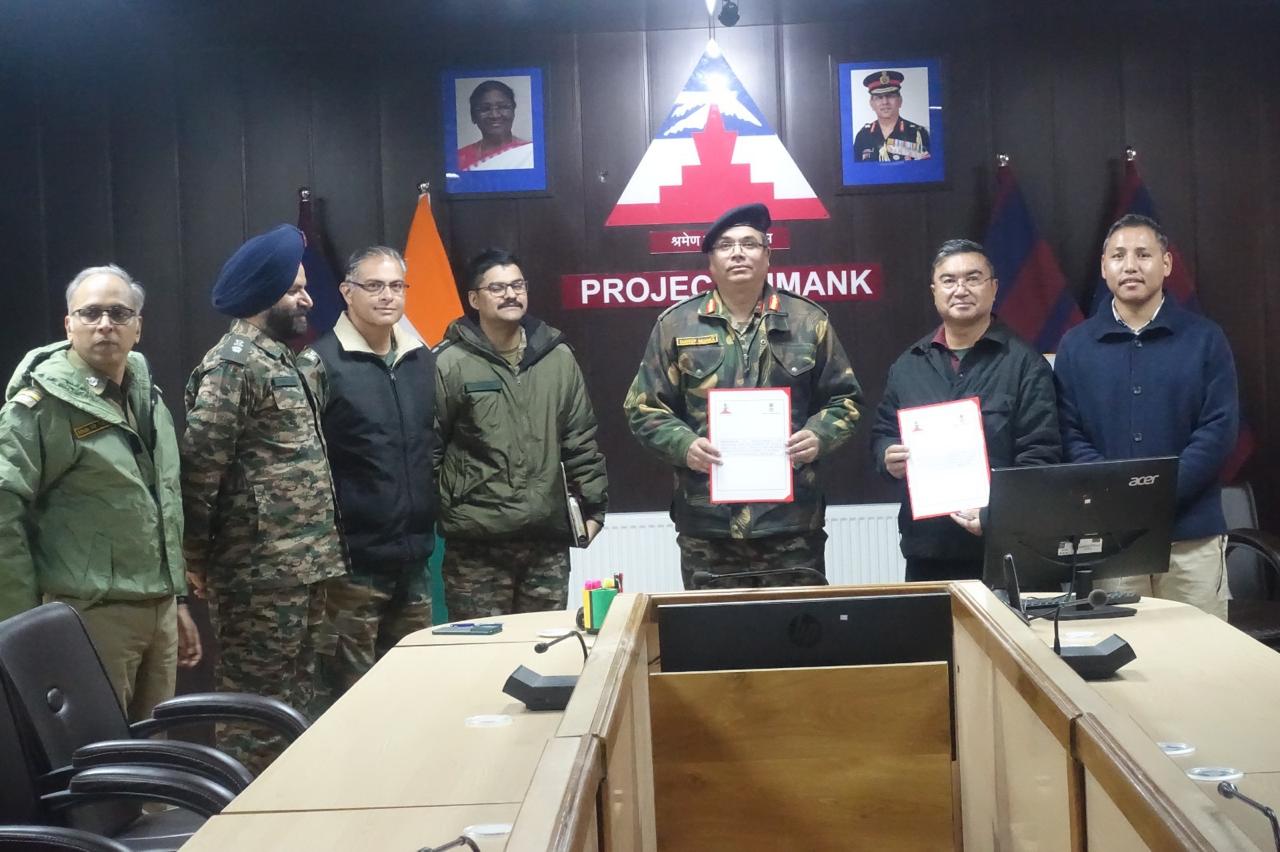
The Memorandum of Understanding, signed in November 2024 between the Housing and Urban Development Department and Project Himank of the Border Roads Organisation, had envisioned integrating processed plastic waste into blacktopping works across the region. The initiative was projected as a twin solution to rising non-biodegradable waste and the need for more durable roads in high-altitude terrain. Yet, with no machinery installed, no pilot stretch identified and no operational timeline made public, the proposal remains stalled.
Sources within the administration claim the delay stems from the non-procurement of specialised machinery required to shred plastic waste into fragments measuring approximately 5.2 millimetres, in line with technical specifications prescribed by the Border Roads Organisation. The processed material was to be washed and prepared before being supplied for road construction.
Officials, speaking on condition of anonymity, stated that the Border Roads Organisation had agreed to facilitate the transportation of machinery for setting up the processing unit. However, the equipment has not been mobilised so far, effectively freezing the project at the preparatory stage.
Col Tarun Kalia of Project Himank rejected allegations of inaction on the part of the organisation. He asserted that the MoU clearly places responsibility on the Housing and Urban Development Department to supply processed plastic waste in the required size and quantity. According to him, detailed discussions were recently held with officials of the Union Territory administration regarding operational modalities, and time has been granted until May to ensure compliance. Once the specified material is made available, he said, the Border Roads Organisation will incorporate it into its seasonal works in Ladakh.
The agreement had proposed the use of discarded plastic, particularly Low-Density Polyethylene and Polyethylene Terephthalate bottles, as an additive in bitumen layers. Experts have long advocated plastic-modified roads for their improved strength and resistance to water damage, especially in the extreme weather conditions prevalent in Ladakh.
Former Councillor of the Ladakh Autonomous Hill Development Council Leh, Tundup Nurbu Cheeta, described the present situation as deeply concerning. He said the initiative had been presented as a structured and sustainable intervention to manage mounting plastic waste, particularly in Leh district, where tourist inflow continues to rise annually. Cheeta maintained that despite the signing of the MoU and exposure visits of councillors to a Pune-based firm to understand the processing model, the project has not translated into action.
He revealed that the company shortlisted to shred plastic waste and convert it into granulated pellets later withdrew, citing high operational costs and limited financial feasibility. According to Cheeta, several firms had previously declined similar proposals on comparable grounds. He questioned whether the administration had undertaken a realistic assessment of waste generation volumes and financial viability before committing to the agreement.
Cheeta further alleged that the prolonged delay reflects either inadequate planning or deeper administrative discord. In his view, launching such an initiative without a clear blueprint and assured resource availability has weakened public confidence in its execution.
Under the MoU, Project Himank, which operates under the Border Roads Organisation and is responsible for maintaining critical road infrastructure in high-altitude regions, was to collaborate with the Housing and Urban Development Department in establishing a collection and processing mechanism for plastic waste. The proposal was widely seen as an opportunity to reduce landfill burden while reinforcing road durability in an ecologically fragile environment.
However, with no visible groundwork and no pilot implementation announced, the project remains confined to files and meeting rooms. Meanwhile, plastic waste continues to accumulate across urban centres of Leh and Kargil, intensifying environmental concerns in a region already under ecological strain.
The delay has drawn criticism from observers who argue that policy announcements lose credibility when not backed by time-bound execution. As Ladakh grapples with limited landfill capacity and increasing consumption of packaged goods, the stalled plastic-to-road initiative has come to symbolise a broader challenge of translating environmental intent into measurable action.
With the upcoming construction season approaching, attention now turns to whether the administration and the Border Roads Organisation can resolve differences and operational hurdles in time. For now, an initiative once projected as a practical solution to Ladakh’s waste crisis remains firmly on hold.
