

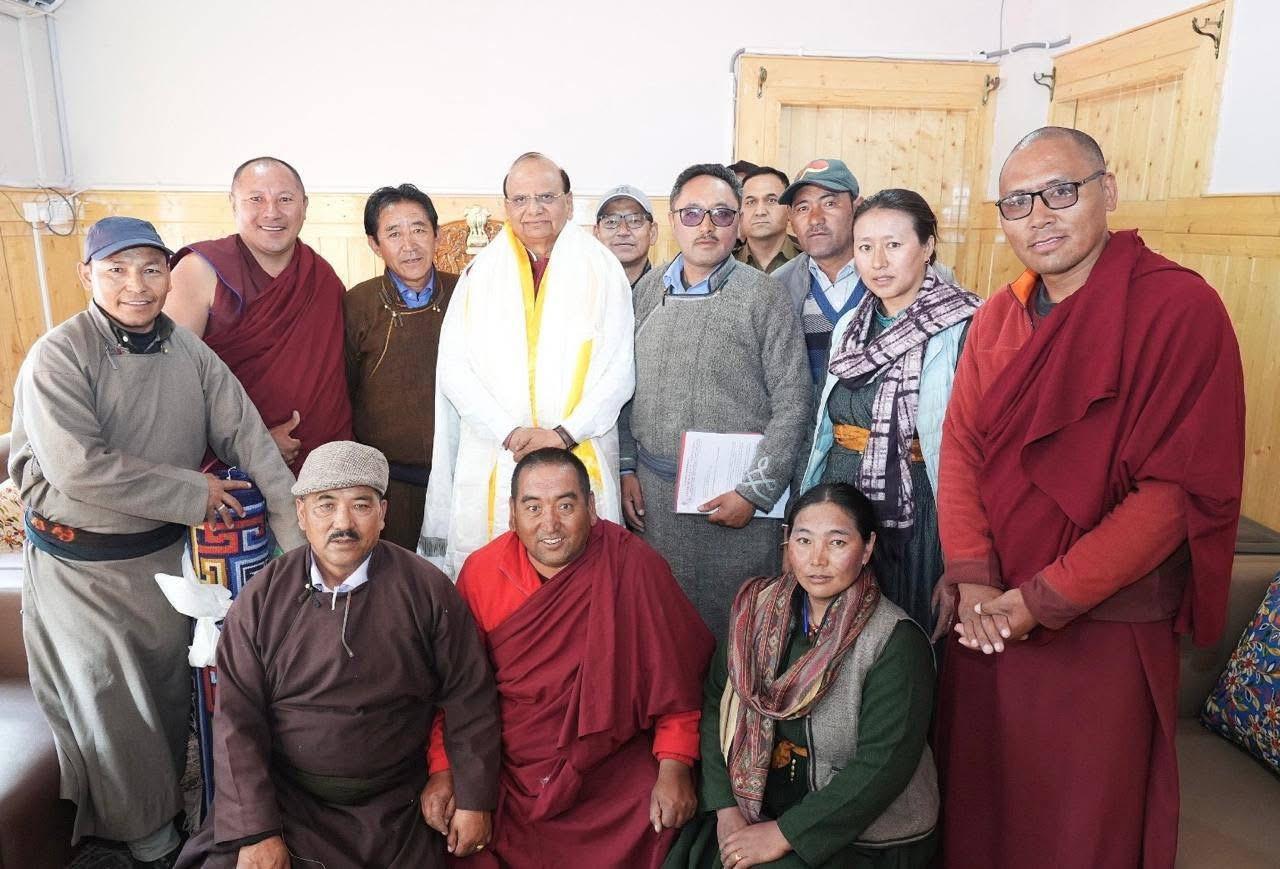
Leh : A joint delegation representing Zanskar’s key community institutions Friday met the Lieutenant Governor of Ladakh, Vinai Kumar Saxena, and the Chief Secretary, expressing gratitude for the declaration of Zanskar as a separate district and inviting them to a public celebration scheduled later this month.
Led by Tsering Dorjay, President of the Zanskar Buddhist Association (ZBA), the delegation submitted a memorandum describing the decision as the culmination of a long-pending demand spanning over four decades. The representatives said the new administrative status is expected to address persistent challenges arising from the region’s remoteness and limited access to governance structures.
The memorandum acknowledged the role of the Union Government, with specific reference to Prime Minister Narendra Modi and Union Home Minister Amit Shah, for responding to the aspirations of the people of Zanskar and prioritising administrative outreach in geographically isolated areas.
Responding to the delegation, Saxena said the decision to accord district status to Zanskar reflects a recognition of its distinct cultural identity and developmental requirements. He added that the move is in line with ongoing efforts to strengthen governance mechanisms and ensure balanced socio-economic progress across Ladakh’s far-flung regions.
On the occasion, the delegation extended a formal invitation to the Lieutenant Governor and the Chief Secretary to attend a public function at Duzin Photang on May 15, marking the administrative transition. Both dignitaries accepted the invitation, indicating their participation in the event.
The delegation comprised office-bearers of the Zanskar Buddhist Association and Zanskar Gonpa Association, representatives of the Nambardar Association and Ama Tsogspa, along with an elected councillor from the Cha constituency, reflecting a broad-based endorsement of the development.
The announcement of Zanskar’s elevation to district status has set in motion preparations for a public celebration, with community organisations mobilising participation across the region, underscoring the wider resonance of the decision among local residents.
