

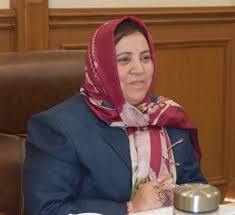
JAMMU, March 6: Jammu & Kashmir’s Minister for Health & Medical Education, School Education, Higher Education, and Social Welfare, Sakeena Itoo, has made a fervent appeal to Union Education Minister Dharmendra Pradhan for an urgent extension of the NEET-UG 2026 application deadline. In a detailed letter dispatched recently, Itoo underscored the profound difficulties confronting thousands of medical aspirants, particularly in the Kashmir Division, where persistent internet restrictions—limited to sluggish 2G speeds—have crippled their ability to complete online submissions effectively. This intervention comes at a critical juncture, as the standard registration window, which opened on February 8, 2026, and is slated to close on March 8, 2026, risks excluding deserving students due to technical barriers beyond their control.
The minister’s plea paints a vivid picture of the ground realities in Kashmir, a region long grappling with intermittent connectivity issues that echo past challenges faced by NEET aspirants. Itoo specifically pointed to widespread technical glitches plaguing the process, including repeated failures in OTP verification—a cornerstone of secure online authentication—and protracted delays in uploading essential documents such as photographs, signatures, and identity proofs. These problems are acutely felt in remote and rural pockets of the Valley, where students often lack access to high-speed broadband or reliable cyber cafes. “Many students from Kashmir Division have brought to my notice difficulties in completing their forms due to internet restrictions limited to 2G speed,” Itoo stated in her communication, echoing concerns voiced directly by affected youth.
NEET-UG, the National Eligibility cum Entrance Test for Undergraduate courses, remains the gateway to MBBS, BDS, and other medical programs across India, drawing over 20 lakh applicants annually. For J&K students, especially from underserved areas, the exam represents a life-changing opportunity to secure seats in prestigious institutions. Itoo emphasized that such connectivity hurdles could irreparably derail promising careers, denying eligible candidates a fair shot despite their rigorous preparation. Historical precedents amplify the urgency: similar internet blackouts in 2019 forced the setup of limited kiosks in district headquarters, yet even those proved insufficient for the volume of applicants, leaving many in limbo.
Compounding the issue is the heavy dependence on stable internet for the NTA’s official portal at neet.nta.nic.in, where applicants must navigate multiple stages—from registration and fee payment to form correction windows tentatively scheduled for March-April 2026. Rural students, in particular, rely on shared devices or travel to urban centers, only to encounter interminable queues and timeouts due to glacial upload speeds. Itoo’s letter passionately advocates for equity, arguing that a blanket deadline ignores these “genuine hardships” and contravenes the spirit of inclusive education. She called for a reasonable extension to empower every aspirant, regardless of location, to participate without disadvantage.
This request aligns with broader calls for digital equity in exam processes, especially in security-sensitive regions like J&K. Past interventions, such as special facilitation centers during connectivity curbs, underscore the government’s recognition of such disparities. As the NEET-UG exam approaches in early May 2026, followed by results in June, the Union Ministry’s response could set a precedent for accommodating regional challenges. Itoo’s proactive step not only safeguards J&K’s medical dreams but also amplifies voices from the margins, ensuring no talented student is sidelined by infrastructure gaps.
