

By Shivang Sattya Gupta
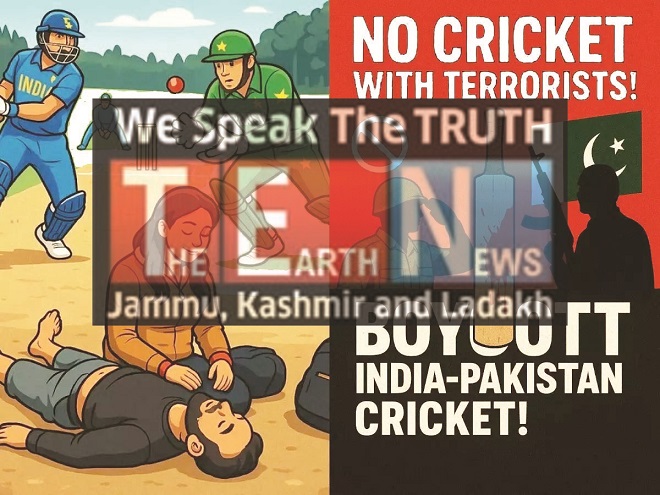
For decades, cricket has been hailed as a force that transcends borders. Yet when the neighbour across the western frontier continues to fuel terrorism, target our soldiers, and endanger our civilians, the question cannot be evaded: should Bharat still extend the prestige and profits of cricket to Pakistan? The answer, loud and clear, is no.
Each time India steps onto the field against Pakistan, the Pakistan Cricket Board reaps immense earnings through sponsorships, broadcasting rights and ticket sales. That financial windfall inevitably strengthens a state that remains complicit in cross-border terror. While Indian soldiers stand guard at the Line of Control, offering Pakistan a stage in world cricket amounts to rewarding duplicity. To claim that cricket can be divorced from terror is to live in denial.
New Delhi has already demonstrated moral resolve by halting bilateral series with Pakistan since 2012. That principle must extend to every arena. A handshake in the middle of a stadium cannot coexist with infiltration at the border. Cricket, for all its charm, is not merely a game of bat and ball — it is an instrument of soft diplomacy. Diplomacy with terror, however, is untenable.
There is also the question of economic leverage. Pakistan’s cricketing establishment thrives disproportionately on its contests with India, while its domestic market offers little in comparison. A boycott would not only uphold Bharat’s dignity but would also deprive Islamabad of a powerful source of global visibility. Just as sanctions squeeze an economy, the denial of cricket starves Pakistan of one of its few avenues of international relevance.
Some caution that such a stand could invite sanctions from the International Cricket Council. This argument collapses when weighed against financial reality. The Board of Control for Cricket in India contributes close to 40 percent of the ICC’s revenues. Far from punishing India, world cricket would be compelled to accommodate its position. Bharat is not a marginal player; it is the sport’s economic anchor.
A boycott would also send a signal far beyond cricketing circles. The world would be reminded that Bharat does not normalise relations with states that nurture terror networks. Just as apartheid-era South Africa was shunned until it reformed, Pakistan too must be made to feel the cost of its choices. Bharat, as a civilisational leader, carries the responsibility of setting this precedent and urging others to follow.
At the heart of this debate lies a choice. Cricket is transient, the nation eternal. Pakistan cannot expect camaraderie on the pitch while it fuels violence across the border. The martyrs who defend our sovereignty deserve more than symbolic tributes — they deserve a policy rooted in dignity.
Bharat can afford to forgo revenue, but it cannot afford to forgo honour. Until Pakistan abandons terror, the verdict should remain unwavering: no cricket, no handshake, no stage.
