

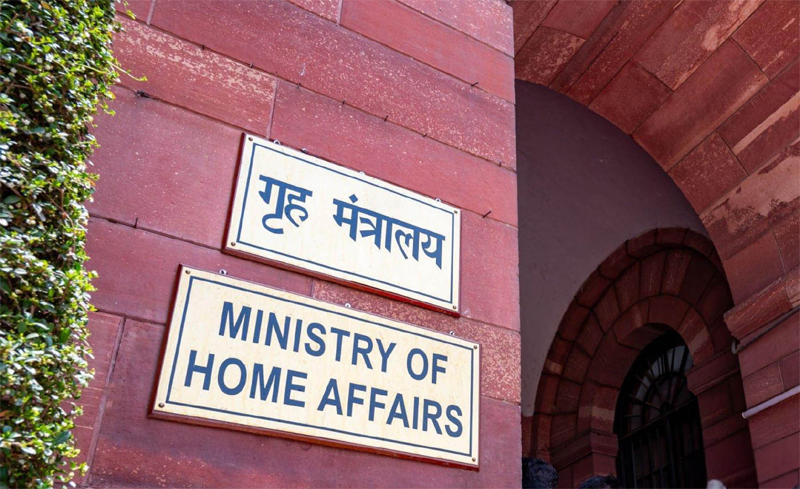
Leh/New Delhi, Aug 18: The Union Ministry of Home Affairs is weighing a proposal from the Ladakh administration to carve out a dedicated Ladakh Administrative Services cadre, but in the Himalayan Union Territory the move is being closely watched through the prism of long-standing political aspirations.
The proposal, submitted formally to the Ministry, outlines the creation of three distinct branches — Administrative, Police, and Forest. Officials in Leh have already mapped out posts for each branch and forwarded the consolidated draft. Sources said the Home Ministry is examining the strength of posts, and may revise the numbers as it weighs functional needs and sustainability before giving its nod.
Currently, Ladakh functions under a joint cadre with Jammu and Kashmir, with officers from the Jammu and Kashmir Administrative and Police Services serving in the region. Under the Jammu and Kashmir Reorganisation Act, cadre management continues to rest with the J&K government, leaving Ladakh dependent on another administration for postings and repatriations. For many in the region, this arrangement has long symbolised the absence of full administrative autonomy.
If cleared, the proposal will allow the Union Public Service Commission to initiate recruitment specifically for Ladakh, in consultation with the UT administration. While local groups acknowledge that the creation of a separate cadre may give the region firmer administrative footing, the absence of movement on broader political issues has fuelled unease.
Both the Leh Apex Body (LAB) and the Kargil Democratic Alliance (KDA) have repeatedly underscored that their struggle is not limited to service structures. Their primary demands remain Statehood, inclusion of Ladakh under the Sixth Schedule of the Constitution, and allocation of two Lok Sabha constituencies. For them, the administrative initiative, though welcome, falls short of addressing Ladakh’s quest for constitutional safeguards and democratic representation.
The sense of drift has been compounded by the lack of follow-up from the Centre. The last structured dialogue was held on May 27 in New Delhi, during which the High Powered Committee chaired by Union Minister of State for Home Nityanand Rai resolved issues of domicile rights and reservation. Another round of talks was promised within a month, yet more than two months later neither the High Powered Committee nor its Sub-Committee has reconvened.
This vacuum has sharpened anxieties in the region. Earlier this month, LAB and KDA jointly called a three-day strike in Kargil, reflecting growing frustration at the silence from New Delhi. Although protests have been temporarily suspended out of respect for the ongoing visit of the Dalai Lama, local leaders have already signalled that agitation may resume after his departure on August 26.
For the people of Ladakh, the proposal under examination in the Home Ministry is being seen as only one part of a larger puzzle. While a separate administrative service may give the Union Territory greater control over its bureaucratic machinery, residents remain adamant that the real measure of autonomy lies in political empowerment and constitutional guarantees — aspirations that continue to hang in the balance.
