

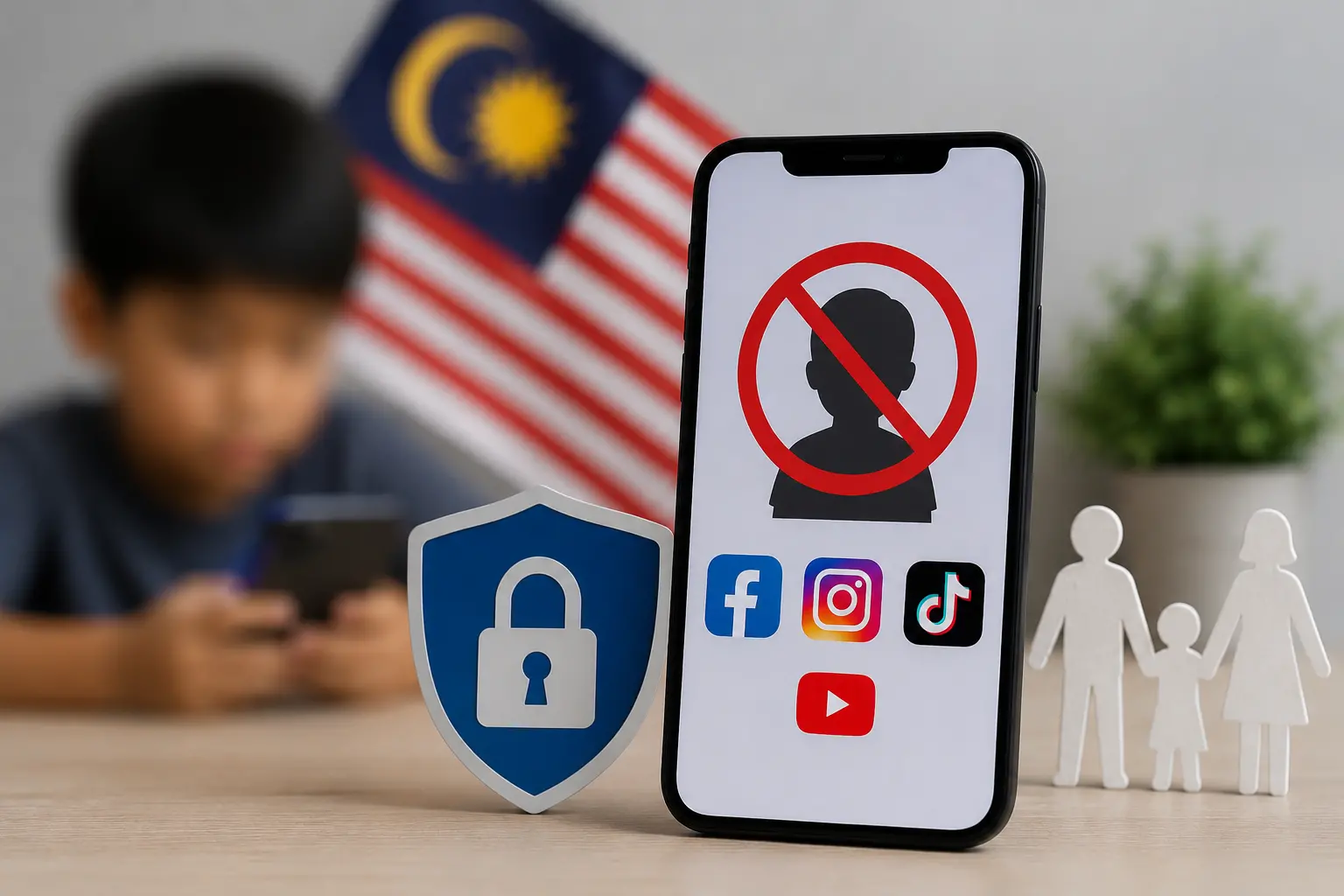
KUALA LUMPUR, JUNE 1: Malaysia has started enforcing a new law prohibiting children under the age of 16 from creating or holding social media accounts, as part of a broader push to strengthen online safety for minors.
Under the new regulations, major platforms such as Facebook, Instagram, TikTok, and YouTube—each with at least eight million users in the country—must introduce strict age-verification systems and block underage users from registering accounts.
The Malaysian Communications and Multimedia Commission said that verification of existing accounts will be carried out in phases over the next six months. Users found to be under 16 will be given one month to download or transfer their data, including photos and videos, before their accounts are restricted or suspended.
Companies that fail to comply could face penalties of up to 10 million ringgit (around $2.5 million). However, parents will not be penalised if their children manage to bypass the restrictions.
Authorities said the move is intended to protect children from harmful content, cyberbullying, and addictive platform features. Several countries, including Australia, Brazil, and Indonesia, have introduced or are considering similar age-based restrictions.
The regulator stressed that the policy is not meant to deny children access to digital technology, but to create a safer online environment. Platforms are also expected to discourage excessive usage and take stronger action against underage and harmful accounts.
Technology companies have yet to outline how they will implement the new rules. Meta has warned that strict bans could push teenagers toward less regulated parts of the internet, though it has introduced “teen accounts” with added safety controls.
The policy has drawn mixed reactions in Malaysia. Some parents support the move, saying it helps children develop healthier offline habits, while others argue that social media can be beneficial under proper supervision and that a blanket ban may be excessive.
Critics have also raised concerns about privacy and enforcement challenges, particularly around the use of government ID for age verification and the possibility of loopholes that could allow underage users to bypass restrictions.
Experts say the effectiveness of the law will depend on enforcement and parental involvement, warning that without strong safeguards, teenagers may still find ways around the rules.
