

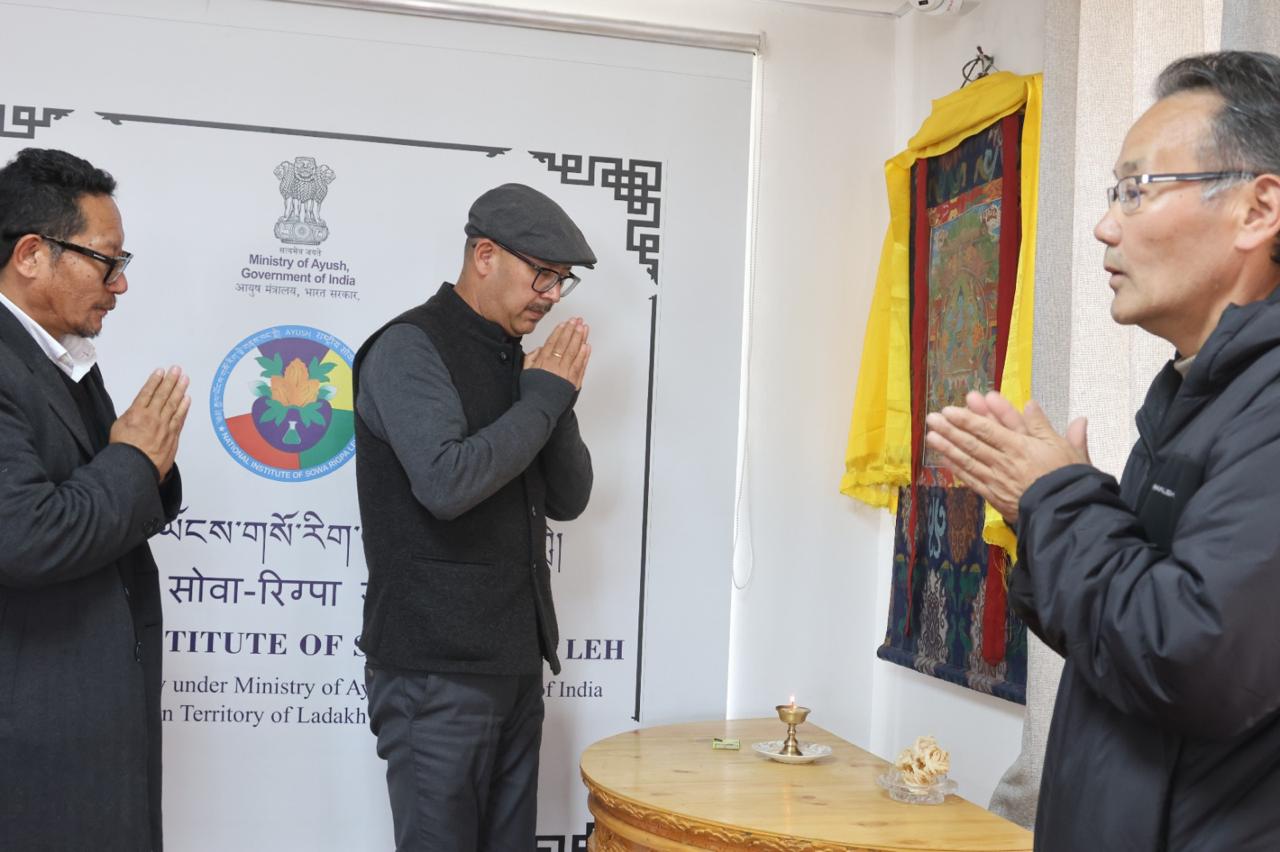
Leh, Apr 2: Stressing that language remains inseparable from the region’s traditional knowledge systems, Director of the National Institute of Sowa-Rigpa (NISR), Dr. Padma Gurmet on Wednesday called upon students to accord due importance to Bhoti alongside their academic pursuits, cautioning that the erosion of linguistic roots could weaken the transmission of cultural heritage.
His remarks came during the Bhoti Day observance at the institute’s Leh campus, where students and faculty gathered to celebrate the linguistic and cultural legacy of the Himalayan region. The programme unfolded as a blend of reflection and performance, with participants engaging in poetry recitations and speeches in Bhoti that echoed both pride and concern over the language’s future, according to the press release .
The event drew attention to the enduring relevance of Bhoti in shaping regional identity. Speakers underlined that beyond its literary value, the language serves as a repository of collective memory and indigenous knowledge. Dr. Tsewang Dhondup emphasised the urgency of learning and using Bhoti in contemporary contexts to ensure its continuity, while Dr. Nawang Tanyas described it as the cultural bedrock of the region, urging students to move beyond symbolic observance and actively engage in its preservation.
The celebrations were marked by enthusiastic participation from students, who used the platform to articulate the historical depth and expressive richness of Bhoti through verse and oration. Their contributions lent a reflective tone to the proceedings, reinforcing the idea that language preservation must be rooted in everyday practice rather than confined to ceremonial occasions.
A traditional Shondol dance performance added a cultural flourish to the programme, offering a visual expression of Ladakh’s heritage and drawing appreciation from the audience.
The Bhoti Day observance at NISR, while celebratory in form, carried a clear message — that sustaining linguistic traditions requires conscious effort, particularly among the younger generation. The institute’s initiative, as outlined in the release, aligns with broader efforts to preserve and revitalise regional languages amid shifting cultural and social dynamics.
