

What does Aug 5 hold for J&K, speculations rife
Jammu, Aug 04: Six years after the abrogation of Article 370 on August 5, 2019, Jammu and Kashmir has undergone a transformative decade, marked by peace, development, and democratic growth.
The revocation of the region’s special status spurred over Rs 80,000 crore in investments, driving progress in governance, infrastructure, tourism, healthcare, and education.
Voter turnout soared, with a 70% increase in panchayat elections and nearly 64% in the 2024 Assembly elections, reflecting robust youth and women’s participation.
Tourism rebounded spectacularly, with 35 lakh visitors in 2024, up from 7 lakh in 2021, bolstered by Srinagar’s UNESCO “World Craft City” status and the G20 Tourism event in 2023. Infrastructure upgrades and reduced violence signal lasting stability, with the Tulip Garden alone attracting 8.5 lakh visitors in 2024.
As the erstwhile state of J&K approaches the sixth anniversary of the abrogation, there have been high patch political developments in last 48 hours across New Delhi and J&K since Prime Minister Narendra Modi is going to address the BJP-led NDA parliamentary party meeting on August 5, a get-together of the ruling alliance’s MPs which is being held after a considerable gap.
The NDA meeting comes a couple of days before the filing of nomination for vice president’s election begins from August 7.
PM Modi is expected to speak on a host of current issues as the Opposition has been raising the heat over the poll body’s alleged partisan conduct favouring the government, and the Pahalgam terror attack and Operation Sindoor.
The prime minister is also likely to be felicitated by the parliamentary party over his government’s military response to the terror strike.
The NDA will have to announce its candidate, whose election will be a certainty due to the alliance’s majority in the electoral college, by August 21, the last date of nomination-filing and the Monsoon Session of Parliament.
The meeting comes in the middle of a session which has been all but a washout so far, except for a two-day discussion on the Pahalgam attack and Operation Sindoor, due to a united Opposition’s ceaseless protest against the Special Intensive Revision (SIR) of electoral rolls in Bihar by the Election Commission. However, no meeting has been held in the last few sessions.
And another political development is the prominent meeting as PM Modi and Union Home Minister Amit Shah called on President Droupadi Murmu separately within hours at the Rashtrapati Bhavan.
It was not known the reasons behind the subsequent meetings of the prime minister and the home minister with the President.
Hours later, the Rashtrapati Bhavan announced through a message on X. However, there is no words so far from the prime minister’s office.
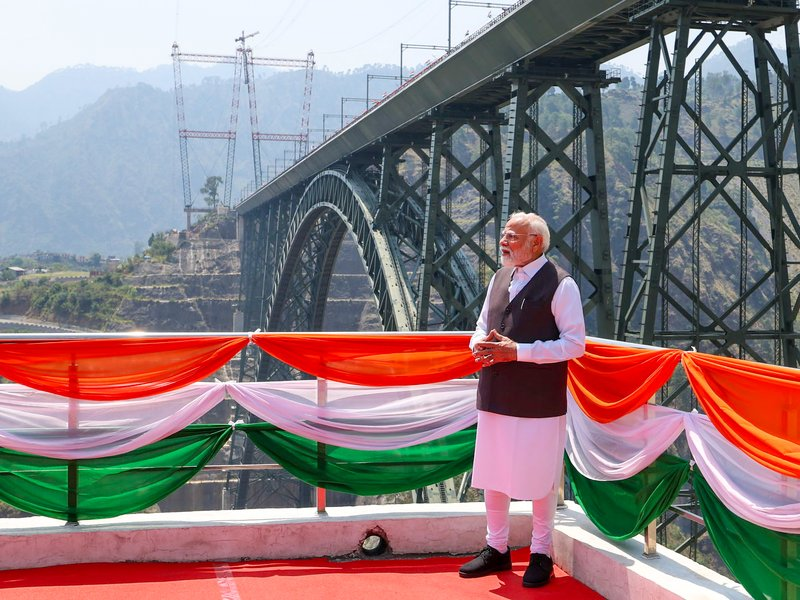
Getting back to the J&K developmental boom, the Udhampur-Srinagar-Baramulla Rail Link is fully operational, while major tunnel projects like Zojila and Z-Morh are underway to boost connectivity. Over 9,700 homes have been digitally connected under BharatNet, expanding digital access in remote areas. Education and employment have also flourished.
New institutions like IIT Jammu and AIIMS Awantipora (set to open in late 2025) are enhancing academic opportunities.
Initiatives such as the Prime Minister’s Employment Generation Programme (PMEGP), Mumkin, and Tejaswini have empowered thousands, especially women, to pursue entrepreneurship.
Meanwhile, healthcare reforms under Ayushman Bharat SEHAT have extended free treatment to 7 lakh residents.
While political debate persists, the undeniable shift from conflict to development is evident. As Kashmir nears six years since Article 370’s revocation, the region stands at a critical juncture—defined not by fear and uncertainty, but by hope, infrastructure, and democratic aspirations.
