

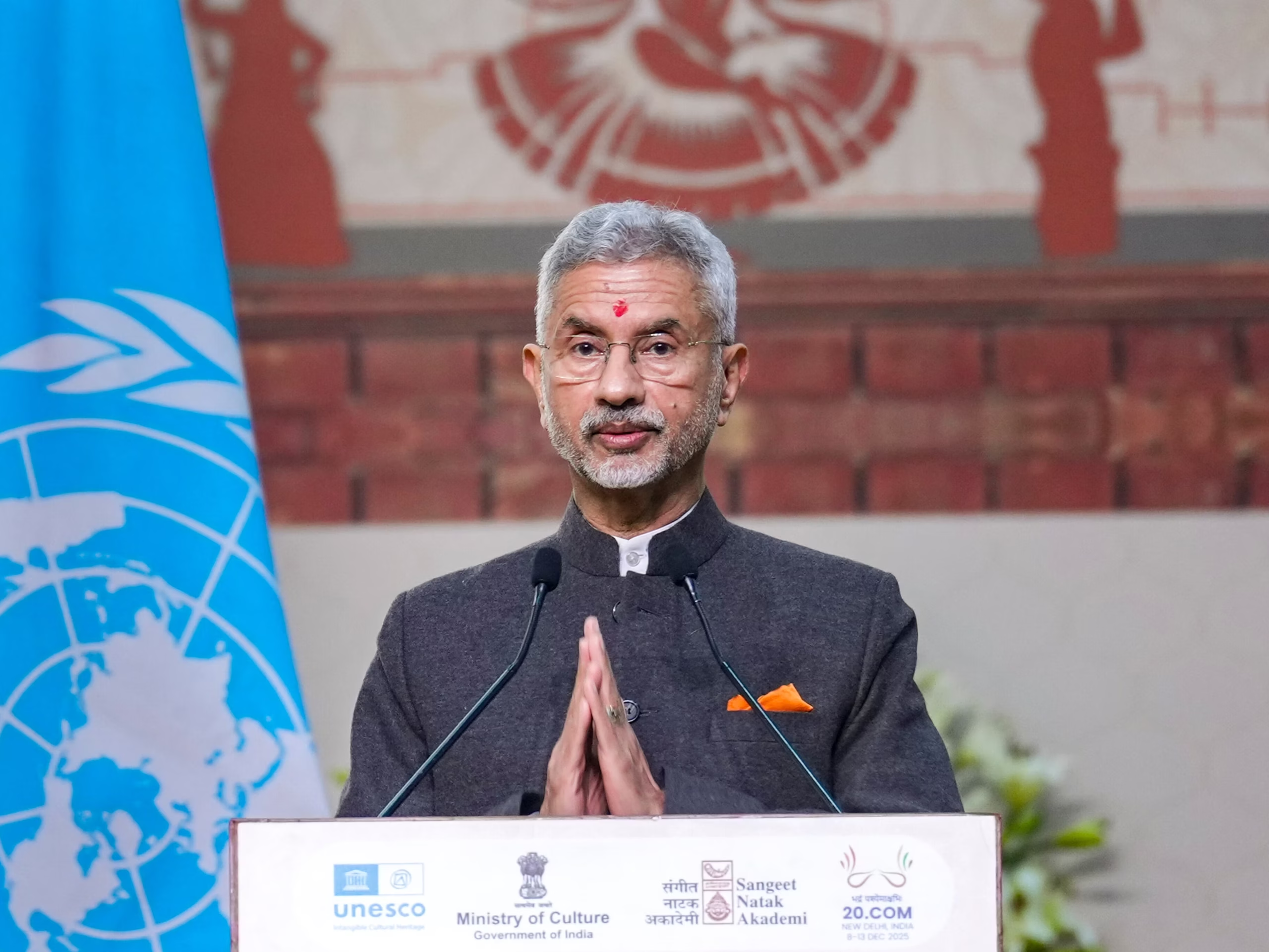
New Delhi, Jan 31: India on Saturday told Arab League member nations that “zero tolerance” for terrorism must be an “uncompromising universal norm”, as the two sides discussed the Gaza peace plan and ways to navigate the current geopolitical environment. The remarks came during the second India–Arab foreign ministers’ meeting in New Delhi, attended by 19 Arab League member states, an influential grouping in West Asia.
Several foreign ministers called on Prime Minister Narendra Modi before the start of the meeting. “The Arab world is a part of India’s extended neighbourhood, linked by deep civilisational bonds, vibrant people‑to‑people connections and enduring brotherly ties, as well as a shared commitment to peace, progress and stability,” Modi said. On social media, he added that enhanced cooperation in technology, energy, trade and innovation would unlock new opportunities and take the partnership to new heights.
In his inaugural address at the ministerial meeting, External Affairs Minister S. Jaishankar said advancing the comprehensive peace plan to end the Gaza conflict, based on UN Security Council Resolution 2803, is a widely shared priority. “Various countries have made policy declarations on the peace plan, individually or collectively. This is the larger context in which we deliberate on the region’s challenges and prospects,” he said.
Jaishankar noted that multiple developments of considerable consequence have taken place in the Middle East in recent years, many of which have reverberated beyond the region. He stressed that the shared interest of India and Arab states lies in strengthening the forces of stability, peace and prosperity.
The minister flagged serious concerns over terrorism and called for concerted global efforts to combat it. “A common threat in both our regions to these objectives is that of terrorism in all its forms and manifestations,” he said. “Cross‑border terrorism is particularly unacceptable because it violates the basic principles of international relations and diplomacy,” he added, in remarks widely seen as an indirect reference to Pakistan.
“Societies targeted by terrorism have the right to defend themselves and will understandably exercise it,” Jaishankar said, underlining that zero tolerance for terrorism must be a universal norm. He urged stronger international cooperation to tackle what he described as a “global scourge”.
Jaishankar highlighted India’s strong partnerships with all Arab League members, noting that the region hosts some of India’s largest expatriate communities, key energy sources, major trade relationships and emerging technology and connectivity initiatives. “We are crucial to each other when it comes to food security and health security. Today’s deliberations, while of a collective nature, will nevertheless give a fillip to many bilateral ties,” he said.
He added that India has developed new capacities and strengths, many of them technology‑driven and people‑centric, and that sharing experiences and best practices would benefit both sides. Referring to the shifting global order, he said the transformation is most visible in West Asia, where the landscape has changed dramatically over the past year, with direct implications for India’s ties with Arab nations.
