

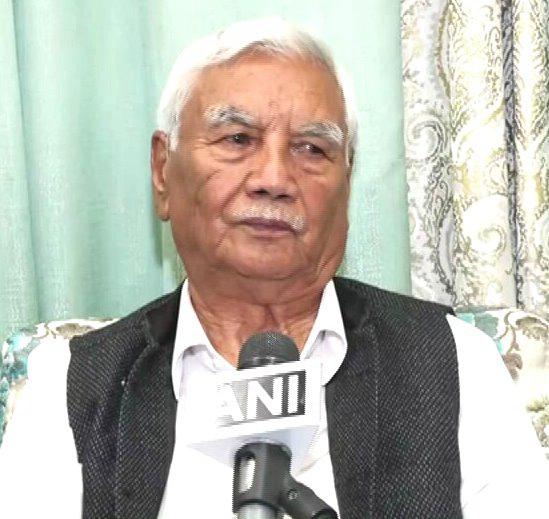
Leh: Senior Ladakhi leader Thupstan Chhewang on Friday described the latest Sub-Committee level talks between Ladakh civil society representatives and officials of the Union Ministry of Home Affairs (MHA) as a “golden day” in Ladakh’s political history, claiming significant progress had been achieved on long-pending demands of the region.
Speaking after the meeting, Chhewang said the dialogue process had continued for the last five to six years around issues central to Ladakh’s identity, governance and constitutional status. While some administrative matters had seen partial resolution earlier, he said the most sensitive demands — including statehood, constitutional safeguards, Sixth Schedule protections and democratic empowerment — had remained unresolved until now.
According to Chhewang, the latest discussions resulted in a major “in-principle” understanding that could pave the way for a new constitutional framework for Ladakh under Article 371 of the Constitution, incorporating provisions similar to Sixth Schedule protections along with meaningful administrative, financial and legislative powers for local institutions.
“The agreement to secure Ladakh’s status under Article 371, along with an elected Union Territory-level legislature headed by a leader enjoying status equivalent to a Chief Minister, represents a historic step forward for the people of this region,” Chhewang said in a written statement issued after the meeting.
The proposed arrangement, if implemented, would mark a dramatic transformation in Ladakh’s governance structure. According to details emerging from the talks, legislative, executive and financial powers could rest with elected representatives through a UT-level legislature, while senior bureaucrats — including the Chief Secretary — would function under the executive authority of the elected body.
The development is being viewed as especially significant given the long-standing public resentment in Ladakh over the absence of a legislative assembly after the abrogation of Article 370 and the bifurcation of the former state of Jammu and Kashmir in August 2019.
Chhewang stressed that all major stakeholders from Ladakh participated unitedly in the discussions, including leaders of LAB and KDA, former Chief Executive Councillors, Members of Parliament and representatives from both Leh and Kargil districts. Observers say the rare political unity displayed by Leh and Kargil-based groups added considerable weight to the negotiations with the Centre.
The statement also indicated that newly-created districts in Ladakh could receive appropriate autonomy over matters relating to land, culture and local governance within their jurisdictions — a key concern repeatedly raised by tribal and social organisations in the region.
However, despite the optimism surrounding the talks, the question of full statehood remains unresolved. According to the discussions, MHA officials reportedly conveyed that Ladakh currently lacks sufficient revenue generation capacity to sustain expenditure obligations such as salaries and administrative costs. Nonetheless, it was suggested that the proposed arrangement could eventually pave the way for full-fledged statehood once the necessary economic criteria are met.
Importantly, Chhewang said the finer details of the proposed framework would now be worked out by the Home Ministry in consultation with legal and constitutional experts, while all stakeholders would be allowed to submit written recommendations to ensure an inclusive and participatory process.
Chhewang also urged the Union Government to withdraw all cases related to the September 24, 2025 Leh incidents and demanded financial compensation and government jobs for the families of the four youths who lost their lives during the protests. He further called for fair compensation for all injured persons.
“The spirit of mutual goodwill that prevailed during today’s meeting provides a strong foundation for a lasting and equitable arrangement,” he said.
