

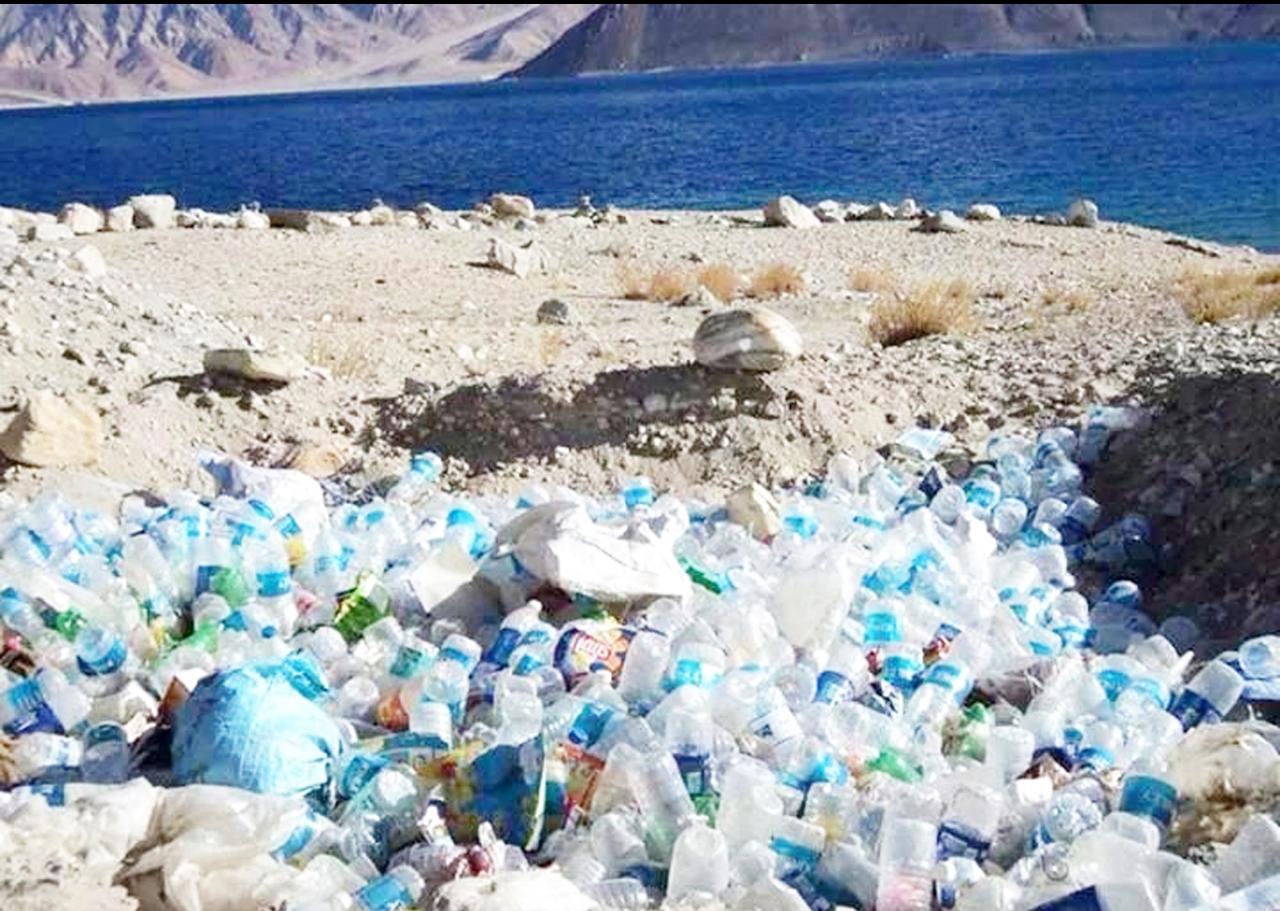
Plastic pollution is no longer a distant environmental concern—it is an immediate and deeply personal crisis. It has entered our rivers, our food systems, and even our bodies, quietly reshaping public health and ecological stability. What makes this crisis more troubling is not just its scale, but its inequality. The heaviest burdens are borne by those least responsible: coastal communities, small island nations, and workers handling waste under unsafe conditions.
Yet, the tragedy lies in the gap between awareness and action. The science is clear, the solutions are known, and the economic benefits of reform are undeniable. Still, global efforts remain fragmented and hesitant, trapped in cycles of negotiation without resolution.
This is a defining moment. Continuing on the current path will deepen the crisis, making recovery costlier and more complex. But a decisive shift—towards reduced production, better design, and collective accountability—can still alter the trajectory. The choice before us is stark: act now with intent, or inherit a future buried in plastic.
EARTH NEWS SCIENCE DESK
The world is no longer debating whether plastic pollution is a problem. That question has been settled. What remains uncertain—and increasingly urgent—is whether humanity possesses the political will and collective discipline to confront a crisis that is quietly reshaping ecosystems, economies, and even the human body itself.
Evidence has mounted steadily over the past decade, but it has now reached a point where denial is no longer tenable. Plastic production and consumption, in their current form, are fundamentally unsustainable. From the snow-fed rivers of the Himalayas to the deepest ocean trenches, traces of plastic have become inescapable. More disturbingly, microplastics—once considered an environmental issue alone—are now being detected within human organs and bloodstream, raising unsettling questions about long-term health consequences.
The crisis, however, is not evenly distributed. Like many environmental challenges, plastic pollution exposes and deepens existing inequalities. Small island nations, for instance, find themselves at the frontline of a problem they did little to create. Ocean currents deposit vast quantities of transboundary plastic waste onto their shores, overwhelming already fragile waste management systems and threatening tourism-driven economies. Marine ecosystems, the lifeline of these regions, are under relentless assault.
Closer to industrial centres, the story is no less troubling. Communities living near plastic production facilities or in areas where waste management is inadequate face disproportionate health risks. Studies increasingly link plastic exposure to respiratory illnesses, cardiovascular conditions, and even certain cancers. These are not abstract risks; they are lived realities for millions.
Amid this landscape of crisis stands an often overlooked workforce: waste pickers. Globally, they are responsible for collecting and sorting more than three-quarters of all plastic that is recycled. Yet their contribution remains undervalued. They operate in hazardous conditions, without adequate safety measures, social security, or job stability. Any serious conversation about plastic reform must acknowledge their role—not as peripheral actors, but as central stakeholders.
Despite widespread awareness, global action has lagged behind the scale of the problem. Negotiations toward a binding international agreement on plastic pollution have so far failed to produce a concrete outcome. This diplomatic inertia is particularly concerning given the warnings outlined in the latest findings by The Pew Charitable Trusts.
Their report, Breaking the Plastic Wave 2025, paints a stark picture of the future if current trends persist. Plastic pollution is projected to more than double within the next 15 years. To put that into perspective, it would be equivalent to dumping nearly a truckload of plastic waste into the environment every second. Alongside this surge, health impacts linked to plastic production and disposal could rise by as much as 75 percent.
Equally alarming is the climate dimension. By 2040, the global plastic system—if treated as a country—would rank as the third-largest emitter of greenhouse gases. This projection underscores a critical but often overlooked truth: plastic pollution is not just an environmental issue; it is a climate crisis in disguise.
At the heart of the problem lies a structural imbalance. Plastic production is accelerating at a pace that far outstrips improvements in waste management. Even with significant investments, the gap continues to widen. This mismatch ensures that more plastic enters the environment than can ever be effectively managed.
Yet, for all its grim forecasts, the report also offers a measure of cautious optimism. The solutions required to address this crisis are neither unknown nor unattainable. According to the findings, deploying a combination of existing strategies could reduce plastic pollution by as much as 83 percent over the next 15 years. In key sectors such as packaging—one of the largest contributors to plastic waste—pollution could be nearly eliminated.
Achieving this transformation, however, demands a fundamental shift in how societies produce, use, and dispose of plastic. It begins with reducing production itself—a politically sensitive but unavoidable step. This must be accompanied by efforts to redesign products, promote reuse systems, and curb the demand for virgin plastic materials. Transparency across supply chains will also be crucial, ensuring that environmental and health impacts are neither hidden nor ignored.
Improving waste management infrastructure remains equally important, particularly in developing regions where systems are often underfunded and overburdened. But waste management alone cannot solve a problem rooted in overproduction. Without upstream interventions, downstream solutions will continue to fall short.
The economic case for action is compelling. By 2040, comprehensive reforms could significantly reduce health-related costs, saving billions in public expenditure. Governments could also cut approximately $19 billion annually in waste collection and disposal expenses. Perhaps most importantly, a restructured plastic economy has the potential to create millions of jobs—jobs that are safer, more stable, and better compensated than those currently available to vulnerable workers.
For regions like Ladakh and Jammu and Kashmir, the stakes are particularly high. Fragile mountain ecosystems are highly sensitive to pollution. Tourism, a key economic pillar, depends heavily on environmental integrity. Plastic waste, if left unchecked, threatens not only natural beauty but also livelihoods. The lessons from global research resonate strongly here: prevention is far more effective than remediation.
The path forward ultimately hinges on international cooperation. A fragmented approach, with countries acting in isolation, will not suffice for a problem that transcends borders. A comprehensive global agreement—one that addresses the entire lifecycle of plastic from production to disposal—is essential.
As negotiations resume in Geneva, the election of a new chair for the Intergovernmental Negotiating Committee offers a critical opportunity to reset momentum. Leadership will matter. So will the willingness of nations to move beyond narrow interests and embrace a shared responsibility.
Delays, at this stage, carry a heavy cost. Every year of inaction allows the problem to compound, pushing solutions further out of reach. The environmental damage becomes harder to reverse, the health impacts more entrenched, and the economic burden more severe.
The narrative around plastic must now shift—from one of convenience to one of consequence. What was once hailed as a symbol of modern innovation has become a marker of systemic excess. The challenge is not merely to manage plastic waste, but to rethink our relationship with the material itself.
An end to plastic pollution is not an unrealistic aspiration. It is, increasingly, a necessity. But it will require urgency, cooperation, and a willingness to confront uncomfortable truths. The window for decisive action is still open—but it is narrowing.The question is no longer whether we can act. It is whether we will act in time.
