


UoL wraps up FDP on Research Methodology; empowers 300+ Scholars
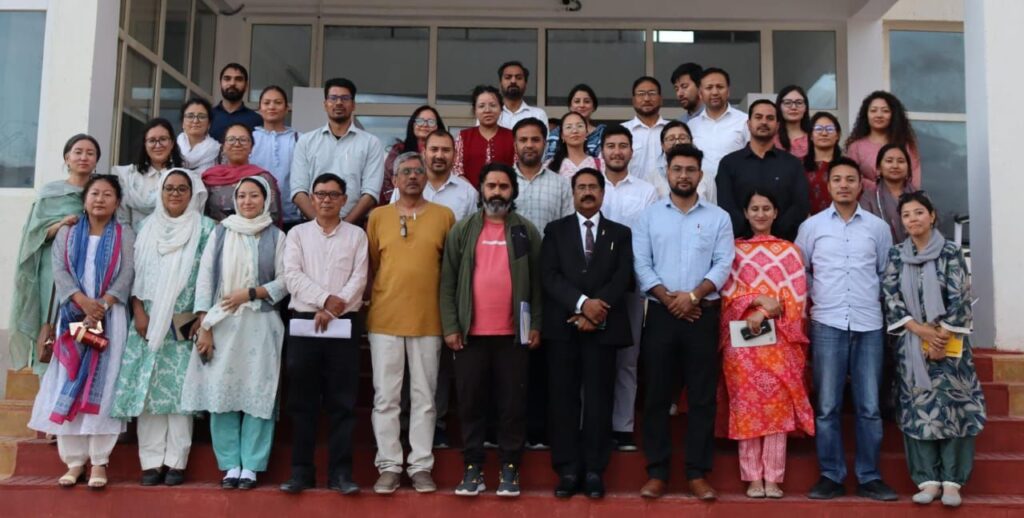
Leh, July 24: A spirited ceremony marked the conclusion of the University of Ladakh’s Faculty Development Programme (FDP 1.0) on “Research Methodology and Data Analytics,” as over 300 participants gathered virtually and in person to celebrate the week-long academic endeavor.
Held in collaboration with Hindu College Moradabad, Banaras Hindu University, and Rajiv Gandhi University, the initiative brought together academicians, researchers, and scholars from India and abroad. The closing session featured speeches, participant reflections, and a detailed report on the programme’s structure, which included training in AI tools, data analysis software, and research ethics.
The evening commenced with an introduction by Dr. Jegmet Spaldon of the University of Ladakh, followed by a welcome address from Dr. Subrat Sharma, Dean of Research, who commended the enthusiastic participation and interdepartmental cooperation throughout the week.
Dr. Ajeet Kumar Maurya, Convener of the FDP, offered a summary of the programme, noting its 36-hour duration and coverage of various analytical tools including Jamovi, Power BI, and multivariate techniques. Sessions also introduced AI applications like ChatGPT and Scite, underscoring the growing role of technology in scholarly work.
Hon’ble Vice-Chancellor of the University of Ladakh, Prof. Saket Kushwaha, was felicitated for his leadership. In his address, he emphasized the university’s commitment to research innovation in mountain-specific challenges such as biodiversity and climate resilience. His vision resonated with the audience, aligning with India’s broader educational goals under NEP 2020.
Chief Guest Prof. Alok Kumar Chakrawal, Vice-Chancellor of Guru Ghasidas Vishwavidyalaya, highlighted the importance of data-driven research and cross-disciplinary collaboration. He praised the University of Ladakh for fostering a culture of digital learning and scholarly exchange.
The ceremony included remarks from Dr. S.S. Rawat of Hindu College and Prof. Virendra Kamalvanshi of Banaras Hindu University, who both underscored the value of cross-institutional academic partnerships. Participants shared positive feedback on the interactive sessions, practical training, and application-focused modules that encouraged real-time learning.
Among the highlights were sessions on systematic literature review, machine learning, and bibliometric analysis. The use of AI-based tools for literature synthesis, combined with statistical software demonstrations, provided researchers with practical competencies for future projects.
Dr. Amjad Hussain delivered the vote of thanks, acknowledging the contribution of partner institutions, resource persons, and technical teams who ensured the programme’s smooth execution.
FDP 1.0 featured speakers from institutions across India and abroad, including the University of Delhi, Panjab University, AURO University, CT University Punjab, and the University of the South Pacific in Fiji. Supported by the Institute for Human Development, New Delhi, the programme succeeded in fostering an environment of learning, collaboration, and academic resilience.
As curtains closed on the event, the University of Ladakh reaffirmed its dedication to advancing research capacity in the Trans-Himalayan region, with plans to launch specialized training initiatives and collaborative research networks in the coming years.
