

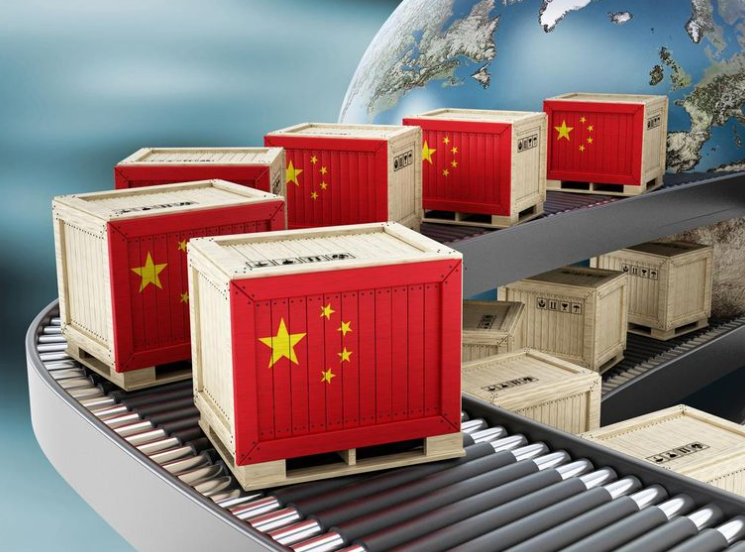
Brussels, October 8: The European Union is stepping up its engagement with China as rising Chinese exports and a widening trade deficit fuel concerns over jobs, industrial competitiveness and the future of key European industries.
European Commission Trade Commissioner Maros Sefcovic is scheduled to hold a two-day meeting in Beijing with Chinese Commerce Minister Wang Wentao, with discussions expected to focus on reducing the EU’s trade deficit with China.
The EU’s trade deficit with China has crossed 360 billion euros, or around USD 410 billion. Sefcovic had earlier set October as a deadline for Beijing to demonstrate meaningful progress in addressing the imbalance.
European lawmakers and economists have increasingly raised concerns over Chinese state subsidies and growing exports, particularly in sectors such as steel, automobiles, electric vehicles, batteries, machinery and chemicals.
The concerns have intensified after China redirected more exports towards European and other international markets following higher US tariffs on Chinese goods.
The European Parliament on Wednesday voted 454-86 in favour of a resolution calling for stronger measures against China, including greater economic reciprocity and a proportionate EU response if Beijing fails to provide greater access to its markets.
European lawmakers have discussed several possible responses, ranging from additional tariffs to the use of the bloc’s Anti-Coercion Instrument, often described as the EU’s “trade bazooka”. The mechanism allows the bloc to restrict trade and investment in response to economic coercion.
The EU has already introduced measures targeting certain Chinese steel imports and small e-commerce parcels. France has also previously advocated stronger action, including tariffs on a wide range of Chinese imports.
European industries are facing increasing pressure from Chinese competition. German automobile sales in China have declined, while Chinese manufacturers are expanding their presence in the European market with competitively priced vehicles supported by substantial state subsidies. Major European manufacturers, including Volkswagen, have announced significant job cuts.
France and Germany have called for a broad review of the EU’s China policy, including making it easier to deploy the Anti-Coercion Instrument.
However, EU member states remain divided over how aggressively to respond to Beijing. Spain, for instance, has maintained relatively closer economic engagement with China, while political groups in several other countries have opposed tougher measures.
European Commission President Ursula von der Leyen has described the surge in Chinese industrial exports as another “China shock” for Europe, comparing it with the impact Chinese imports had on US manufacturing in the early 2000s.
Analysts say Europe needs to strengthen its domestic industrial base while adopting a more assertive trade strategy towards China. At the same time, experts caution that completely disengaging from China is neither realistic nor desirable given the depth of economic ties.
China has rejected calls for protectionist measures, warning that tariffs and supply-chain decoupling would hurt both sides.
According to Chinese customs data, Chinese exports to the EU increased 15.3 per cent during the first eight months of this year, while imports from the EU rose 6.2 per cent.
China has also launched an anti-dumping investigation into EU exports of p-nitrotoluene, a chemical used in dyes and pharmaceuticals, ahead of the Sefcovic-Wang meeting. Beijing had earlier warned it could take retaliatory action if the EU adopted stronger protectionist measures.
China’s export sector has remained resilient despite US tariffs and other trade restrictions. Its global trade surplus reached around USD 1.2 trillion in 2025, with exports to Europe, Southeast Asia, Latin America and Africa increasing.
The EU remains heavily dependent on Chinese supplies of products including lithium-ion batteries and hybrid electric vehicles, while Chinese automakers are also expanding manufacturing operations in Europe.
Analysts expect Chinese investment in Europe to remain an important bargaining tool in negotiations, particularly as EU countries compete to attract new investment, manufacturing projects and jobs.
The upcoming talks in Beijing are therefore expected to test whether the EU and China can address their growing trade tensions while maintaining broader economic ties.
