

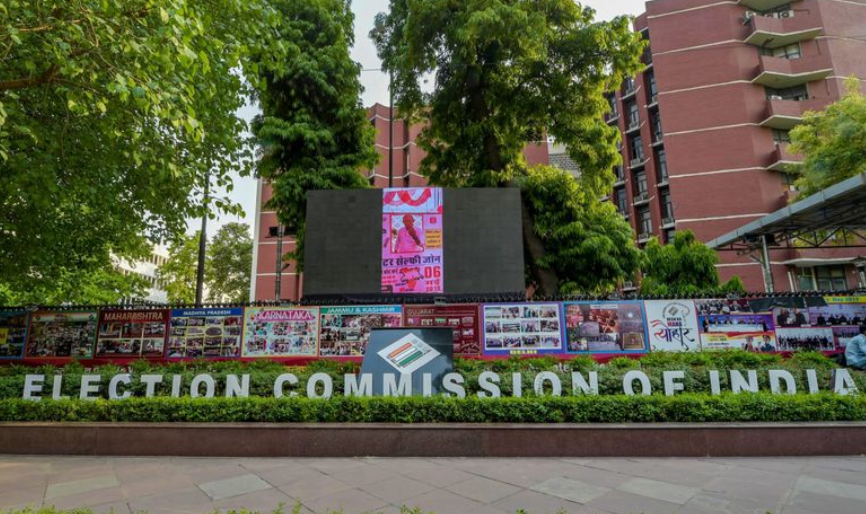
NEW DELHI, NOV 10 : The Election Commission of India (ECI) has tightened rules governing political neutrality during elections by extending restrictions applicable to serving government employees to retired officials and other individuals engaged or re-employed by State and Union Territory governments in various capacities.
In an order issued on November 9, the Commission directed the Chief Secretaries and Chief Electoral Officers of Goa, Manipur, Punjab, Uttar Pradesh and Uttarakhand to ensure strict compliance with the instructions during the Model Code of Conduct (MCC) period.
The move aims to prevent individuals associated with government establishments from using their official positions, influence or access to support any political party or candidate during elections.
The ECI clarified that retired government officers and employees, along with other individuals attached to, engaged by, employed or re-employed by State or Union Territory governments in different capacities, would be subject to the same restrictions and prohibitions applicable to serving government employees during the MCC period.
Reiterating its position on political neutrality, the Commission said government employees were not expected to participate in election campaigns or canvassing. They must take “scrupulous care not to lend their names, official position or authority to assist one individual/political party/group as against another”.
The Commission also pointed out that the Model Code of Conduct applies not only to government departments but also to organisations, committees, corporations and commissions funded wholly or partly by the government, along with their employees.
Relevant service conduct rules in various states also prohibit government servants from participating in political activities and elections.
However, the ECI observed that specific guidelines were not in place to regulate the political neutrality and conduct of retired government officials and other individuals engaged or re-employed by State and Union Territory governments during the MCC period.
The November 9 directive seeks to address this gap by bringing such personnel under the restrictions already imposed on serving government employees.
In a significant measure, the Commission has specifically barred these individuals from summoning election-related officers of any constituency or district where elections have been announced for official discussions or meetings.
They have also been prohibited from conducting video conferences or holding meetings with such officers.
Issuing a stern warning, the ECI said that “any omission or commission of any act in contravention of Commission’s directions shall be viewed seriously”.
The Chief Secretaries and Chief Electoral Officers have been instructed to circulate the order among all concerned authorities and individuals to ensure its strict implementation.
The latest directions refer to the Commission’s earlier instructions issued on November 6, 1984, and April 6, 1991, regarding the conduct of government employees during elections.
By extending these established principles to retired officials and other government-engaged personnel, the ECI aims to prevent individuals linked to government institutions from using their official standing, institutional access or influence to affect the electoral process.
The directive reinforces the Commission’s emphasis on maintaining an impartial administrative machinery during elections and ensuring that government-linked personnel remain politically neutral.
