

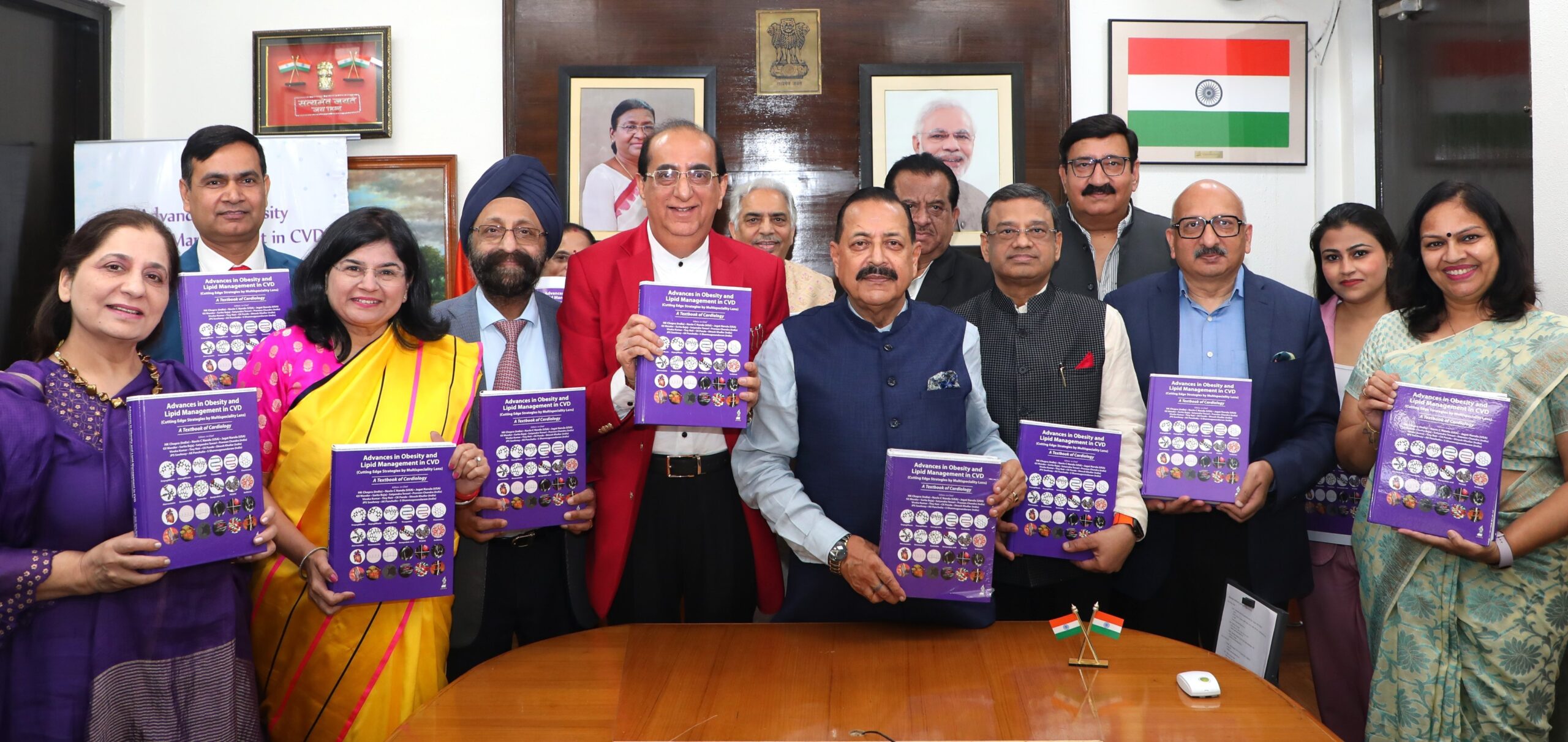
NEW DELHI, Mar 29: Union Minister Dr. Jitendra Singh, who is also a noted professor and scholar in diabetes, warned today that abdominal or central obesity is a greater health risk than overall obesity, especially in the Indian context where even lean‑looking individuals often carry high levels of visceral fat.
Speaking at the release of the book “Advances in Obesity and Lipid Management in CVD”, edited by eminent cardiologist Dr. H.K. Chopra, Dr. Singh explained that central obesity acts as an independent risk factor, even in people who are not generally classified as obese. He said such abdominal fat predisposes individuals to a wide range of metabolic disorders, including diabetes, hypertension, heart disease, fatty liver and lipid abnormalities.
Referring to the distinct Indian body phenotype, the Minister noted that while overall obesity is rising, abdominal obesity remains disproportionately high and strongly linked to cardiovascular and metabolic disease. “Central obesity, even without generalized obesity, has major clinical implications and must be detected early and managed with targeted interventions,” he said.
Dr. Singh described the new publication as timely and aligned with the national priority of tackling obesity, echoing Prime Minister Narendra Modi’s call for greater public awareness and lifestyle changes—such as reducing oil and unhealthy food intake—to move towards a “Vikshit Bharat, Swasthya Bharat and Obesity‑Free Bharat.”
He highlighted growing evidence tying abdominal fat to fatty liver disease, insulin resistance and early‑onset cardiovascular complications, pointing out that the increasing incidence of type‑2 diabetes and cardiac events in younger populations reflects changing diets, reduced physical activity and lifestyle imbalances.
The Minister also urged caution against extreme or unscientific fitness routines, warning that overexertion without proper preparation or rest can itself pose health risks. He stressed the importance of sustained lifestyle discipline, adequate sleep and scientifically guided preventive care.
The 172‑chapter, 23‑section volume, authored by over 300 experts from India and abroad, marks a shift from conventional risk‑factor‑based care to precision prevention. It covers emerging therapies such as GLP‑1 receptor agonists (Semaglutide, Tirzepatide), advanced lipid‑lowering strategies (statins, ezetimibe, bempedoic acid, PCSK9 inhibitors, inclisiran, apheresis and gene‑based interventions), and the role of digital health and AI‑enabled decision support in cardiovascular care.
In his foreword, Dr. Jitendra Singh flagged obesity and dyslipidemia as major public health challenges responsible for rising cardiovascular morbidity and mortality in India and globally. He called for stronger awareness, early screening and evidence‑based clinical practices, underscoring projections that India’s obesity burden will surge by 2050 if current trends continue.
The textbook is expected to serve as a comprehensive clinical resource, strengthening capacity building and improving patient outcomes. The Minister commended Dr. H.K. Chopra and the editorial team for integrating global expertise into a single authoritative volume. Leading cardiologists and contributors, including Dr. Viveka Kumar, Dr. Praveen Chandra, Dr. J.P.S. Sawhney, Dr. Mona Bhatia, Dr. Anu Grover, Shrikant Bhatia and Anand Kumar, were present at the launch.
