

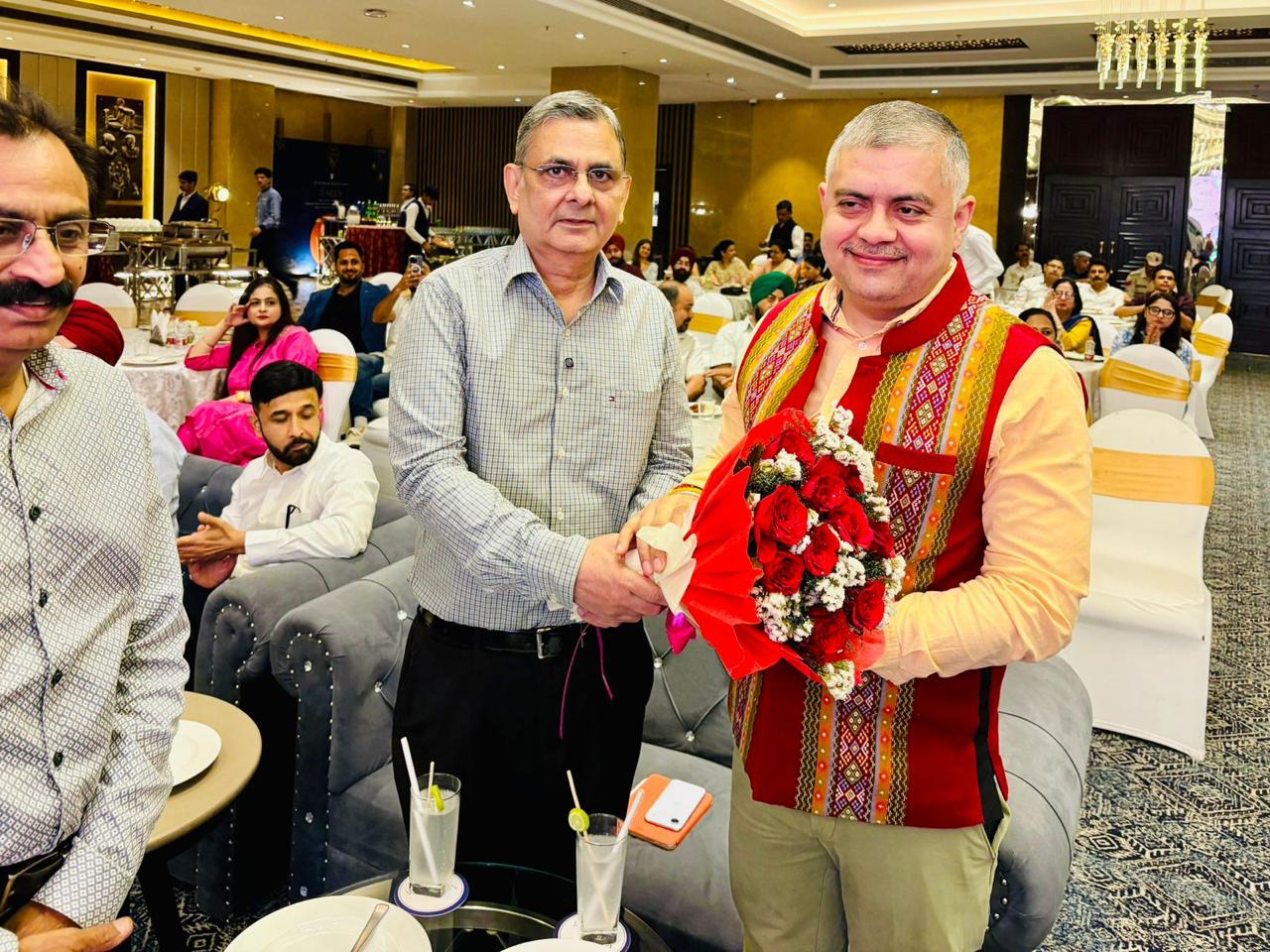
Jammu, Apr 27 : Setting the tone for an ambitious transition to data-led governance, Amit Sharma on Sunday outlined the contours of Census 2027, pitching it as India’s first fully digital enumeration exercise and urging widespread citizen participation across Jammu & Kashmir and Ladakh.
Addressing a gathering as Chief Guest at a health awareness event organised by Rotary Club Jammu City in association with Fortis Hospital Gurugram, Sharma — who serves as Chief Principal Census Officer and Director of Census Operations under the Ministry of Home Affairs — said the upcoming census would be conducted without paper, relying entirely on digital platforms to generate real-time, granular data.
He detailed that the exercise in the Union Territories will unfold in two phases, beginning with House Listing Operations and Housing Census from June 1 to June 30, 2026, preceded by a self-enumeration window from May 17. The second phase, Population Enumeration, is scheduled for February 2027, while snow-bound regions will be covered earlier in September 2026 to accommodate weather constraints.
Sharma emphasised that enumerators will use mobile applications equipped with in-built validation systems to minimise errors and ensure consistency. In a shift aimed at greater inclusivity, residents will also be able to submit their details independently through a dedicated self-enumeration portal.
Calling census data the backbone of governance, he said its accuracy directly influences policy formulation, welfare delivery and allocation of public resources across sectors such as healthcare, education and infrastructure. He added that reliable datasets are critical for responding to emerging socio-economic challenges and ensuring balanced regional development.
On preparedness, Sharma noted that groundwork — including freezing of administrative boundaries, deployment of digital infrastructure and training of field staff — has already been completed to facilitate seamless operations.
Addressing concerns around privacy, he assured that the exercise would be conducted under strict safeguards mandated by the Census Act, 1948, with encrypted data transmission and secure storage in certified infrastructure. He cautioned citizens against sharing sensitive financial or identity details beyond the prescribed questionnaire.
Urging community involvement, Sharma appealed to members of civil society, particularly Rotary networks, to support awareness campaigns and cooperate with field officials. “Participation at every level will determine the accuracy and usefulness of the data collected,” he observed, adding that the census will shape governance priorities in the years ahead.
The event concluded with the Rotary Club honouring Sharma for his outreach and efforts to promote census awareness among citizens.
