

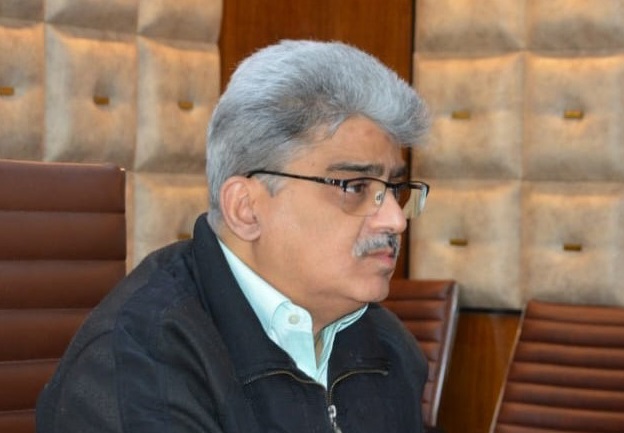
JAMMU, Jan 10: Chief Secretary Atal Dulloo on Saturday chaired a high-level review to assess the progress of the National Ayush Mission (NAM) in Jammu and Kashmir, with a strong push for expanding Ayush services, infrastructure, and outreach to strengthen holistic healthcare across all districts. The meeting focused on service delivery through Ayush facilities, creation of dedicated hospitals and units, and widening the reach of Ayush-based public health programmes to communities at the grassroots level.
Senior officers including the Secretary Health & Medical Education, Principal GMC Srinagar, Commissioner Food & Drugs Administration, Directors of Health Services Jammu and Kashmir, Director Ayush and other concerned officials attended the review, during which department-wise and scheme-wise progress was presented. The Chief Secretary underlined the importance of Ayush in preventive and promotive healthcare and called for convergence with the broader health system to maximise impact.
The meeting was informed that all 523 Ayushman Arogya Mandirs (Ayush) across the Union Territory have been fully operational since March 31, 2025, and are providing a wide spectrum of Ayush wellness interventions and patient care services based on Ayurveda, Yoga, Unani, Siddha and Homeopathy principles. These centres are functioning as the frontline Ayush health facilities, delivering OPD services, counselling, yoga sessions and community outreach.
Reviewing infrastructure creation, it was apprised that the 50-bedded Integrated Ayush Hospital at Chawalgam, Kulgam, has been completed and made fully operational. The hospital recorded an OPD footfall of 12,852 patients during 2024–25 and 5,546 patients in 2025–26 up to December 2025, reflecting growing public acceptance of Ayush services. An amount of Rs 105 lakh has been sanctioned under SAAP 2025–26 for allied works including landscaping, development of a herbal garden, creation of supporting facilities and provision of manpower.
Similarly, the 50-bedded Integrated Ayush Hospital at Billawar in Kathua district has achieved around 80 per cent physical progress, with finishing works such as tiling and aluminium fittings currently underway. An allocation of Rs 70 lakh has been approved for construction of the boundary wall, and the project is targeted for completion by March 2026, after which it will add substantial Ayush bed strength in the region.
The meeting was also told that the 10-bedded Integrated Ayush Hospital at Gadhi Garh, Jammu, has been made functional by utilising the building of Sub-Centre Lower Gadhi Garh. OPD services at this facility catered to 7,609 patients in 2024–25 and 4,713 patients during 2025–26 up to December 2025. To strengthen the institution further, Rs 122.50 lakh has been approved for construction of an additional block and engagement of necessary manpower.
The Chief Secretary reviewed the implementation of Ayush Public Health Programmes and was informed that performance targets have been surpassed in several components. Under the National Programme for Prevention and Management of Osteoarthritis and other Musculoskeletal Disorders, 62 units have been operationalised, where 59,628 people have been screened and 48,576 patients have received Ayush treatment. These units are playing a key role in managing chronic and lifestyle-linked musculoskeletal conditions.
Director Ayush, Dr Suresh Sharma, highlighted that under SUPRAJA, which focuses on maternal and neonatal health, 33 units are functional, delivering Ayush-based care and counselling to pregnant women and newborns. Likewise, 40 units each have been operationalised under AYURVIDYA for school health and KARUNYA for palliative care, integrating Ayush into student wellness and long-term care for chronically ill and terminally ill patients.
He further informed that the VAYO MITRA programme for geriatric healthcare is being implemented through 22 units, providing Ayush-based support to thousands of senior citizens. In addition, Mobile Medical Units and NPCDCS-linked components are extending Ayush outreach to remote, rural and underserved pockets, ensuring that people in far-flung areas also benefit from traditional and integrative healthcare services.
The meeting also reviewed the impact of Ayush wellness interventions delivered through Ayushman Arogya Mandirs. It was noted that during 2024–25 and 2025–26, lakhs of beneficiaries have been covered through yoga sessions, routine OPD consultations, distribution of Ayush medicines, screening for non-communicable diseases, Prakriti Parikshan, and community awareness activities. These initiatives, officials said, reflect the growing acceptance of Ayush services among the general public.
On the financial front, it was informed that during 2024–25, over 71 per cent expenditure was achieved under the National Ayush Mission. For 2025–26, funds to the tune of Rs 37.31 crore have been on-boarded through the SNA-SPARSH portal, with substantial releases already made to implementing agencies. The UT is aiming to achieve more than 80 per cent expenditure by the end of March 2026, ensuring optimal utilisation of central and state resources earmarked for Ayush.
The Chief Secretary also took stock of Ayush educational institutions, including Government Ayurvedic, Unani and Homeopathic Medical Colleges. The meeting discussed ongoing academic activities, infrastructure strengthening, creation of teaching and non-teaching posts and proposals for introduction of new courses. These measures are aimed at augmenting human resource capacity in Ayush systems and producing qualified professionals to serve in the expanding network of Ayush facilities.
Officers also briefed the meeting on steps taken to enhance the visibility and public connect of Ayush in Jammu and Kashmir. Large-scale Information, Education and Communication (IEC) and Behaviour Change Communication (BCC) campaigns have been held across districts under themes such as Har Ghar Ayush, Yoga and Meditation, Nasha Mukt Abhiyan, Anemia Mukt Bharat, Poshan Abhiyan, Millets awareness and observance of Ayurveda Day. Digital and social media outreach, along with regular TV and radio programmes, have helped amplify the message of Ayush-based healthy lifestyles.
Discussing the roadmap ahead, the meeting outlined proposals for establishing a Government Homeopathic Medical College at Kathua and setting up 10, 30 and 50-bedded Integrated Ayush Hospitals in the remaining districts to ensure district-wide Ayush in-patient care. Plans were also shared for creating a Government Ayurvedic Medical College and Hospital in Baramulla, strengthening Ayush public health programmes in all Ayushman Arogya Mandirs and operationalising tele-consultation services through the e-Sanjeevani platform to improve remote access.
Emphasising timely completion of all ongoing projects and effective utilisation of funds, Chief Secretary Atal Dulloo called for deeper integration of Ayush services with the mainstream healthcare system. He reiterated that Ayush has a vital role in preventive, promotive and holistic healthcare and directed the departments concerned to maintain momentum so that accessible, affordable and people-centric Ayush services are made available across the length and breadth of Jammu and Kashmir.
