

Entire day after 7:15 AM on March 19 will be considered auspicious for Kalash Sthapana
JAMMU: The Hindu New Year traditionally begins with the Pratipada (first day) of the Shukla Paksha of the Chaitra month. However, there has been some confusion regarding the exact date of the festival this year. The Pratipada Tithi will begin at 6:53 AM on 19 March and will end at 4:53 AM on 20 March. Since the Pratipada will start after sunrise on 19 March and end before sunrise on 20 March, the tithi is considered Kshaya (shortened). According to scriptures, when the Pratipada Tithi is not present at sunrise on both days, the first day is considered the beginning of the new year. Therefore, Chaitra (Vasant) Navratri will be observed from 19 March to 27 March this year.
On Thursday, 26 March, both Durga Ashtami and Shri Ram Navami will be observed, while Durga Navami will be celebrated on Friday, 27 March. Since the birth of Lord Shri Ram is celebrated when the Navami Tithi prevails during midday, and this condition occurs on 26 March, Shri Ram Navami will be celebrated on that day. Maha Navami will be observed on 27 March, which will also mark the conclusion of the Navratri festival. This year Navratri will be observed for the full nine days.
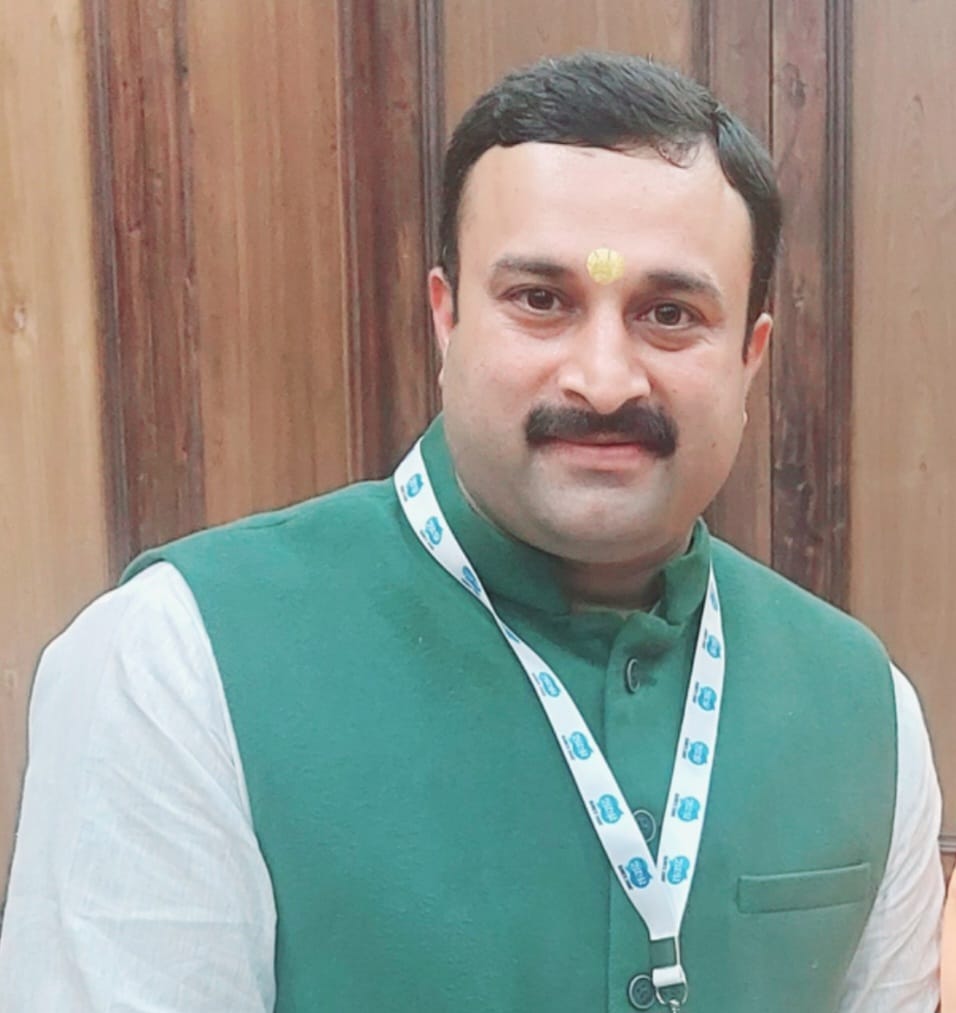
Mahant Rohit Shastri President of Shri Kailakh jyotish avim Vedic sansthan Trust further informed that the auspicious time for Kalash Sthapana and lighting the sacred lamp on Thursday, 19 March 2026, will begin at 7:15 AM, and the entire day will remain auspicious. However, the following Shubh Choghadiya timings are considered especially favorable: 7:15 AM to 7:45 AM, 10:30 AM to 12:02 PM
Additionally, the Abhijit Muhurat will occur from 12:05 PM to 12:53 PM, which is also regarded as an excellent time for Kalash Sthapana.
The Navratri fast is observed from Pratipada to Navami of the Shukla Paksha of Chaitra month. During these nine days, devotees worship the nine forms of Goddess Durga—Shailputri, Brahmacharini, Chandraghanta, Kushmanda, Skandamata, Katyayani, Kaalratri, Mahagauri and Siddhidatri. Devotees should perform the worship of Goddess Durga and recite the Durga Saptashati, either personally or through a learned priest.
Chaitra Navratri 2026 Schedule: 19 March – Pratipada – Worship of Maa Shailputri & Ghatasthapana; 20 March – Dwitiya – Worship of Maa Brahmacharini; 21 March – Tritiya – Worship of Maa Chandraghanta; 22 March – Chaturthi – Worship of Maa Kushmanda; 23 March – Panchami – Worship of Maa Skandamata; 24 March – Shashthi – Worship of Maa Katyayani; 25 March – Saptami – Worship of Maa Kaalratri; 26 March – Ashtami – Worship of Maa Mahagauri & Shri Ram Navami; 27 March – Navami – Worship of Maa Siddhidatri & Durga Navami
According to the Devi Bhagavat Purana: “Shashi-Surye Gajarudha, Shani-Bhaume Turangame Gurau Shukre Cha Dolayam, Budhe Nauka Prakeertita.”
This means that if the first day of Navratri falls on Sunday or Monday, Goddess Durga arrives on an elephant. If it falls on Saturday or Tuesday, she arrives on a horse. If it falls on Thursday or Friday, she arrives on a palanquin (Doli), and if it falls on Wednesday, she arrives on a boat.
Since Chaitra Navratri begins on Thursday, 19 March this year, the Goddess will arrive on a palanquin. According to traditional astrological beliefs, this may indicate global tensions, unrest, instability, and the possibility of diseases or hardships, which could affect public peace and prosperity.
However, the departure of the Goddess will take place on Friday, which signifies that she will depart on an elephant. This is considered auspicious and is believed to bring good rainfall, prosperity, and relief from difficulties.
Navratri is also considered a highly auspicious period for spiritual practices, meditation, and tantra sadhana. Household devotees also worship Goddess Durga during these days to awaken their inner spiritual power. It is believed that spiritual practices performed during Navratri do not go in vain. Charity and acts of kindness are also considered highly meritorious during this period.
Devotees should avoid tamasic foods and intoxicants such as alcohol during Navratri, as they can have negative effects not only on the body but also on one’s spiritual progress.
Along with Vasantik Navratri, the new Hindu year named “Roudra Samvatsar” will also begin on Thursday, 19 March. In this Samvatsar, Jupiter (Guru) will be the king and Mars (Mangal) will serve as the minister.
