

Leh, Feb 13: Issuing explicit directions to fast-track regulatory reforms and remove administrative delays affecting tourism and local industries, the Union Government on Thursday asked the Ladakh administration to institutionalise compliance reforms and eliminate procedural overlaps that continue to burden businesses in the Union Territory.
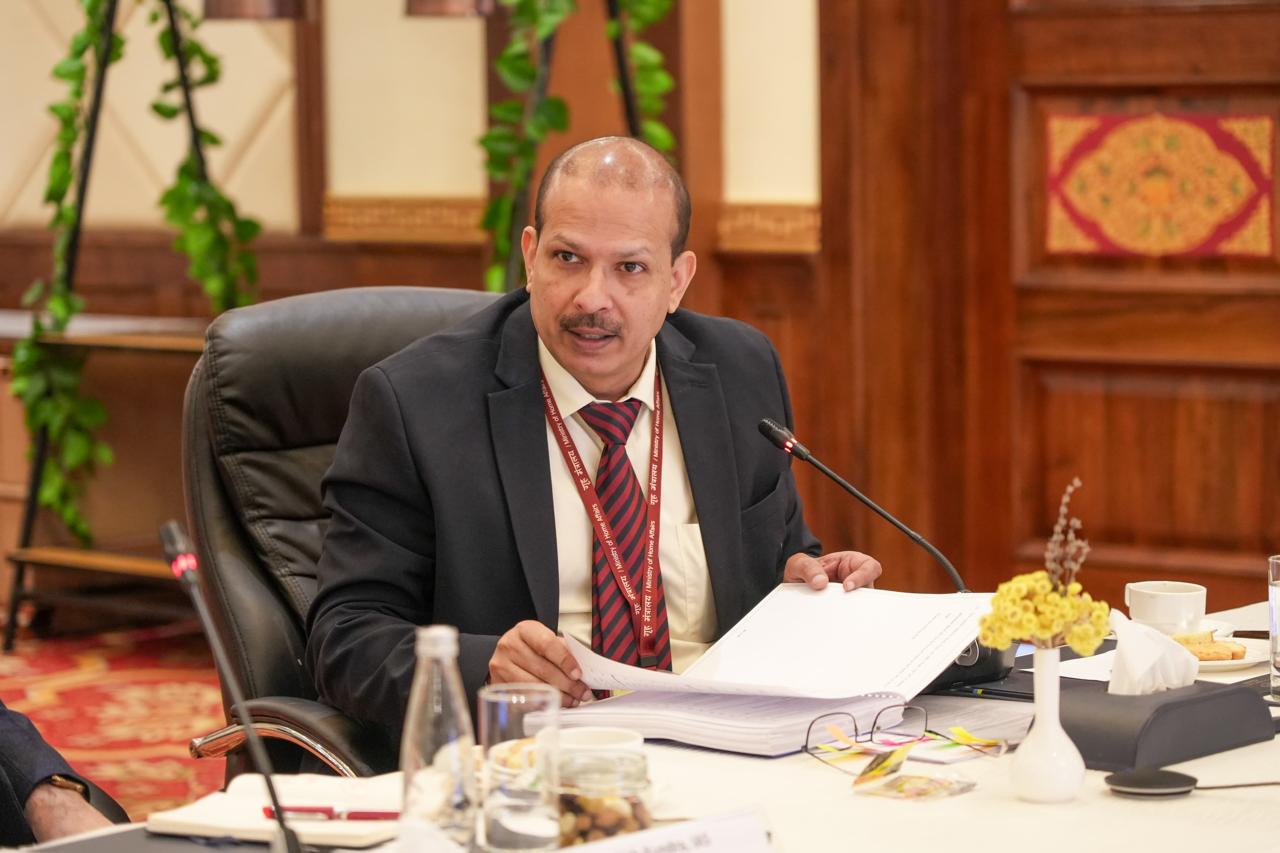
Special Secretary, Cabinet Secretariat, K.K. Pathak, who heads the Centre’s Task Force on Deregulation and Compliance Reduction, jointly chaired a high-level review meeting with Chief Secretary of Ladakh Ashish Kundra to assess the progress of the ongoing deregulation drive and to identify sector-specific bottlenecks hampering economic activity, particularly in tourism.
Officials reviewed the status of Phase-I of Deregulation 1.0 (2025), which covers 23 priority areas, including labour reforms, fire safety regulations, building byelaws and the Ladakh Land Records Web GIS Portal. The meeting also examined the proposed framework for Deregulation 2.0, with departments placing on record the operational challenges and implementation gaps faced during the first phase.
Industry stakeholders from tourism, manufacturing, food processing, school education and the pashmina sector presented a consolidated picture of ground-level difficulties arising from fragmented approvals, unclear guidelines and infrastructure constraints.
The tourism industry flagged delays and uncertainty related to foreign tourist permissions, Form C procedures, homestay registration and water management systems. Operators pointed out that the absence of uniform processes continues to affect small service providers and community-based tourism initiatives.
Manufacturing representatives from Kargil drew attention to the acute shortage of industrial land and the lack of organised storage and distribution facilities, which they said restrict expansion and limit market access.
Entrepreneurs engaged in food processing sought administrative support for customs clearances, land allocation for fruit export units and the establishment of a dry port facility. They also raised concerns regarding the implementation of the smart metering system.
The pashmina sector pressed for geographical indication tagging, robust authenticity checks and the setting up of testing laboratories within Ladakh to strengthen quality control and protect local producers.
Chief Secretary Ashish Kundra assured stakeholders that the administration is actively examining the issues placed before the meeting. He said Ladakh’s industrial strategy would continue to focus on sustainable and region-specific development models, with priority to small, efficient units that suit the Union Territory’s terrain and climate.
Highlighting the Ladakh Tourism Portal, he said the platform is intended to simplify access to homestay and hotel services for visitors, and stressed the need for clearer and more predictable regulations for foreign tourists.
During the review, K.K. Pathak examined matters related to the SDP subsidy framework, land byelaws, industrial estates, transport infrastructure and tourism policies, including homestay regulations. He directed departments to maintain accurate and updated records of all industrial units and to further streamline compliance requirements.
Stating that tourism remains one of the strongest economic drivers for Ladakh, he called for tighter coordination among departments and urged the administration to embed reform measures within regular governance systems so that simplified procedures are sustained beyond individual review exercises.
The meeting was attended by senior officers from the departments of industries and commerce, tourism, school and higher education, agriculture and horticulture, public health engineering, power, health, sports and youth services, information technology and environment, along with representatives of industry bodies and entrepreneurs from Leh and Kargil.
