

MHA alerts states to monitor pro-Iran clerics
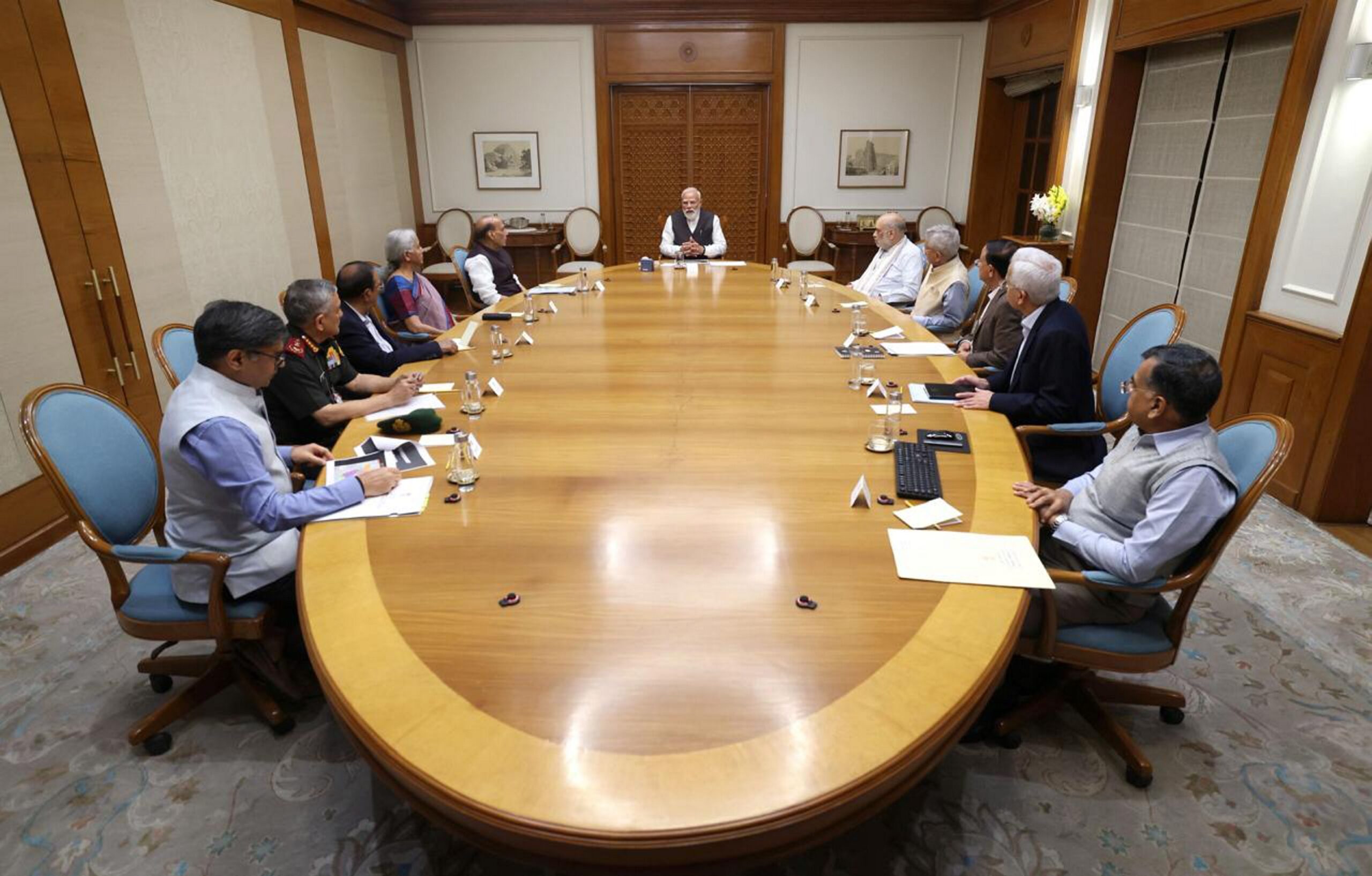
NEW DELHI: The Cabinet Committee on Security (CCS) has reviewed the evolving situation in West Asia and expressed concern over the safety and security of the large Indian expatriate community in the region.
The CCS also directed all concerned departments to take necessary and feasible measures to assist Indian nationals affected by the developments.
The CCS, which met last evening under the chairmanship of Prime Minister Narendra Modi, also underscored the importance of an early cessation of hostilities and a return to dialogue and diplomacy.
Earlier, the Union Home Ministry has asked states to keep an eye on pro-Iran radical preachers giving inflammatory statements that may result in violence in the wake of the Israel-US attack on Iran, officials said.
In a letter circulated to all states on February 28, the Ministry of Home Affairs (MHA) also asked all states and UTs to keep vigil on social media activities of extremists and global terror group handles, they said.
Advising the states to ensure that no law-and-order issues arise, the ministry has asked the states to heighten vigilance, as global events might have a domestic ripple effect through rhetorical statements, they said.
The circular asked the states to increase security at consulates, embassies, and other diplomatic offices of the USA and Israel in their jurisdictions, and at other entities of the two countries to prevent any untoward incident and maintain peace and tranquillity.
Shia mourners took to the streets in various parts of India on Sunday to express outrage and grief over the death of Iranian supreme leader Ayatollah Ali Khamenei in a US-Israel strike.
Meanwhile, an official statement said the CCS met to review the evolving situation in West Asia, and the meeting was briefed on the air strikes in Iran on February 18 and the subsequent escalation, including attacks in several Gulf countries.
“It (CCS) expressed serious concern over the safety and security of the large Indian expatriate community in the region,” the statement said.
The CCS also reviewed the difficulties faced by Indian travellers transiting the region and students appearing for scheduled examinations, as well as the broader implications for regional security and economic and commercial activities.
“The CCS directed all concerned departments to take necessary and feasible measures to assist Indian nationals affected by the developments. It underscored the importance of an early cessation of hostilities and a return to dialogue and diplomacy,” the statement said.
The CCS meeting has been convened to take stock of the situation emerging in the wake of the attack on Iran by the United States and Israel and the killing of Iranian Supreme Leader Ayatollah Ali Khamenei.
Iran responded to the assault by firing drones and missiles at Israel and US military installations around the Gulf, and also at the global business hub of Dubai.
Defence Minister Rajnath Singh, Home Minister Amit Shah, External Affairs Minister S Jaishankar and Finance Minister Nirmala Sitharaman attended the meeting.
The CCS meeting was also attended by National Security Advisor Ajit Doval, Principal Secretaries to the Prime Minister P K Mishra and Shaktikanta Das, Chief of Defence Staff General Anil Chauhan, Cabinet Secretary T V Somanathan and Foreign Secretary Vikram Misri.
There are around 10,000 Indian citizens who live, study and work in Iran, while over 40,000 live in Israel. The number of Indians who live in the Gulf and West Asia is about 9 million.
Currently, the airspace of West Asia is almost closed.
With flight services disrupted due to the military escalation in West Asia, hundreds of Indians are stranded in Dubai, Doha and other key hub airports, with many of them taking to social media to appeal to the Indian government for assistance.
India has in the past successfully evacuated thousands of Indians from different parts of the world, including West Asia, amidst conflicts.
The Ministry of External Affairs (MEA) said Indian missions across the region are in continuous contact with nationals, and helplines have been activated.
Iranian Supreme Leader Khamenei was killed in a major attack on Iran launched by Israel and the United States. Iranian state television and the state-run IRNA news agency announced the 86-year-old’s death early Sunday.
The announcements came after a joint US and Israeli aerial bombardment from Saturday that targeted Iranian military and governmental sites.
US President Donald Trump said it gave the Iranians their greatest chance to take back their country.
Trump said the heavy and pinpoint bombing was to continue through the week or as long as necessary.
PM speaks to Netanyahu, Saudi Prince, Bahrain King
NEW DELHI: Prime Minister Narendra Modi on Monday spoke to the King of Bahrain and the Crown Prince of Saudi Arabia and condemned the recent attacks on the two countries in violation of their sovereignty and territorial integrity, asserting that India stands in solidarity with their people in this difficult hour.
During his telephonic conversations with Bahrain King Hamad Bin Isa Al Khalifa and the Crown Prince and Prime Minister of Saudi Arabia, Mohammed Bin Salman, Prime Minister Modi said that the earliest restoration of regional peace and stability is of utmost importance and thanked them for looking after the well-being of the Indian community living there in these difficult times.
“Discussed the evolving situation in West Asia with Crown Prince and PM of Saudi Arabia, HRH Prince Mohammed bin Salman. India condemns the recent attacks on Saudi Arabia in violation of its sovereignty and territorial integrity.
“We agreed that earliest restoration of regional peace and stability is of utmost importance. I thanked him for looking after the well-being of the Indian community in these difficult times,” Modi said in a post on ‘X’.
In another post, he said: “Had a productive telephone conversation with the King of Bahrain, His Majesty King Hamad Bin Isa Al Khalifa. India condemns the attacks on Bahrain and stands in solidarity with its people in this difficult hour. I thank him for the steadfast support extended to the Indian community in Bahrain”.
The telephonic conversations took place in the wake of the attack on Iran by the US and Israel, in which Iran’s Supreme Leader Ayatollah Ali Khamenei was killed, and Iran’s retaliation in which it fired drones and missiles at Israel and US military installations around the Gulf, and also at the global business and aviation hubs Dubai and Doha.
The prime minister had earlier spoken to his Israeli counterpart Benjamin Netanyahu and the President of the UAE, Sheikh Mohamed bin Zayed Al Nahyan.
The number of Indians who live in the Gulf and West Asia is about 9 million.
There are around 10,000 Indian citizens who live, study and work in Iran, while over 40,000 live in Israel.
Currently, the airspace of West Asia is almost closed.
Meanwhile Modi also spoke to his Israeli counterpart, Benjamin Netanyahu, to discuss the West Asia situation and conveyed India’s concerns.
During his telephonic conversation with Netanyahu, Modi emphasised the safety of civilians as a priority.
“Had a telephone call with PM Benjamin Netanyahu to discuss the current regional situation. Conveyed India’s concerns over recent developments and emphasised the safety of civilians as a priority. India reiterates the need for an early cessation of hostilities,” Modi said in a post on ‘X’.
The telephonic conversation took place in the wake of the attack on Iran by the US and Israel and the killing of Iran’s Supreme Leader, Ayatollah Ali Khamenei.
Iran also fired a series of missiles towards Israel and several other West Asian countries. Prime Minister Modi earlier night spoke to the President of the UAE, Sheikh Mohamed bin Zayed Al Nahyan, and strongly condemned the attacks on the Gulf nation, saying India stands in solidarity with the UAE in these difficult times.
